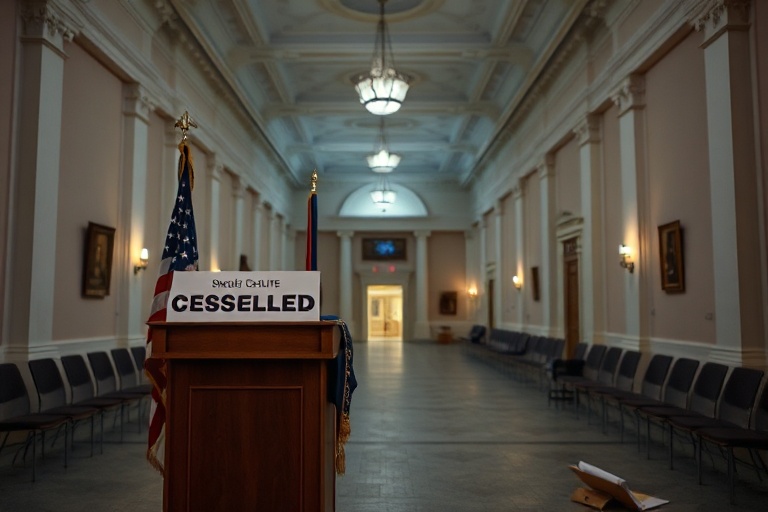
Mississippi’s Redistricting Special Session Cancelled Amid Growing Tensions
The Mississippi State Legislature has called off its special session dedicated to redistricting, a decision that reflects broader political and demographic challenges facing the state. Originally scheduled to convene, the session was abruptly cancelled after legislative leaders failed to reach consensus on new district boundaries. This move comes as Mississippi grapples with the implications of the 2020 U.S. Census data, which revealed significant population shifts that demand redistricting adjustments.
Mississippi, like many Southern states, faces a delicate balance between maintaining political power structures and responding to demographic changes. The cancellation of the special session highlights the deep divisions within the state’s political leadership, mirroring similar struggles in other U.S. states where redistricting has become a contentious issue. The delay in redistricting could have far-reaching consequences, including delayed elections and legal challenges over representation.
Why Redistricting Matters in Mississippi’s Political Landscape
Redistricting in Mississippi is not just a bureaucratic exercise—it is a high-stakes process that determines political representation for the next decade. The state’s Republican-led legislature has historically used redistricting to solidify its dominance, a strategy that has drawn criticism from civil rights groups and Democratic lawmakers. With Mississippi’s population growth concentrated in urban areas like Jackson and Gulfport, rural districts risk losing influence unless boundaries are redrawn to reflect these shifts.
The cancelled special session leaves the state in a precarious position. Without new district maps, Mississippi may face legal challenges under the Voting Rights Act, particularly concerning minority representation. Historically, Mississippi has been at the center of voting rights battles, and any perceived gerrymandering could reignite national scrutiny. The situation also underscores the broader trend in U.S. politics, where redistricting has become a tool for partisan advantage rather than a process rooted in fairness.
Key Factors Behind the Cancellation
The decision to cancel the special session was not made lightly. Several factors contributed to the impasse:
- Partisan Disagreements: Republicans and Democrats remain deeply divided over how to redraw district lines. While Republicans seek to maintain their legislative majority, Democrats argue for maps that better reflect Mississippi’s growing diversity.
- Legal and Ethical Concerns: Civil rights organizations have threatened lawsuits if the redistricting process is perceived as discriminatory. This has created pressure on lawmakers to proceed carefully, if at all.
- Election Timelines: With statewide elections approaching, the delay in redistricting could disrupt primary and general election schedules, potentially disenfranchising voters.
- Public Sentiment: Mississippians are increasingly vocal about the need for fair representation, adding another layer of complexity to the legislative process.
The cancellation also reflects a broader pattern in U.S. politics, where redistricting has become a flashpoint for national debates over democracy, equity, and representation. States like Texas, Georgia, and Alabama have faced similar controversies, with courts often stepping in to resolve disputes. Mississippi’s situation is unique, however, due to its history of racial and political tensions, which continue to shape its legislative battles.
The Global Context: Redistricting as a Worldwide Issue
While Mississippi’s redistricting crisis may seem like a localized issue, it is part of a global conversation about political representation. Countries around the world, from India to Brazil, have grappled with how to fairly redraw electoral boundaries in response to population changes. In the United Kingdom, for example, the Boundary Commissions periodically adjust district lines to prevent malapportionment, though the process is often contentious. Similarly, in Canada, independent commissions handle redistricting to minimize political interference.
Mississippi’s struggle highlights a fundamental challenge in democratic systems: balancing stability with adaptability. When redistricting becomes a tool for partisan gain, it undermines public trust in elections. Conversely, failing to adjust district boundaries can lead to unequal representation, where some communities are systematically underrepresented. The cancellation of Mississippi’s special session underscores the difficulty of navigating these competing priorities.
Globally, the issue of redistricting is often tied to broader questions of governance and equity. In countries with strong democratic traditions, independent bodies oversee the process to ensure fairness. In the U.S., however, redistricting remains a deeply political exercise, with state legislatures wielding significant control. This has led to calls for reform, including the adoption of independent redistricting commissions, which have gained traction in states like California and Michigan.
What’s Next for Mississippi?
The cancellation of the special session does not mean the end of Mississippi’s redistricting debate. Legislative leaders have indicated that they may revisit the issue in the coming months, though no firm timeline has been established. In the meantime, advocacy groups are preparing legal challenges, and civil rights organizations are closely monitoring the situation.
For Mississippi voters, the delay could mean longer wait times for election materials, confusion over polling locations, and potential disenfranchisement. The state’s history of voting rights struggles serves as a reminder of the high stakes involved. As the debate unfolds, Mississippians will be watching closely to see whether their leaders prioritize fairness over political gain.
The broader implications of Mississippi’s redistricting impasse extend beyond the state’s borders. It serves as a case study in how democratic systems adapt—or fail to adapt—to changing demographics. As the U.S. continues to diversify, the lessons learned from Mississippi’s struggles could shape the future of redistricting nationwide.
For those interested in the intersection of politics and representation, this story is far from over. The coming months will reveal whether Mississippi can find a path forward that balances its political traditions with the demands of a changing electorate.
Further Reading
For more insights into political representation and redistricting, explore our coverage of Politics and Culture. These sections offer in-depth analysis on how demographic shifts are reshaping democratic institutions across the U.S. and beyond.