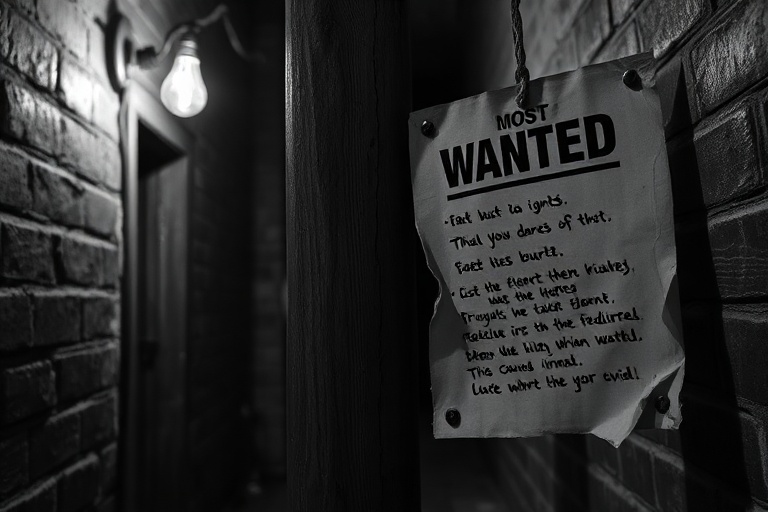
The concept of a “most wanted” list transcends borders, serving as both a law enforcement tool and a cultural artifact. These lists—whether compiled by governments, media outlets, or international organizations—reflect societal priorities, fears, and fascinations. From criminals evading justice to celebrities dominating headlines, the items on these lists often shape public discourse in profound ways.
While most wanted lists originated in the realm of crime fighting, their influence has expanded into entertainment, politics, and even consumer culture. Today, they function as dual-purpose documents: one foot firmly planted in legal necessity, the other stepping into the realm of public obsession. This duality raises intriguing questions about power, visibility, and the nature of notoriety in our interconnected world.
The Evolution of Most Wanted Lists in Law Enforcement
The modern most wanted list traces its roots to the early 20th century, when law enforcement agencies began formalizing their search for fugitives. The FBI’s Ten Most Wanted Fugitives program, established in 1950, became the gold standard for such initiatives. Its creation was partly motivated by the bureau’s desire to leverage public assistance in capturing dangerous criminals who might otherwise evade detection.
Over time, the criteria for inclusion expanded beyond violent offenders to include white-collar criminals, cybercriminals, and international fugitives. The program’s longevity demonstrates its effectiveness—hundreds of individuals have been captured thanks to public tips generated by the list. However, critics argue that such lists can sometimes prioritize sensational cases over systemic issues, creating a distorted view of criminal threats.
International organizations have adopted similar approaches. Interpol’s Red Notices, for instance, serve as global alerts for individuals wanted by national jurisdictions. These notices facilitate cross-border cooperation but also highlight the challenges of balancing sovereignty with international justice. The most wanted list, in its various forms, has become a cornerstone of modern law enforcement strategy.
How These Lists Shape Public Perception
The psychological impact of most wanted lists cannot be overstated. For the general public, these lists transform abstract notions of crime into concrete, identifiable threats. The humanization of fugitives—through photographs and descriptions—creates a paradoxical relationship between wanted individuals and the communities they allegedly victimized.
Media coverage amplifies this effect. When a fugitive from a most wanted list becomes a household name, their notoriety often eclipses the crimes they’re accused of committing. This phenomenon raises ethical questions about the role of media in perpetuating certain narratives. Does the constant spotlight on certain criminals inadvertently glorify their actions? Or does it serve as a necessary deterrent?
The Most Wanted Lists That Transcend Crime
While law enforcement lists dominate the conversation, the most wanted concept has expanded into unexpected domains. Environmental organizations maintain lists of endangered species, while conservationists compile rosters of invasive species threatening ecosystems. These lists invert the traditional power dynamic, identifying targets for protection rather than capture.
In the realm of entertainment, media outlets and fan communities create their own most wanted lists. Film studios release “most anticipated” movie lists, while music publications track the most wanted concert venues. These lists reflect consumer desires and industry trends, demonstrating how the format has been adapted to serve commercial interests.
Political movements have also embraced the most wanted format. Activist groups maintain lists of corrupt officials or human rights violators, while watchdog organizations track environmental offenders. These lists serve as tools for accountability, using public pressure to drive change where traditional justice systems fall short.
The Role of Social Media in Modern Most Wanted Lists
Digital platforms have revolutionized how most wanted lists are created, distributed, and consumed. Viral challenges, crowd-sourced investigations, and online petitions have given rise to new forms of public engagement with these lists. The internet’s ability to amplify voices means that a local most wanted list can now reach a global audience within hours.
This democratization of information has both positive and negative consequences. On one hand, it empowers communities to hold power to account and assists in the capture of dangerous individuals. On the other, it can lead to misinformation, vigilante justice, and the erosion of due process. The most wanted list, once a tool of professional law enforcement, now exists in a landscape where anyone with an internet connection can contribute to its creation.
Cultural Icons on Most Wanted Lists
The intersection of crime and celebrity culture has produced some of the most fascinating most wanted lists in recent history. From notorious gangsters to rogue hackers, these individuals often achieve a kind of infamy that transcends their criminal activities. Their stories become part of the cultural lexicon, inspiring books, films, and even fashion trends.
Consider the case of entertainment figures who found themselves on law enforcement lists. Some, like musician Snoop Dogg, were initially associated with criminal activity before transitioning into mainstream success. Others, like financier Bernard Madoff, demonstrated how white-collar crime could generate the same level of public fascination as violent crime.
This phenomenon isn’t limited to individuals. Entire subcultures have been placed on various most wanted lists, from punk rockers in the 1970s to hacktivist groups in the 21st century. The act of being “wanted” often becomes a badge of honor within these communities, further blurring the lines between criminality and countercultural identity.
The Globalization of Most Wanted Lists
As crime and culture become increasingly globalized, so too do most wanted lists. International fugitives like Joaquín “El Chapo” Guzmán and Joaquín “El Chapo” Guzmán demonstrate how criminal networks operate across borders, necessitating multinational cooperation in tracking and capturing individuals. These high-profile cases often dominate headlines for years, reflecting both the scale of the crimes and the challenges of cross-border justice.
The globalization of most wanted lists also extends to cultural phenomena. K-pop groups, anime characters, and viral internet personalities have all found their way onto various most wanted lists, reflecting the interconnected nature of modern fandom. In some cases, these lists serve as marketing tools, generating buzz for upcoming releases or events.
However, the international nature of these lists also raises important questions about cultural imperialism. When a Western media outlet compiles a most wanted list of international artists, does it reinforce existing power imbalances? How do local perspectives differ from global ones when it comes to what—or who—deserves to be on such a list?
Conclusion: The Dual Nature of Being Wanted
The most wanted list serves as a mirror, reflecting both our fears and our fascinations. It reveals what societies consider most threatening, whether that threat is criminal, environmental, or cultural. Yet it also exposes our vulnerabilities—the ways in which we are all, in some sense, complicit in the systems that create these lists.
As technology continues to evolve, so too will the format and function of most wanted lists. Artificial intelligence may soon generate personalized lists based on individual browsing habits. Augmented reality could allow users to “see” wanted individuals in their physical environment. These developments will undoubtedly bring new challenges and opportunities.
Ultimately, the most wanted list reminds us of the power of visibility. To be on such a list is to be seen, whether by law enforcement, the public, or the world at large. It is a form of attention that can be both empowering and destructive. In an era where everyone clamors for a slice of the spotlight, the most wanted list forces us to confront uncomfortable questions about who deserves our gaze—and why.