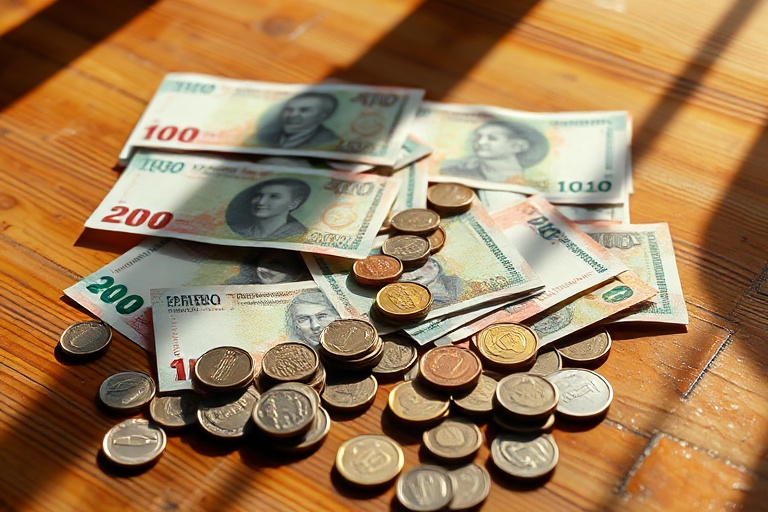
Peso Mexicano: Economic Resilience Amid Global Uncertainty
The Mexican peso has long been a bellwether for Latin America’s economic health, but in recent years, it has also emerged as a surprising bright spot amid global volatility. Once dismissed as a currency prone to sharp fluctuations, the peso has demonstrated remarkable stability, even outperforming many of its emerging-market peers. This shift reflects broader changes in Mexico’s economic policies, trade relationships, and investor confidence.
While the peso’s journey has been anything but linear, its current trajectory offers valuable insights into the country’s economic resilience. From NAFTA’s legacy to nearshoring trends, several factors have converged to reshape perceptions of Mexico’s financial future. Understanding these dynamics requires looking beyond surface-level trends to examine the underlying forces at play.
The Peso’s Recent Performance: A Shift in Perception
For decades, the Mexican peso was synonymous with instability, frequently buffeted by commodity price swings, political uncertainty, and capital flight. However, the narrative began to change in the mid-2010s as structural reforms took hold. The currency’s resilience became particularly evident during the COVID-19 pandemic, when it defied expectations by strengthening against the dollar despite global economic contraction.
One of the peso’s most notable achievements has been its ability to weather U.S. monetary policy shifts. Even as the Federal Reserve raised interest rates aggressively in 2022 and 2023, the peso remained relatively stable—a stark contrast to the volatility seen in other emerging-market currencies like the Argentine peso or the Turkish lira. This stability has not gone unnoticed by investors, who have increasingly favored Mexico as a destination for foreign direct investment.
Industry analysts point to several key drivers behind the peso’s newfound strength. First, Mexico’s central bank, Banxico, has maintained a proactive approach to monetary policy, keeping inflation in check while avoiding the extreme measures seen in other economies. Second, the country’s proximity to the U.S. has made it a prime beneficiary of nearshoring trends, as companies seek to reduce supply chain risks by relocating production closer to their largest market.
Key Factors Behind the Peso’s Resilience
- Strong Macroeconomic Fundamentals: Mexico’s fiscal discipline and low public debt-to-GDP ratio have bolstered investor confidence.
- Diversified Trade Relationships: While the U.S. remains Mexico’s largest trading partner, growing ties with Europe and Asia have reduced dependence on any single market.
- Remittances as a Stabilizing Force: Record-high remittances from Mexican workers abroad have provided a steady inflow of dollars, supporting the peso’s value.
- Energy Sector Reforms: The liberalization of Mexico’s energy sector has attracted foreign investment, further strengthening the currency’s backing.
Broader Implications: What the Peso’s Strength Means for Mexico
The peso’s stability is more than just a currency story—it reflects deeper economic transformations. For one, it has enabled Mexico to reduce borrowing costs, as foreign investors demand lower yields on peso-denominated debt compared to past decades. This has freed up fiscal resources for social programs and infrastructure projects, which in turn support long-term growth.
Moreover, the peso’s strength has had a stabilizing effect on inflation, which had been a persistent challenge for Mexico in the 1990s and early 2000s. By anchoring inflation expectations, the central bank has been able to pursue more predictable monetary policy, reducing the risk of boom-and-bust cycles that once plagued the economy.
Yet the peso’s performance also highlights vulnerabilities. While nearshoring has been a boon, it has concentrated economic activity in a handful of industries, such as automotive and electronics. This leaves Mexico exposed to sector-specific shocks, particularly if global demand weakens. Additionally, political risks remain a wildcard. The current administration’s approach to energy policy and regulatory oversight has drawn both praise and criticism, with some investors warning that recent changes could undermine investor confidence over time.
The Peso in a Global Context: A Comparative Outlook
To appreciate the peso’s resilience, it helps to compare it with other emerging-market currencies. Take the Brazilian real, for example, which has struggled with political turmoil and fiscal imbalances, or the South African rand, which remains highly sensitive to commodity price swings. The Mexican peso, by contrast, has carved out a middle ground—volatile enough to attract speculative interest but stable enough to avoid crisis conditions.
This balance is no accident. Mexico’s central bank has built a reputation for transparency and independence, a rarity in a region where monetary policy is often politicized. The government’s commitment to free-trade agreements, including the USMCA (the successor to NAFTA), has also reassured investors that Mexico remains open for business, even as global trade tensions rise.
Looking ahead, the peso’s trajectory will depend on several variables. The U.S. election cycle could introduce new trade frictions, while domestic policy decisions—such as energy subsidies or labor reforms—may influence investor sentiment. Yet, for now, the peso stands as a testament to Mexico’s ability to adapt and thrive in an unpredictable world.
Conclusion: The Peso as a Symbol of Mexico’s Economic Evolution
The Mexican peso’s journey from instability to strength is a story of resilience, reform, and recalibration. It underscores the importance of sound economic policies, diversified trade relationships, and institutional credibility. While challenges remain, the peso’s performance offers a compelling case study in how emerging markets can navigate global uncertainty.
For investors, the peso represents an opportunity to bet on Mexico’s continued integration into the global economy. For policymakers, it serves as a reminder that stability is not a given but a product of deliberate choices. And for everyday Mexicans, a stronger peso means more purchasing power, lower inflation, and greater economic security.
As Mexico continues to position itself as a key player in global supply chains, the peso will remain a critical barometer of its economic health. Whether it can sustain this momentum will depend on the country’s ability to address its structural challenges while capitalizing on new opportunities. One thing, however, is clear: the peso is no longer just a currency—it is a symbol of Mexico’s economic evolution.
For more insights into Mexico’s economic trends and financial markets, explore our News and Business categories on Dave’s Locker.