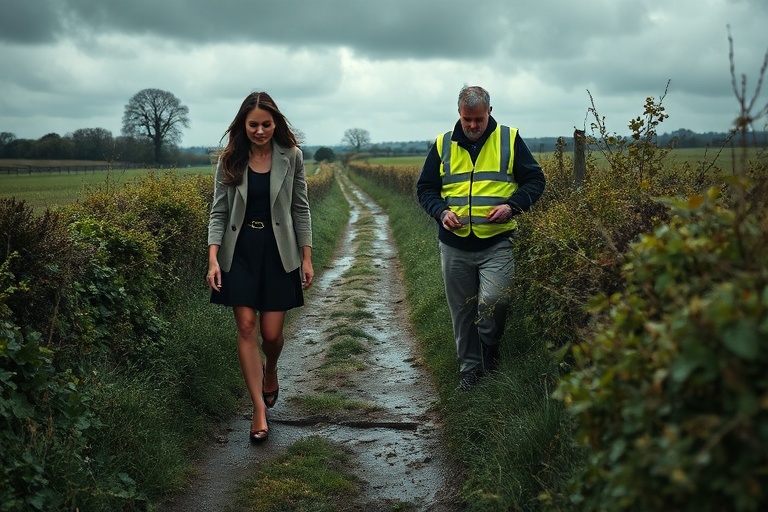
Pippa Middleton Footpath Inquiry Explained: Legal and Community Impact
The Pippa Middleton footpath inquiry has drawn significant attention since its announcement, raising questions about public access rights, private property boundaries, and the responsibilities of landowners. The investigation centers on a stretch of land in Bucklebury, Berkshire, where Middleton’s family owns property adjacent to a popular public footpath. Locals and national observers alike have followed the developments closely, with debates emerging over the balance between private ownership and public access.
At its core, the inquiry examines whether the footpath has been unlawfully obstructed. Reports suggest that barriers and misleading signage may have been placed along the route, potentially violating the Right to Roam principles embedded in British law. The situation has prompted discussions about how such disputes should be resolved when public rights intersect with private property interests.
The Origins of the Dispute
Public footpaths in England and Wales are protected under the Countryside and Rights of Way Act 2000, which guarantees access to certain areas for walking, cycling, and horseback riding. The footpath in question, known as Public Footpath 10, runs near Pippa Middleton’s family home and has been used by locals for generations. However, signs of tension surfaced when residents noticed changes along the route.
According to local reports, new barriers and signs appeared, directing walkers away from their traditional path. Some residents claimed these alterations made the footpath difficult to follow, effectively discouraging its use. A formal complaint was lodged with the local council, which then referred the matter to the relevant authorities for investigation.
The inquiry’s scope expanded when it was revealed that the barriers may have been installed without proper consultation or legal authorization. This raised concerns about whether private landowners can unilaterally alter public access routes without consequence. The situation has since become a focal point for discussions on property rights versus public access.
Legal and Ethical Considerations
The legal framework governing public footpaths is well-established, but enforcement often proves challenging. Under UK law, landowners are prohibited from obstructing public rights of way without permission from the local council. If found in violation, they may be required to remove obstructions and could face penalties.
Ethically, the case touches on broader questions of fairness and inclusivity. Public footpaths serve as vital arteries for communities, particularly in rural areas where alternative routes may be limited. When access is restricted, even unintentionally, it can disproportionately affect those who rely on these paths for daily exercise, commuting, or leisure.
Legal experts have noted that the inquiry could set a precedent for similar disputes across the country. If the barriers are deemed unlawful, landowners may need to reassess how they manage their properties to avoid future conflicts. Conversely, if the inquiry finds in favor of the landowner, it could embolden others to restrict access in comparable situations.
Key Questions Raised by the Inquiry
- Were the barriers installed with the intention of obstructing public access, or were they part of unrelated property maintenance?
- Did the landowner seek or receive approval from the local council before altering the footpath?
- How will the inquiry’s findings influence future disputes over public rights of way?
- What measures can be taken to ensure that public footpaths remain accessible without infringing on private property rights?
Community and Political Reactions
The inquiry has sparked a wave of reactions from the local community and beyond. Residents of Bucklebury have expressed mixed feelings, with some supporting Middleton’s family and others siding with the public’s right to access the footpath. Public meetings have been held to discuss the issue, highlighting the divide between those who prioritize property rights and those who advocate for open access.
Local councilors have emphasized the importance of resolving the dispute amicably. One councilor stated, “The goal is to find a solution that respects both the landowner’s rights and the community’s access needs. Mediation may be the best path forward.” This approach aligns with broader efforts to address such conflicts through dialogue rather than litigation.
On a national level, the inquiry has drawn attention from advocacy groups like the Open Spaces Society, which campaigns for the preservation of public access to green spaces. The organization has called for clearer guidelines to prevent similar disputes in the future, urging landowners and local authorities to collaborate on maintaining accessible routes.
What Happens Next?
As the inquiry progresses, several possible outcomes could emerge. If the authorities determine that the footpath was unlawfully obstructed, the landowner may be required to remove the barriers and restore the path to its original state. Alternatively, the inquiry could conclude that the alterations were justified, though such a finding would likely face pushback from the community.
Regardless of the outcome, the case underscores the need for proactive measures to prevent such disputes. Landowners and local councils could benefit from clearer communication channels to address concerns before they escalate. Public awareness campaigns may also help educate communities about their rights and the proper procedures for reporting obstructions.
For now, the inquiry serves as a reminder of the delicate balance between private property and public access. As rural landscapes continue to evolve, so too will the challenges of preserving the rights of walkers, cyclists, and nature enthusiasts alike.
Conclusion
The Pippa Middleton footpath inquiry is more than a local dispute—it is a microcosm of broader tensions surrounding land use and public access in the UK. As the investigation unfolds, it will likely prompt further discussions about how to reconcile competing interests while upholding the principles of fairness and openness. Whatever the outcome, the case highlights the importance of vigilance in protecting the public’s right to enjoy the countryside.
For those invested in this issue, staying informed about the inquiry’s progress will be crucial. Whether through local council updates or advocacy group reports, understanding the nuances of the case can help shape future conversations about public access and property rights.