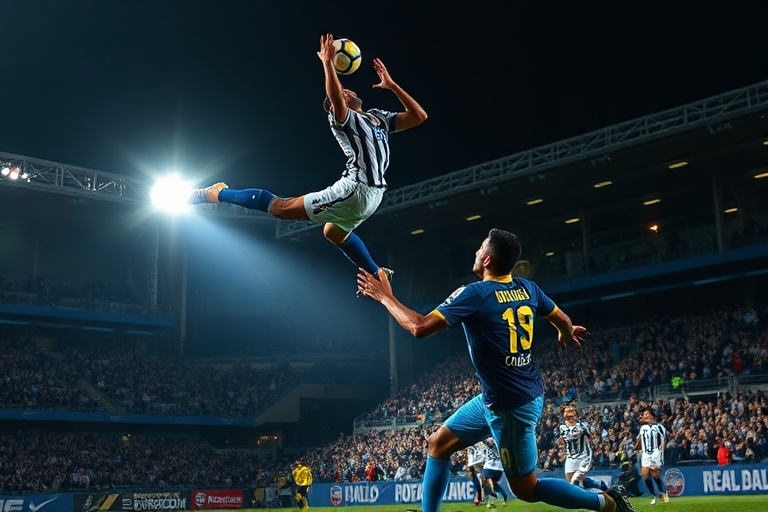
Few fixtures in Spanish football carry the same historical weight as a showdown between Real Madrid and Real Oviedo. Though the latter has spent much of its history in the lower divisions, the rare meetings between these two clubs have produced moments of drama, nostalgia, and tactical intrigue. The recent resurgence of Real Oviedo in La Liga has reignited interest in what was once a David vs Goliath narrative in Spanish football.
The rivalry between the two clubs is not rooted in fierce competition but in the contrasting identities they represent. Real Madrid stands as the global icon of footballing excellence, while Real Oviedo embodies the resilient spirit of smaller clubs fighting to maintain their place among Spain’s elite. When these sides meet, it’s more than just a match—it’s a celebration of football’s diversity and a reminder that the beautiful game thrives beyond the spotlight.
The Historical Context: From Humble Beginnings to Brief Encounters
Real Oviedo was founded in 1926 and spent several decades in La Liga during the mid-20th century, often punching above its weight. The club’s golden era came in the 1990s, when it regularly competed in the top flight, famously finishing sixth in the 1990-91 season under the guidance of manager Javier Irureta. During that period, Real Oviedo became known for its attacking style and a squad that included talents like Czech striker Pavel Hapal and Spanish midfielder Juanele.
Real Madrid, on the other hand, has been a constant presence at the summit of Spanish football since its inception in 1902. With 35 La Liga titles and 20 Copa del Rey trophies, Los Blancos have defined success in domestic football. Their encounters with Real Oviedo were infrequent but memorable, often marked by Real Madrid’s dominance, though Oviedo occasionally pulled off surprises. One such instance occurred in the 1991-92 season, when Oviedo defeated Real Madrid 4-3 at the Santiago Bernabéu in a match that showcased the Asturian side’s attacking flair.
The contrast between the two clubs extends beyond their histories. Real Madrid has always been a global brand, attracting superstars like Cristiano Ronaldo, Zinedine Zidane, and now Jude Bellingham. Real Oviedo, meanwhile, has operated with limited resources, relying on homegrown talent and a strong connection with its local fanbase in Asturias. This disparity has only added to the intrigue when the two sides meet, as it forces a clash of philosophies—glamour versus grit, star power versus loyalty.
Tactical Breakdown: How the Clash of Styles Plays Out on the Pitch
When Real Madrid and Real Oviedo face off, the tactical battle is as compelling as the individual matchups. Real Madrid typically sets up in a 4-3-3 formation, prioritizing possession, high pressing, and rapid transitions. Their system is designed to control games through midfield dominance, with players like Luka Modrić and Toni Kroos dictating tempo from deep. The front three—comprising Vinícius Júnior, Karim Benzema (or now potentially Kylian Mbappé), and Rodrygo—offers both creativity and directness, making them a constant threat.
Real Oviedo, when playing against top-tier opposition, often adopts a 5-4-1 or 4-4-2 formation, prioritizing defensive solidity and quick counterattacks. The Asturian side’s approach is pragmatic, focusing on minimizing mistakes and exploiting spaces when the opposition overcommits. Their midfielders, such as Borja Bastón and Sergi Enrich, are tasked with disrupting play and transitioning quickly into attack, often relying on the pace of wingers to stretch defenses.
In recent years, Real Oviedo has evolved under managers like José Luis Mendilibar, who has instilled a disciplined yet flexible system. The team’s ability to absorb pressure and strike on the break has made them a difficult opponent for even the biggest clubs. When facing Real Madrid, Oviedo’s strategy often revolves around frustrating the opposition’s playmakers, forcing mistakes, and capitalizing on set-pieces—a traditional strength of Asturian sides.
Key Tactical Considerations
- Midfield Battle: Real Madrid’s control of possession will be challenged by Oviedo’s midfielders, who excel in pressing and regaining the ball quickly.
- Defensive Organization: Oviedo’s back five must stay compact to prevent Real Madrid’s wingers from exploiting space behind the full-backs.
- Set-Piece Threat: Both teams are vulnerable at set-pieces, but Oviedo’s aerial presence in defense and attack could prove decisive.
- Transition Play: Real Madrid’s ability to transition from defense to attack in seconds will test Oviedo’s defensive structure.
Broader Implications: What This Match Means for Spanish Football
The resurgence of Real Oviedo in La Liga is more than just a feel-good story—it highlights a growing trend in Spanish football. Clubs with limited financial resources are finding ways to compete through smart recruitment, tactical innovation, and strong fan engagement. Oviedo’s rise reflects the resilience of traditional football clubs in an era dominated by financial powerhouses like Real Madrid and FC Barcelona.
For Real Madrid, matches against teams like Oviedo serve as a reminder of the league’s depth. While the focus is often on the Champions League or high-profile El Clásico fixtures, games against mid-table sides are crucial for maintaining squad sharpness and squad morale. These matches also provide opportunities for young talents to gain valuable minutes, as seen with players like Eduardo Camavinga and Aurélien Tchouaméni integrating into the first team.
From a broader perspective, the Real Madrid vs Real Oviedo fixture underscores the importance of competitive balance in La Liga. The league thrives when multiple clubs can challenge for European spots, not just the usual suspects. Oviedo’s presence at the top level adds unpredictability and excitement, ensuring that every matchday carries narrative weight. It also reinforces the idea that football is not just about financial muscle but about identity, tradition, and the passion of the fans.
The Asturian club’s ability to compete against Europe’s elite could inspire other smaller clubs to invest in youth development and scouting networks. If Oviedo can sustain their top-flight status, it may encourage a shift in how La Liga is perceived—not just as a two-horse race, but as a league with genuine competition across the board.
Looking Ahead: What’s Next for Both Clubs?
For Real Madrid, the immediate priority will be maintaining their title challenge in La Liga and making a deep run in the Champions League. Carlo Ancelotti’s side has the firepower to go all the way in Europe, but domestic consistency remains key. Matches against sides like Oviedo, while not glamorous, are essential for maintaining rhythm and squad depth.
Real Oviedo, meanwhile, will be focused on securing their place in La Liga for another season. Survival is the primary objective, but the club’s ambitions extend beyond mere preservation. With a new generation of talent emerging from their academy and a loyal fanbase behind them, Oviedo is positioning itself as a club that punches above its weight. Their ability to attract promising young players who may not yet be ready for the biggest clubs could become a model for other mid-sized teams.
As Spanish football continues to evolve, the rivalry between Real Madrid and Real Oviedo may remain sporadic, but its significance grows with each encounter. These matches are a reminder that football’s beauty lies in its unpredictability and the stories it creates. Whether it’s a 1990s classic or a modern-day clash, the duels between these two sides carry a legacy that transcends mere statistics.
For fans of the beautiful game, such fixtures are a celebration of football’s diversity. They remind us that behind every headline-grabbing superstar, there are clubs fighting for their place in the sun—clubs like Real Oviedo, whose spirit and determination make the sport so compelling.
As the final whistle blows in their next meeting, one thing is certain: the story of Real Madrid vs Real Oviedo is far from over. It’s a narrative that continues to evolve, driven by passion, resilience, and the unyielding love for football.
Stay tuned to Dave’s Locker Sports for comprehensive coverage of La Liga and the latest football news.