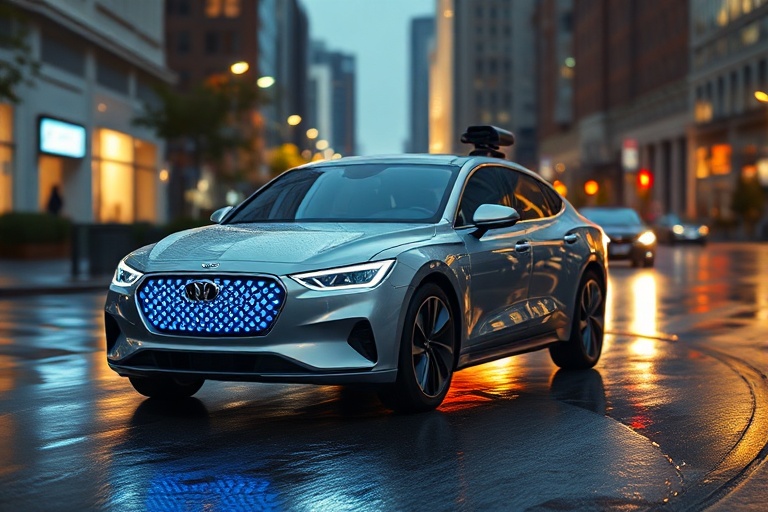
Self-Driving Cars: The Future of Autonomous Vehicles in 2024
Autonomous vehicles stand at the intersection of innovation and practicality, reshaping how society thinks about transportation. While fully self-driving cars remain a work in progress, the technology has evolved rapidly over the past decade. From early experiments in the 2010s to today’s advanced driver-assistance systems, the journey toward full autonomy has been marked by both breakthroughs and setbacks. The implications stretch far beyond convenience—they touch on safety, regulation, urban planning, and even human behavior.
The State of Self-Driving Technology in 2024
As of 2024, self-driving technology has reached a pivotal stage. Most major automakers now offer some form of advanced driver-assistance systems (ADAS), such as Tesla’s Autopilot and Ford’s BlueCruise. These systems can handle highway driving, maintain lane position, and even change lanes with minimal input. However, true Level 5 autonomy—where no human intervention is required—remains elusive.
Several companies, including Waymo, Cruise, and Zoox, have deployed robotaxis in limited urban areas. These services operate under strict regulatory oversight, often restricted to specific geofenced zones. While they provide a glimpse into the future, challenges persist. Safety incidents, regulatory hurdles, and public skepticism continue to slow widespread adoption. The technology itself is impressive, but the infrastructure needed to support it—such as smart roads and updated traffic systems—has not kept pace.
Where Autonomous Driving Stands Technologically
Self-driving systems rely on a combination of sensors, AI, and real-time data processing. Key components include:
- LiDAR: Measures distances using laser pulses, creating high-resolution 3D maps of surroundings.
- Cameras: Provide visual context, detecting traffic lights, road signs, and pedestrians.
- Radar: Tracks speed and distance of nearby objects, even in poor visibility.
- AI Algorithms: Process sensor data to make split-second decisions, from braking to lane changes.
Despite these advancements, edge cases—such as unpredictable human drivers, construction zones, or extreme weather—still pose significant challenges. Machine learning models must continuously improve to handle scenarios they’ve never encountered before.
Safety and Regulation: The Balancing Act
The promise of self-driving cars lies in their potential to reduce accidents caused by human error. According to the National Highway Traffic Safety Administration (NHTSA), over 90% of crashes involve some form of driver error. Autonomous vehicles, proponents argue, could drastically cut these numbers by eliminating fatigue, distraction, and impaired driving.
Yet, the transition is not without risks. High-profile accidents involving autonomous vehicles, such as Uber’s 2018 fatal crash in Arizona, have raised serious concerns. Regulators have responded with cautious optimism, implementing strict testing protocols. In the U.S., the NHTSA oversees safety assessments, while individual states set their own rules for deployment. Europe and China have adopted similar frameworks, though approaches vary.
One of the biggest debates centers on liability. If a self-driving car causes an accident, who is responsible—the manufacturer, the software developer, or the human owner? Legal experts anticipate years of litigation before clear precedents emerge. Until then, public trust in the technology remains fragile.
Broader Implications: Beyond the Driver’s Seat
The rise of autonomous vehicles will ripple through society in ways that extend far beyond transportation. Urban planning, for instance, may shift as parking lots and garages become obsolete. Ride-sharing services could lead to fewer cars on the road, reducing congestion and emissions. Some cities are already redesigning infrastructure to accommodate AVs, installing smart traffic lights and dedicated lanes.
Economically, the self-driving revolution could disrupt industries. Traditional automakers face pressure to adapt or risk obsolescence. Meanwhile, tech companies like Waymo and Cruise are pouring billions into R&D, positioning themselves as leaders in the mobility sector. The job market will also evolve, with demand for new roles in AI training, fleet management, and cybersecurity.
Yet, not all changes will be positive. Critics warn of job losses in driving-related professions, from truckers to taxi drivers. There are also concerns about data privacy, as AVs collect vast amounts of location and behavior data. Who owns this data? How is it used? These questions remain largely unanswered.
Key Takeaways for Consumers and Policymakers
As the technology matures, several factors will determine its success:
- Public Acceptance: Consumer trust is critical. High-profile accidents and skepticism could delay adoption.
- Regulatory Clarity: Consistent laws across states and countries will be necessary for seamless integration.
- Infrastructure Upgrades: Roads, traffic systems, and digital networks must evolve to support AVs.
- Ethical Frameworks: Decision-making algorithms must be transparent and accountable.
- Cost and Accessibility: Early models will likely be expensive, limiting access to wealthier consumers.
Conclusion: A Slow but Inevitable Transition
Self-driving cars are not a matter of if, but when. While full autonomy may still be years away, incremental advancements are already transforming the way we move. The path forward requires collaboration among automakers, regulators, and the public. Safety must remain the top priority, but so too must innovation. The road ahead is complex, but the potential benefits—fewer accidents, reduced emissions, and new economic opportunities—make it worth pursuing.
For now, the best approach is patience. The technology is promising, but the journey is just beginning. As autonomous vehicles inch closer to mainstream adoption, society must prepare for the changes they will bring.
To explore more on how autonomous vehicles are reshaping industries, check out Technology Trends and Automotive Innovations on Dave’s Locker.