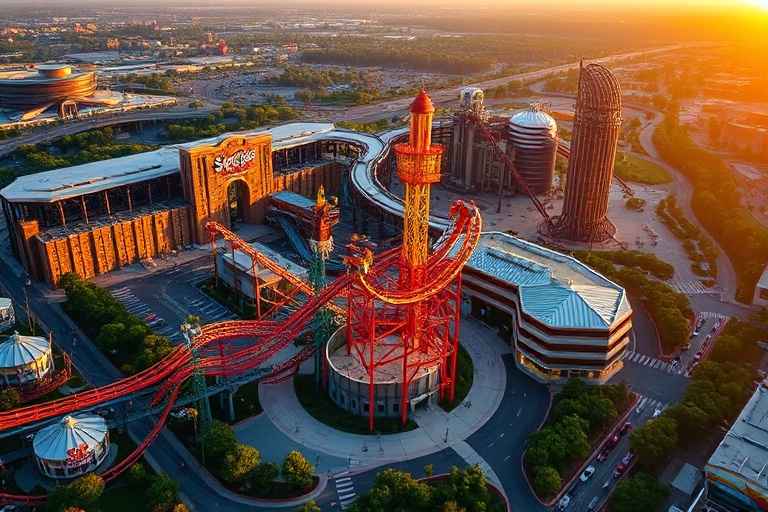
Since its founding in 1961, Six Flags has grown from a single Texas-based theme park into one of the most recognizable names in global entertainment. With 20 properties across North America, the company operates some of the most thrilling roller coasters and immersive attractions in the world. More than just a collection of rides, Six Flags represents a carefully crafted ecosystem of adrenaline, nostalgia, and family entertainment.
The brand’s evolution reflects broader trends in the amusement industry. While early parks focused on traditional carnival-style attractions, Six Flags pioneered the modern mega-park concept with elaborate theming, seasonal events, and record-breaking coasters. Today, the company balances innovation with nostalgia, maintaining classic rides like the historic Superman: Ultimate Flight while introducing cutting-edge experiences like the recently opened Tigris at Six Flags Over Florida.
The History Behind the Thrills
Six Flags began as a modest operation in Arlington, Texas, known as “Six Flags Over Texas.” The name referenced the six different flags that had flown over the state throughout its history. Founder Angus Wynne Jr. envisioned a park that would celebrate Texas heritage while offering unprecedented entertainment value. Within its first decade, the park introduced groundbreaking attractions like the Mine Train roller coaster, which remains operational today.
By the 1970s and 1980s, Six Flags expanded aggressively across the United States. Acquisitions included iconic properties like Astroland in New York and Great Adventure in New Jersey. Each park maintained unique themes while adopting the Six Flags brand identity. The company’s growth mirrored the rise of suburban leisure culture, positioning theme parks as essential family destinations.
The 1990s brought corporate restructuring and a new era of innovation. Premier Parks acquired Six Flags in 1998, leading to rapid expansion into international markets. Today, the company operates parks in Mexico and Canada, with plans for future growth in emerging markets. Despite financial challenges in recent years, Six Flags has maintained its position as a leader in the amusement industry through strategic partnerships and relentless focus on guest experience.
What Makes Six Flags Different
Six Flags distinguishes itself through several key strategies that set it apart from competitors. First, the company’s portfolio includes a mix of regional parks and destination resorts. While smaller parks like Six Flags Hurricane Harbor Oaxtepec serve local markets, flagship properties like Six Flags Magic Mountain attract visitors from across the country. This diversity allows Six Flags to cater to different demographics and travel patterns.
The parks themselves are designed as immersive experiences rather than mere collections of rides. Each property features distinct theming, from the Gothic architecture of Six Flags Over Georgia to the tropical setting of Six Flags Discovery Kingdom. This approach creates stronger emotional connections with guests, encouraging repeat visits and fostering brand loyalty.
Six Flags also prioritizes innovation in ride development. The company maintains an extensive in-house design team that collaborates with leading manufacturers to create signature attractions. Recent additions like Zadra at Six Flags Over Texas demonstrate the company’s commitment to pushing boundaries in coaster design. With multiple record-breaking launches planned for upcoming seasons, Six Flags continues to shape the future of amusement park technology.
- Seasonal Events: Six Flags transforms its parks with elaborate seasonal events like Fright Fest and Holiday in the Park, extending operating seasons and creating new revenue streams.
- Membership Programs: The company’s popular membership programs offer benefits like unlimited visits, discounts, and exclusive perks, driving recurring revenue.
- Dining and Retail: Parks feature diverse dining options ranging from quick-service snacks to themed restaurants, while retail locations offer exclusive merchandise.
- Educational Initiatives: Six Flags collaborates with schools on STEM programs that use roller coasters to teach physics and engineering concepts.
The Business of Fun
Running a successful amusement park requires more than just great rides. Six Flags operates in a complex industry characterized by high capital expenditures, seasonal demand fluctuations, and intense competition. The company’s business model relies on several revenue streams beyond ticket sales. Food and beverage operations generate significant margins, with parks often achieving per-guest spending of $50 or more.
Seasonal passes represent another crucial component of Six Flags’ financial strategy. Annual memberships provide predictable revenue while encouraging frequent visits. The company’s most dedicated fans, known as “passholders,” often visit parks dozens of times per year, creating a stable customer base even during economic downturns.
Technology plays an increasingly important role in Six Flags’ operations. The company has invested heavily in digital ticketing, mobile apps, and cashless payment systems. These innovations improve guest experiences while providing valuable data on visitor behavior. Recent partnerships with companies like Samsung have introduced new ways for guests to interact with park attractions through augmented reality and mobile gaming.
However, the amusement park industry faces significant challenges. Rising insurance costs, labor shortages, and changing consumer preferences have impacted profitability. Six Flags has responded by diversifying its offerings with water parks, hotel properties, and entertainment partnerships. The recent acquisition of the Daffy’s Fun House IP demonstrates the company’s willingness to explore new licensing opportunities.
The Future of Six Flags
Looking ahead, Six Flags is positioning itself for continued growth through several strategic initiatives. The company plans to open new parks in underserved markets, including a highly anticipated location in Saudi Arabia. These international expansions will help diversify revenue streams while introducing the Six Flags brand to new audiences.
Technology will remain a key focus, with investments in virtual reality experiences and enhanced mobile applications. Six Flags has also expressed interest in developing partnerships with major entertainment franchises to create themed attractions based on popular movies and television shows.
The company’s commitment to sustainability represents another important evolution. Recent initiatives include solar panel installations, water conservation programs, and partnerships with environmental organizations. These efforts address growing consumer concerns while reducing operational costs.
Despite these ambitious plans, Six Flags must navigate a rapidly changing entertainment landscape. The rise of streaming services, home entertainment options, and alternative leisure activities presents ongoing challenges. However, the company’s strong brand recognition, extensive property portfolio, and innovative spirit position it well for continued success.
For thrill-seekers and families alike, Six Flags remains a premier destination. Whether experiencing the world’s tallest, fastest, or most innovative roller coasters, guests continue to find joy and excitement within these carefully crafted environments. As the company approaches its seventh decade of operation, Six Flags demonstrates that the magic of amusement parks extends far beyond mere entertainment—it’s a vital part of modern culture and childhood memories.