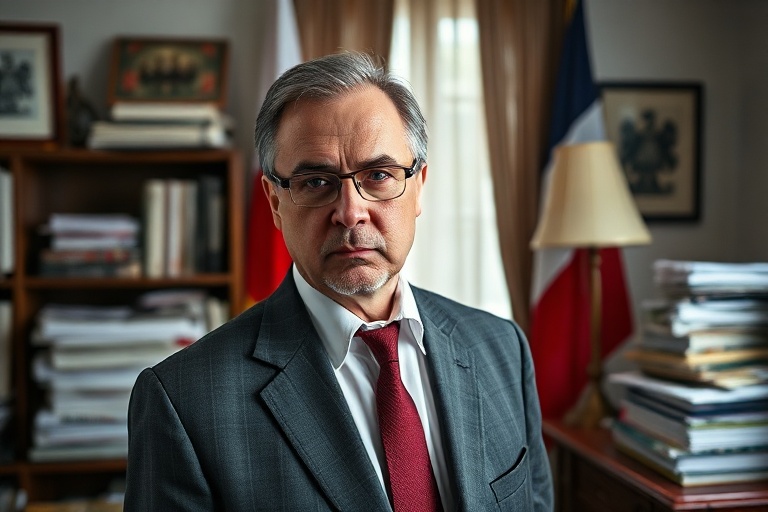
Who Is Sławomir Mentzen?
Sławomir Mentzen is a Polish politician who has become one of the most recognizable figures in the country’s conservative and nationalist circles. Born on July 13, 1984, in Toruń, he studied law at the Nicolaus Copernicus University in his hometown before entering politics. Mentzen is a co-founder of the New Hope political party, which emerged from the broader right-wing movement in Poland. His political career has been marked by a firm stance on traditional values, economic liberalism, and skepticism toward the European Union’s regulatory influence.
Mentzen’s rise to prominence accelerated in 2019 when he was elected to the Polish parliament, the Sejm, representing the Toruń constituency. His oratory skills and uncompromising rhetoric quickly made him a key voice in debates about Poland’s future, particularly regarding sovereignty, cultural identity, and economic policy. While he remains a polarizing figure, his influence extends beyond Poland’s borders, as his views resonate with similar movements across Europe and beyond.
The Political Philosophy Behind Mentzen’s Movement
Mentzen’s political ideology blends economic liberalism with cultural conservatism. He advocates for free-market policies, lower taxes, and reduced state intervention in the economy. At the same time, he strongly opposes progressive social policies, including LGBTQ+ rights, gender ideology, and what he describes as “foreign cultural impositions” on Polish society. His rhetoric often emphasizes the preservation of Poland’s Catholic heritage and national sovereignty, positioning him as a defender against globalization’s perceived threats.
His party, New Hope, positions itself as an alternative to the dominant Law and Justice (PiS) party, which governed Poland for eight years before losing power in 2023. While PiS leaned heavily on welfare policies and state-led economic interventions, New Hope promotes a more libertarian approach to economics. Mentzen’s vision includes privatization, deregulation, and a reduction in public spending, which he argues will stimulate growth and reduce bureaucratic inefficiency.
The party’s platform also includes strict immigration controls and opposition to EU federalism. Mentzen has been vocal about his belief that the EU’s regulatory framework undermines Poland’s ability to set its own laws, particularly on issues like climate policy and LGBTQ+ rights. His stance reflects a broader trend in Central and Eastern Europe, where many voters and politicians view the EU as an encroaching authority that threatens national identity.
Global Connections: Mentzen’s Influence Beyond Poland
Mentzen’s ideas have found traction in other parts of Europe, particularly in countries with rising nationalist movements. His speeches and interviews have been shared widely in conservative media outlets, and he has been invited to speak at events alongside figures like Hungary’s Viktor Orbán and Spain’s Vox party leaders. These connections highlight a growing network of politicians who share similar views on sovereignty, tradition, and opposition to progressive social policies.
In the United States, Mentzen’s economic liberalism has drawn comparisons to libertarian and right-wing populist movements. While his cultural conservatism aligns more closely with the American right, his free-market advocacy resonates with some libertarian factions. This transatlantic alignment has sparked discussions about the potential for cross-border collaboration among like-minded political groups.
However, Mentzen’s global reach is not without controversy. Critics argue that his rhetoric often crosses into exclusionary and divisive territory, particularly regarding LGBTQ+ rights and immigration. Human rights organizations have condemned his statements, and the European Parliament has repeatedly scrutinized Poland’s record on judicial independence and media freedom—a context in which Mentzen’s party plays a role.
Key International Relationships
- Viktor Orbán (Hungary): Mentzen has praised Orbán’s policies on sovereignty and cultural preservation, often citing Hungary as an example of resisting EU overreach.
- Vox (Spain): The Spanish far-right party has expressed solidarity with New Hope, particularly on issues like immigration and national identity.
- Conservative Media Outlets: Mentzen frequently appears in outlets like Breitbart and The Daily Wire, where his views on tradition and economics are highlighted.
Controversies and Public Perception
Mentzen’s political career has been defined by confrontation. His comments on LGBTQ+ issues, including his opposition to pride marches and same-sex marriage, have drawn international condemnation. In 2021, he described LGBTQ+ ideology as “more destructive than communism,” a statement that sparked widespread outrage. While his supporters praised his honesty, critics accused him of promoting hate speech.
Another contentious moment came in 2022 when he suggested that Poland should reject EU climate policies, arguing that they would harm the country’s economy. The statement drew criticism from environmental groups and EU officials, who accused him of undermining collective efforts to combat climate change. Mentzen’s response—that Poland should prioritize its own interests—reinforced his image as a nationalist willing to challenge international consensus.
Domestically, Mentzen’s party has struggled to gain significant traction. Despite his high-profile status, New Hope has not yet become a major force in Polish politics. Polls consistently place the party below 10% support, far behind the ruling Civic Coalition and the opposition Law and Justice. Some analysts attribute this to the party’s radical stances, which alienate moderate voters, while others suggest that Mentzen’s rhetoric lacks the populist appeal of PiS’s welfare-focused messaging.
The Future of Mentzen’s Political Career
As Poland navigates its political future following the 2023 election loss of the Law and Justice party, Mentzen’s role remains uncertain. His party is positioning itself as a viable alternative for voters disillusioned with both the ruling coalition and the traditional opposition. However, its radical platform may limit its appeal to a broader electorate.
Internationally, Mentzen’s influence could grow if nationalist movements continue to gain ground in Europe and beyond. His ability to articulate a clear, if controversial, vision for Poland’s future ensures that he will remain a figure of both admiration and criticism. Whether his party can translate that vision into political power, however, remains an open question.
For observers of global politics, Mentzen represents a case study in how nationalist and libertarian ideas can intersect, creating a unique brand of conservatism that challenges both left-wing progressivism and traditional right-wing populism. His career will likely be watched closely in the coming years as a barometer for the shifting tides of European politics.
To explore more about right-wing political movements in Europe, visit our Politics category. For deeper analysis on conservative ideologies, check out our Analysis section.
A Final Thought
Sławomir Mentzen’s journey from a law student in Toruń to a leading voice in Poland’s political landscape reflects the broader tensions shaping modern Europe. His blend of economic liberalism and cultural conservatism offers a compelling, if contentious, alternative to the dominant political narratives. Whether this alternative will gain lasting traction remains to be seen, but Mentzen’s story is undeniably one of the most intriguing in contemporary European politics.