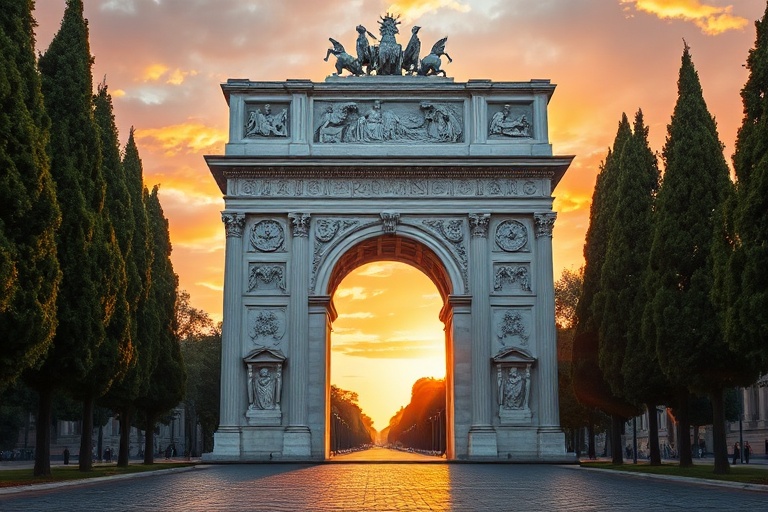
The triumphal arch stands as one of the most enduring symbols of victory, power, and architectural ambition in human history. Originating in ancient Rome, these monumental structures were designed to commemorate military triumphs, honor emperors, and showcase the might of the empire. Over centuries, the concept spread across civilizations, evolving in form and function while retaining its core purpose: to celebrate conquest and legacy.
Today, triumphal arches are more than mere relics of the past. They serve as cultural touchstones, influencing everything from public monuments to national identities. This article explores the origins, architectural evolution, and symbolic meanings of triumphal arches, while examining their lasting impact on modern society.
The Origins of the Triumphal Arch in Ancient Rome
The earliest triumphal arches emerged in Rome during the 2nd century BCE, though their roots trace back to Etruscan and Greek traditions. The Romans refined the concept, creating freestanding arches that could be adorned with sculptures, inscriptions, and reliefs depicting military campaigns. These structures were not just decorative; they were integral to Roman civic ritual.
The first recorded triumphal arch was built in 196 BCE to honor Lucius Stertinius, a general who had won victories in Spain. By the time of Augustus, arches became standardized as symbols of imperial authority. The Arch of Augustus in Rome, erected in 29 BCE, set a precedent for future designs with its single, central passageway flanked by engaged columns.
Roman triumphal arches served multiple functions:
- Military propaganda: They visually reinforced Rome’s dominance over conquered territories.
- Public spectacle: Triumphant generals paraded beneath them during victory processions.
- Architectural innovation: Their design incorporated Greek orders (Doric, Ionic, Corinthian) with Roman engineering prowess.
Architectural Evolution: From Rome to the Modern Era
The triumphal arch’s design evolved significantly from its Roman origins. While early arches were simple and functional, later iterations—such as the Arch of Constantine (315 CE)—featured elaborate sculptural programs and reused spolia (repurposed materials) to underscore dynastic legitimacy. Medieval and Renaissance architects reinterpreted the form, often integrating arches into city gates or church facades.
In the 17th and 18th centuries, European monarchs revived the triumphal arch as a tool of political messaging. The Arc de Triomphe in Paris (1806–1836), commissioned by Napoleon, exemplified this trend. Unlike its Roman predecessors, it incorporated neoclassical elements and celebrated a modern empire rather than an ancient one. Its massive scale—50 meters tall and 45 meters wide—reflected the ambitions of the French state.
Key architectural features of triumphal arches include:
- Passageways: Typically one or three, symbolizing entry into a new era of prosperity.
- Attic story: The upper section often bore inscriptions or statues.
- Decorative reliefs: Scenes of battles, processions, or allegorical figures.
- Engaged columns: Fluted or plain, supporting entablatures.
Symbolism and Cultural Significance
Beyond their aesthetic and structural roles, triumphal arches carry deep symbolic weight. They represent the intersection of power, memory, and public space. In Rome, arches like the Arch of Titus (81 CE) commemorated specific victories, such as the sack of Jerusalem, while also serving as reminders of imperial authority. The inscriptions—often in Latin—glorified emperors and their achievements, ensuring their legacies endured.
In later centuries, triumphal arches took on new meanings. The Wellington Arch in London (1828–1833), originally a gateway to Buckingham Palace, later commemorated Britain’s military successes. Its relocation in 1883 to a less prominent site reflected shifting urban priorities, demonstrating how these monuments adapt—or are repurposed—over time.
Today, triumphal arches continue to evoke strong reactions. Some see them as relics of colonialism or militarism, while others view them as artistic triumphs. The debate surrounding Confederate monuments in the U.S., for instance, has forced a reconsideration of how triumphal architecture intersects with modern values. Should these structures be preserved, contextualized, or removed? The answer often depends on historical context and contemporary perspectives.
Triumphal Arches in the Modern World
The legacy of the triumphal arch lives on in unexpected ways. Modern cities often incorporate arch-like structures into urban planning, not to celebrate conquest, but to mark milestones or define public spaces. The Gateway Arch in St. Louis (1965), for example, symbolizes America’s westward expansion, though its design—an inverted catenary curve—owes more to engineering innovation than Roman tradition.
Even in digital spaces, the concept persists. Video games like Assassin’s Creed feature triumphal arches as backdrops for historical storytelling, while films often use them to evoke grandeur or nostalgia. The enduring appeal of these structures lies in their ability to condense history into a single, striking form.
Yet, the triumphal arch’s role in the 21st century is not without controversy. As societies grapple with questions of identity and memory, these monuments face scrutiny. Some cities have added plaques to provide historical context, while others have dismantled problematic arches altogether. The debate underscores a fundamental truth: triumphal arches are not static symbols but living ones, shaped by the eras that interpret them.
Conclusion
The triumphal arch is a testament to humanity’s desire to monumentalize triumph—whether military, political, or cultural. From the dusty streets of ancient Rome to the bustling squares of modern metropolises, these structures have evolved in form and function while retaining their core purpose: to commemorate and inspire. They remind us that architecture is not merely about bricks and mortar but about the stories we choose to tell—and how we choose to remember them.
As we move forward, the triumphal arch will undoubtedly continue to adapt, reflecting the values and contradictions of each new generation. Whether celebrated or contested, its presence endures as a bridge between past and present, a silent witness to the ebb and flow of history.