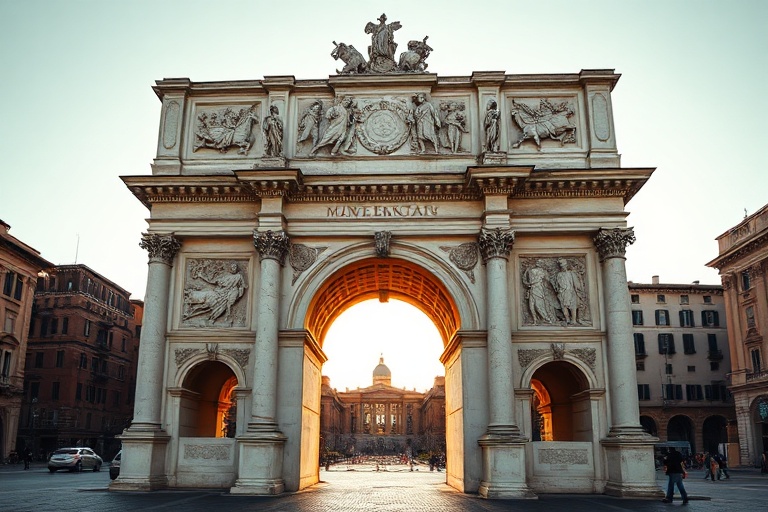
triumphal arch
Iconic Symbols of Victory and Legacy
The triumphal arch stands as one of humanity’s most enduring architectural achievements. These monumental structures, originally conceived in ancient Rome, were designed not merely as gateways but as grand declarations of power, conquest, and cultural identity. With their towering columns, intricate carvings, and symbolic reliefs, triumphal arches have transcended their original purpose to become global icons of triumph and memory.
From the sun-baked streets of Rome to the bustling boulevards of Paris, these arches tell stories of empires, revolutions, and human aspiration. Their design has been replicated across continents, adapted by cultures to reflect their own values while preserving the essence of celebration. Understanding the triumphal arch requires examining its origins, its evolution, and the ways it continues to shape public spaces today.
The Birth of a Monument: Rome’s Architectural Legacy
The concept of the triumphal arch emerged in the Roman Republic, evolving from temporary wooden structures to permanent stone monuments. The first known arches were built to honor military victories and public achievements, often adorned with reliefs depicting battles, captives, and triumphant generals. The Arch of Titus, erected in 81 CE, is one of the earliest and most preserved examples, commemorating the emperor’s siege of Jerusalem.
These arches were not mere decoration; they were propaganda tools. Positioned along major processional routes, they framed the return of victorious armies, ensuring that Rome’s triumphs were etched into the collective memory. The use of spolia—reused materials from conquered lands—further underscored the empire’s dominance, transforming enemy resources into symbols of Roman power.
By the time of Emperor Constantine, arches had become even more elaborate, incorporating Christian symbolism while maintaining their traditional forms. The Arch of Constantine, built in 315 CE, is a fascinating blend of reused sculptures and new carvings, reflecting both continuity and change in Roman culture.
A Global Phenomenon: How Triumphal Arches Spread Across Continents
The influence of the Roman triumphal arch extended far beyond Italy. In medieval Europe, arches took on religious significance, often marking the entrances to cathedrals and abbeys. The Porte Saint-Denis in Paris, constructed in 1672, exemplifies the Baroque adaptation of the Roman model, celebrating military victories under Louis XIV while echoing the grandeur of antiquity.
In the Americas, Spanish conquistadors and later colonial powers erected triumphal arches to assert their dominance and mark the founding of new cities. The Arco de los Cabos in Mexico City, built in 1730, is a striking example of Baroque artistry, blending indigenous craftsmanship with European design. Meanwhile, in Asia, arches like the India Gate in New Delhi—inspired by the Arc de Triomphe—served as tributes to fallen soldiers, recontextualizing the form to honor sacrifice rather than conquest.
Here’s a brief overview of some of the world’s most notable triumphal arches:
- Arch of Hadrian (Athens, Greece) – A gateway marking the boundary between ancient Athens and the Roman Empire.
- Arc de Triomphe (Paris, France) – A symbol of French nationalism and the Napoleonic Wars.
- Brandenburg Gate (Berlin, Germany) – A neoclassical monument that witnessed pivotal moments in European history.
- Tiananmen Gate (Beijing, China) – A modern interpretation blending imperial tradition with revolutionary symbolism.
Beyond Victory: The Modern Reinterpretation of Triumphal Arches
In contemporary times, triumphal arches have moved beyond military and political narratives. Cities now use them to celebrate cultural milestones, technological progress, and social change. The Gateway Arch in St. Louis, Missouri, for example, is not a war monument but a tribute to the westward expansion of the United States, embodying the spirit of exploration and innovation.
Architects and urban planners continue to draw inspiration from these historic structures. The Wellington Arch in London, originally a ceremonial gate, now stands as a silent observer to London’s transformation into a global metropolis. Its relocation and redesign in the 19th century reflect how cities repurpose their landmarks to fit evolving identities.
Even in digital spaces, the concept of the triumphal arch persists. Virtual arches appear in video games, films, and digital art, symbolizing achievements or narrative climaxes. They serve as a reminder that the human desire to celebrate triumph—whether in conquest, creativity, or progress—remains timeless.
Why These Structures Still Matter Today
Triumphal arches are more than relics of the past; they are living testaments to the power of architecture to shape identity and memory. They remind us that monuments are not static—they evolve with the societies that build them. Whether standing in Rome’s Forum or gracing a city square in Buenos Aires, these arches invite reflection on history, power, and the stories we choose to memorialize.
For historians, architects, and travelers alike, they offer a tangible connection to the past. For city planners, they provide lessons in how to integrate history into modern urban landscapes. And for all of us, they pose a question: What victories will future generations choose to celebrate in stone and steel?
As cities continue to grow and cultures shift, the triumphal arch remains a relevant symbol—one that challenges us to consider not just the triumphs of the past, but the triumphs we aim to achieve in the future.