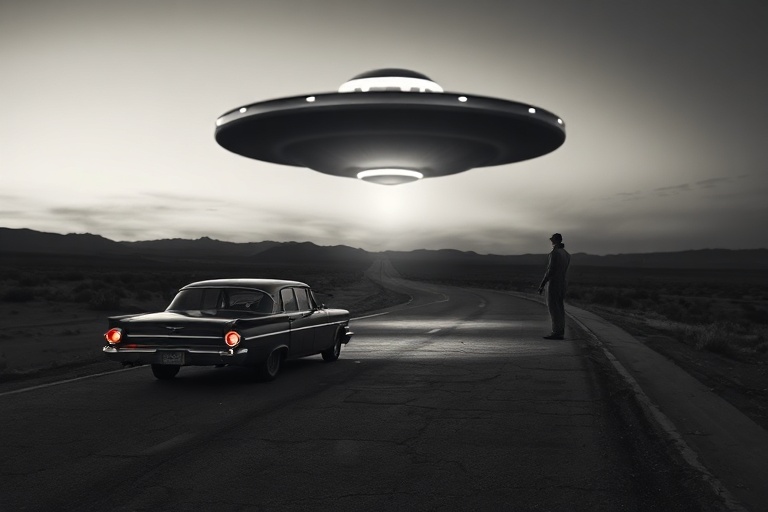
Unidentified Aerial Phenomena: The Global Obsession with UFO Files
The fascination with unidentified aerial phenomena (UAPs)—commonly known as UFOs—has persisted for decades. What began as a niche interest among conspiracy theorists has evolved into a subject of serious discussion among scientists, governments, and the public. Across continents, cultures have interpreted these sightings through their own lenses, blending folklore with modern technology. From declassified military footage to viral social media clips, the UFO files continue to expand, revealing as much about human psychology as they do about potential extraterrestrial encounters.
This global obsession isn’t confined to any single region. Reports emerge from remote villages in Peru, bustling cities in China, and rural landscapes in the United States. Each culture processes these sightings differently, often embedding them into local myths or religious narratives. In some cases, UFO encounters have become part of national identity, while in others, they remain fringe topics discussed only in hushed tones. The diversity of responses underscores a universal question: Are we alone in the universe, or are these sightings merely misidentified natural phenomena?
The Historical Roots of UFO Sightings
The modern UFO era is often traced back to 1947, when a pilot named Kenneth Arnold reported seeing nine crescent-shaped objects flying near Mount Rainier in Washington state. Though Arnold never used the term “flying saucer,” the media quickly adopted it, sparking a wave of similar reports. Within weeks, sightings were documented across the U.S., and by the 1950s, UFOs had infiltrated popular culture through films, TV shows, and pulp magazines. The phenomenon wasn’t limited to America—Europe, South America, and Asia all produced their own waves of sightings, each with unique cultural twists.
During the Cold War, UFO sightings often took on a sinister tone. Governments on both sides of the Iron Curtain were quick to dismiss reports as either Soviet disinformation or mass hysteria. Yet, declassified documents from the U.S., France, and the U.K. reveal that military and intelligence agencies took these sightings seriously enough to investigate. The technology behind these objects—if real—could represent a breakthrough beyond human innovation. This duality—of public curiosity and governmental secrecy—has only deepened the mystery.
Government Disclosures and the Shift in Public Perception
The past decade has seen a dramatic shift in how governments address UFOs. In 2017, the New York Times published a story revealing a Pentagon program called the Advanced Aerospace Threat Identification Program (AATIP), which studied UAPs. Three years later, the U.S. Department of Defense released three declassified videos of UAP encounters, confirming their authenticity but offering no explanation for the objects’ behavior. These disclosures validated years of whistleblower testimonies and fueled a surge in public interest.
Other countries have followed suit. In 2021, the French government declassified its UFO archives, making them publicly accessible for the first time. Japan’s Ministry of Defense has also acknowledged investigating UAP reports, while Mexico’s Congress recently held a hearing featuring alleged alien mummies—a claim that sparked both intrigue and skepticism. These global disclosures suggest that UFOs are no longer a taboo subject but a topic warranting serious inquiry. Yet, the lack of definitive answers has only intensified debates about transparency and the possibility of extraterrestrial life.
Cultural Interpretations: From Myth to Modern Mythology
UFO sightings are not just scientific anomalies; they are cultural artifacts. Indigenous communities in Australia and the Americas have long told stories of celestial beings visiting Earth, often framing these encounters within spiritual or ancestral narratives. In Japan, the concept of “tokusatsu”—literally “special effects”—has influenced how UFOs are depicted in media, blending science fiction with folklore. Meanwhile, in Europe, UFOs have been tied to historical events, such as the 1980 Rendlesham Forest incident in England, which some claim was an extraterrestrial landing.
The way cultures interpret UFOs reflects broader societal values. In technologically advanced nations like the U.S. and Japan, sightings are often analyzed through a scientific lens, with experts debating propulsion systems and potential alien technologies. In contrast, countries with strong religious traditions may view UFOs as divine interventions or omens. This diversity highlights how the UFO phenomenon transcends mere curiosity—it is a mirror held up to humanity’s hopes, fears, and search for meaning.
The Role of Technology in UFO Investigations
Advancements in technology have revolutionized how UFO sightings are documented and studied. Smartphone cameras, drones, and high-resolution satellites now allow for real-time tracking of aerial phenomena. Citizen science initiatives, such as the Scientific Coalition for UAP Studies, encourage the public to submit sightings for analysis. Meanwhile, AI tools are being developed to sift through vast datasets, identifying patterns that might elude human observers.
Yet, technology has also complicated the search for answers. Deepfake videos and AI-generated content have made it increasingly difficult to distinguish genuine footage from hoaxes. Social media amplifies both credible reports and sensationalist claims, creating an environment where misinformation spreads as quickly as truth. As governments and researchers grapple with this influx of data, the challenge isn’t just finding evidence of UAPs—it’s discerning what’s real in an era of digital overload.
What’s Next for the UFO Files?
The future of UFO research remains uncertain, but several trends are shaping its trajectory. Governments are gradually opening up their archives, though often with redactions that fuel further speculation. Scientific institutions, including NASA and Harvard’s Galileo Project, are dedicating resources to systematic studies, moving the conversation from conspiracy theories to empirical research. Meanwhile, the commercial sector is entering the fray, with companies like Lockheed Martin exploring advanced aerospace technologies that could explain—or even replicate—UAP behavior.
For the public, the allure of UFOs shows no signs of fading. Documentaries, podcasts, and streaming series continue to explore the topic, each offering a new perspective on the mystery. Whether these sightings represent evidence of extraterrestrial life or simply a testament to humanity’s enduring fascination with the unknown, one thing is clear: the UFO files are far from closed. As technology advances and governments become more transparent, the next chapter in this global saga may finally provide the answers—or at least the clarity—so many have been seeking.
The journey to understand UAPs is as much about exploring the cosmos as it is about understanding ourselves. From ancient myths to cutting-edge science, the search for answers continues, reminding us that the universe—and our place within it—is far stranger and more wondrous than we ever imagined.