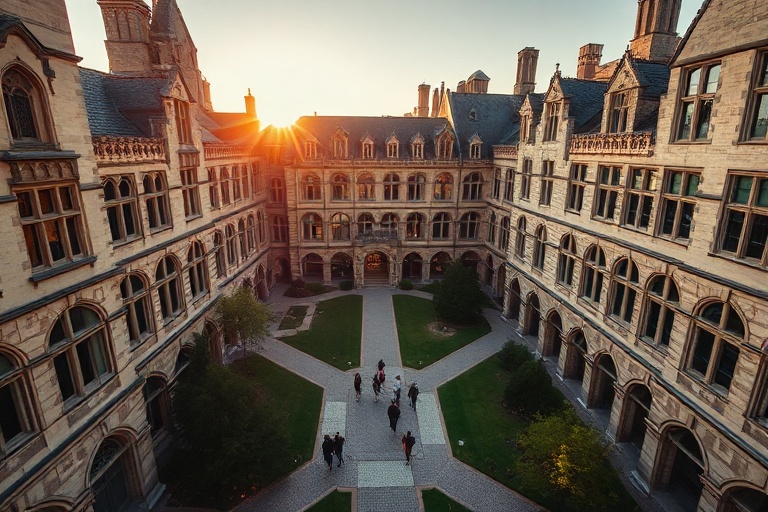
The University of Chicago stands as a beacon of intellectual pursuit, where tradition meets transformative research. Founded in 1890 by John D. Rockefeller and a group of American Baptist education society members, the university quickly established itself as a bastion of academic excellence. Its Gothic Revival architecture, sprawling campus, and unwavering commitment to inquiry have made it one of the most respected institutions in higher education.
What truly sets the University of Chicago apart is its dedication to the pursuit of knowledge without boundaries. From its early days, the university embraced a curriculum rooted in the liberal arts and sciences, fostering critical thinking and interdisciplinary collaboration. This philosophy has not only shaped generations of scholars but has also influenced educational models worldwide.
The Core Curriculum: A Foundation for Lifelong Learning
At the heart of the University of Chicago’s educational philosophy is the Core Curriculum. Introduced in 1942, this rigorous program is designed to expose students to a broad range of disciplines, from humanities and social sciences to mathematics and physical sciences. The Core is not merely a checklist of courses but a transformative experience that challenges students to engage deeply with ideas.
The Core includes foundational courses such as Humanities 13000: Reading and Writing: The Western Tradition, which explores seminal texts from ancient to modern times. Another cornerstone is Civilization Studies, a two-quarter sequence that examines the development of human cultures through literature, philosophy, and history. These courses are taught in small seminars, ensuring that students receive personalized attention from faculty.
The impact of the Core Curriculum extends beyond the classroom. It cultivates habits of mind that serve graduates well in their careers and personal lives. Alumni often cite the Core as a defining experience of their time at the university, one that instilled in them the ability to think critically, communicate effectively, and approach problems with intellectual humility.
Pioneering Research and Intellectual Contributions
The University of Chicago has long been at the forefront of groundbreaking research. Its faculty and alumni have made significant contributions across disciplines, from economics and physics to sociology and medicine. The university’s commitment to research is evident in its numerous institutes and centers, including the renowned Becker Friedman Institute for Economics and the James Franck Institute for physics.
One of the most notable achievements in the university’s history is the development of the world’s first man-made, self-sustaining nuclear reaction. In 1942, under the leadership of Enrico Fermi, scientists at the University of Chicago achieved this milestone in a squash court beneath the university’s Stagg Field. This breakthrough not only advanced nuclear science but also played a pivotal role in the Manhattan Project during World War II.
The university’s research extends beyond the sciences. The Chicago School of Sociology, founded by Robert E. Park and Ernest Burgess in the 1920s, revolutionized the field by applying empirical methods to the study of urban life. Meanwhile, the university’s economics department has produced numerous Nobel laureates, including Milton Friedman and Eugene Fama, whose work has shaped modern economic theory.
Key Research Initiatives at the University of Chicago
- Economics: The Becker Friedman Institute conducts research on economic policy, inequality, and global financial systems.
- Physics: The Kavli Institute for Cosmological Physics explores the origins of the universe through particle physics and astrophysics.
- Medicine: The Pritzker School of Molecular Engineering develops innovative solutions for global health challenges.
- Social Sciences: The Harris School of Public Policy addresses pressing societal issues through data-driven research and policy analysis.
- Humanities: The Neubauer Collegium for Culture and Society fosters interdisciplinary research in literature, art, and philosophy.
The University’s Role in Shaping Public Discourse
The University of Chicago has long been a hub for intellectual debate and public discourse. Its commitment to free expression is enshrined in the Chicago Principles, a set of guidelines adopted in 2015 that affirm the university’s dedication to open inquiry and robust debate. These principles have gained national attention as a model for other institutions grappling with issues of free speech and academic freedom.
The university’s influence extends beyond academia into the realms of politics, law, and culture. Alumni have served as U.S. Supreme Court justices, cabinet members, and leaders in business and the arts. Figures like former U.S. Attorney General John Ashcroft, Nobel laureate Saul Bellow, and filmmaker Mike Nichols exemplify the diverse paths taken by graduates of the university.
The university’s role in shaping public discourse is also evident in its numerous public lectures, symposia, and conferences. Events such as the Chicago Humanities Festival and the Institute of Politics bring together scholars, policymakers, and the public to discuss pressing issues of the day. These initiatives underscore the university’s commitment to engaging with the broader community and fostering informed dialogue.
Broader Implications: The University of Chicago’s Global Influence
The University of Chicago’s impact is felt far beyond the confines of its campus. Its educational model and research findings have inspired institutions around the world, from elite universities in Europe and Asia to emerging universities in Africa and South America. The university’s emphasis on interdisciplinary collaboration and critical thinking has become a benchmark for higher education globally.
One area where the university’s influence is particularly pronounced is in the field of economics. The Chicago School of Economics, with its emphasis on free markets and limited government intervention, has shaped economic policies in the United States and abroad. Policymakers, including Federal Reserve chairs and treasury secretaries, have drawn on the insights of Chicago economists to guide their decisions.
The university’s commitment to social justice and equity also resonates in its global outreach. Programs such as the University of Chicago Civic Scholars Initiative empower students to engage with local and global communities, addressing issues such as poverty, education, and healthcare. By fostering a sense of civic responsibility, the university prepares students to become leaders who are equipped to tackle the world’s most pressing challenges.
The University of Chicago’s Enduring Legacy
As the University of Chicago approaches its 140th anniversary, its legacy of rigor, innovation, and intellectual curiosity remains as vital as ever. The university continues to attract top-tier faculty and students from around the world, ensuring that its contributions to scholarship and society will endure for generations to come.
For those considering higher education, the University of Chicago offers more than just a degree—it provides an intellectual journey that challenges, inspires, and transforms. Whether through its rigorous Core Curriculum, groundbreaking research, or commitment to free expression, the university remains a model of what higher education can and should be.
In a time when the role of universities is increasingly scrutinized, the University of Chicago stands as a testament to the enduring value of education. It is a place where ideas are not just taught but actively pursued, where students are not just educated but empowered to change the world.
For more insights into the world of higher education and intellectual pursuits, explore Dave’s Locker Education section and Analysis archives.
The University of Chicago continues to shape the future of education and research, proving that rigorous inquiry and intellectual curiosity are timeless virtues.