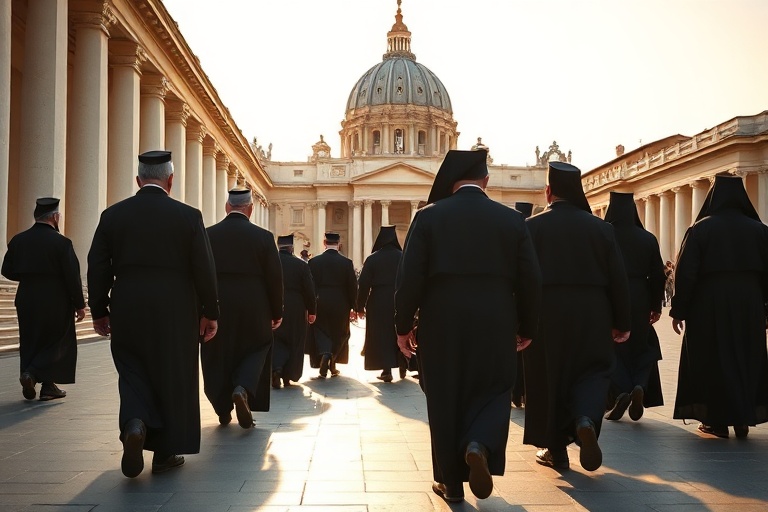
The relationship between the Vatican and the Society of Saint Pius X (SSPX) has long been a subject of intrigue within Catholic circles and beyond. Founded in 1970 by Archbishop Marcel Lefebvre, the SSPX represents a traditionalist movement that rejects many of the reforms of the Second Vatican Council. Its stance on liturgy, ecumenism, and religious freedom has placed it at odds with mainstream Catholicism for decades. Yet, the Vatican has maintained a cautious, evolving dialogue with the group, reflecting the complexities of balancing tradition and reform within the Church.
The Origins and Beliefs of the SSPX
The Society of Saint Pius X emerged in response to what its founders perceived as a crisis within the Catholic Church following the Second Vatican Council (1962-1965). Archbishop Marcel Lefebvre, a French bishop known for his conservative stance, established the SSPX as a priestly fraternity dedicated to preserving the Traditional Latin Mass and the pre-conciliar teachings of the Church. The society’s opposition to the reforms introduced by Vatican II—such as the use of vernacular languages in the liturgy and the spirit of ecumenism—set it apart from the broader Catholic community.
The SSPX’s beliefs are rooted in a strict interpretation of Catholic doctrine, particularly in matters of liturgy and ecclesiology. Its priests celebrate the Mass exclusively in Latin, using the 1962 Roman Missal, and adhere to a traditionalist interpretation of Catholic teaching. This approach has attracted a dedicated following among Catholics disillusioned with the post-conciliar Church, but it has also led to repeated conflicts with Vatican authorities.
Key Tenets of the SSPX
- Traditional Latin Mass: The SSPX insists on the exclusive use of the Traditional Latin Mass, rejecting the Novus Ordo Mass introduced after Vatican II.
- Opposition to Ecumenism: The society rejects the Church’s modern ecumenical efforts, viewing them as a dilution of Catholic doctrine.
- Rejection of Religious Freedom: The SSPX argues that the Church’s declaration on religious freedom (Dignitatis Humanae) contradicts traditional Catholic teaching on the state’s duty to uphold the true faith.
- Sedevacantism Concerns: While the SSPX does not officially endorse sedevacantism (the belief that the papal seat is vacant), some of its members have expressed doubts about the legitimacy of recent popes.
The Vatican’s Response: From Condemnation to Dialogue
The Vatican’s relationship with the SSPX has shifted over time, moving from outright condemnation to cautious engagement. In 1976, Pope Paul VI suspended Archbishop Lefebvre’s priestly faculties after Lefebvre consecrated bishops without papal approval. The situation escalated in 1988 when Lefebvre consecrated four bishops without Vatican consent, leading to his excommunication. This act marked one of the most significant rifts in modern Catholic history.
However, the Vatican’s approach began to soften in the 21st century. Pope Benedict XVI, known for his appreciation of liturgical tradition, took steps to reconcile the SSPX with Rome. In 2009, he lifted the excommunications of the four SSPX bishops, including Bishop Richard Williamson, who had made controversial remarks about the Holocaust. This decision sparked widespread criticism but also opened the door to further dialogue.
Pope Francis, while more critical of the SSPX’s positions, has continued the process of engagement. In 2018, the Vatican reached a provisional agreement with the society, granting it limited canonical recognition while maintaining doctrinal oversight. This agreement allows SSPX priests to administer sacraments validly and licitly, though they remain outside full communion with Rome. The Vatican’s goal appears to be one of gradual integration, balancing the society’s traditionalism with the need for unity within the Church.
Key Moments in Vatican-SSPX Relations
- 1976: Pope Paul VI suspends Archbishop Lefebvre’s priestly faculties after he defies Vatican orders.
- 1988: Lefebvre consecrates four bishops without papal approval, leading to his excommunication.
- 2009: Pope Benedict XVI lifts the excommunications of the four SSPX bishops.
- 2018: The Vatican reaches a provisional agreement with the SSPX, granting limited recognition.
- 2022: Further negotiations continue, with the Vatican seeking to clarify the society’s canonical status.
Theological and Practical Challenges
The Vatican’s engagement with the SSPX is fraught with theological and practical challenges. On a doctrinal level, the society’s rejection of key Vatican II teachings—such as religious freedom and ecumenism—places it at odds with the modern Church. The Vatican has repeatedly emphasized that full reconciliation requires the SSPX to accept the authority of the council and the teachings of the post-conciliar popes. However, the society’s leadership has shown little willingness to compromise on these points.
Practically, the SSPX operates thousands of chapels, schools, and seminaries worldwide, serving a significant number of traditionalist Catholics. Its refusal to accept Vatican authority means that its members are not permitted to receive sacraments in regular Catholic parishes. This has led to a parallel Catholic community, with its own hierarchy and institutions. The Vatican’s goal is to bring this community back into full communion, but the process is slow and complicated.
One of the most contentious issues is the SSPX’s stance on Vatican II. While the society does not outright reject the council, it interprets its teachings in a highly selective manner. For example, it accepts the council’s dogmatic constitutions but rejects its pastoral declarations, such as Dignitatis Humanae on religious freedom. This selective acceptance makes dialogue difficult, as the Vatican insists on the full authority of the council.
What’s Next for the Vatican and the SSPX?
The future of the Vatican-SSPX relationship remains uncertain. While the provisional agreement of 2018 was a step forward, significant obstacles remain. The SSPX’s leadership has expressed skepticism about full reconciliation, and its members are divided on the issue. Some are eager to return to full communion with Rome, while others view the Vatican’s overtures as a trap.
For the Vatican, the challenge is to balance the need for unity with the reality of the SSPX’s traditionalist appeal. Pope Francis has taken a more critical stance toward the society, emphasizing the need for doctrinal clarity. However, he has also shown a willingness to engage in dialogue, reflecting a broader strategy of pastoral accompaniment.
One possible outcome is a gradual integration of the SSPX into the Church, with its priests granted limited canonical status while maintaining their traditionalist practices. Another possibility is a continued stalemate, with the society remaining in a state of partial communion indefinitely. Whatever the outcome, the Vatican-SSPX relationship will continue to be a defining issue for traditionalist Catholics in the years to come.
Potential Scenarios for the Future
- Full Reconciliation: The SSPX accepts Vatican II in full and returns to full communion with Rome.
- Partial Integration: The SSPX gains limited canonical recognition, allowing its priests to operate within the Church while maintaining some autonomy.
- Continued Separation: The SSPX remains in a state of partial communion, with no further progress toward reconciliation.
- Schism: The SSPX formally breaks away from Rome, creating a permanent rift within the Church.
The Vatican-SSPX relationship is a microcosm of the broader tensions within the Catholic Church. It reflects the ongoing struggle to reconcile tradition with reform, authority with pastoral sensitivity. As the Church moves forward, the question of how to engage with traditionalist movements like the SSPX will remain a critical challenge.