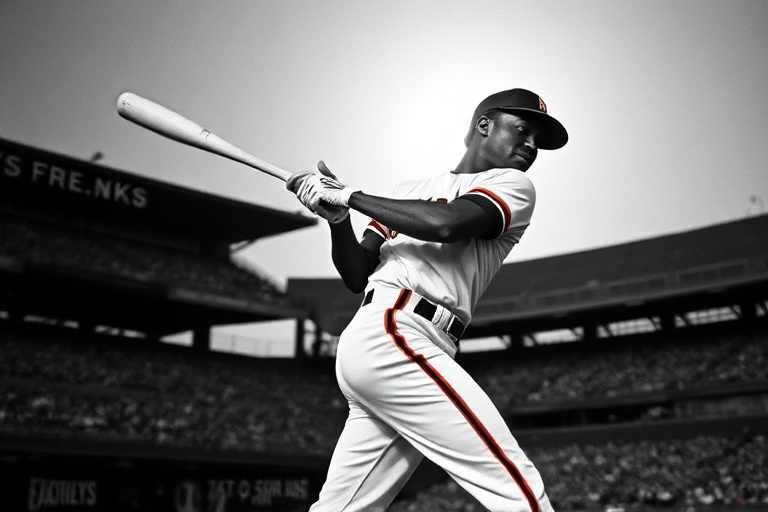
Willie Mays: Baseball Legend and Cultural Icon Explored
The name Willie Mays evokes images of a golden era in baseball—one defined by grace, power, and an unmistakable joy for the game. For over two decades, Mays didn’t just play center field; he redefined it, turning defensive brilliance into an art form while delivering offensive production that few could match. His career spanned the Negro Leagues, the integration of Major League Baseball, and the rise of the modern game, making him a bridge between generations of players and fans alike.
The Early Years: From Birmingham to the Majors
Willie Howard Mays Jr. was born on May 6, 1931, in Westfield, Alabama, a small town outside Birmingham. Baseball was in his blood—his father played semipro ball, and his uncle was a catcher in the Negro Leagues. By age 16, Mays was already making waves in the Negro Southern League with the Birmingham Black Barons, where his talent was undeniable. Scouts took notice, and in 1950, the New York Giants signed him to a contract, launching his professional career.
Mays made his MLB debut in May 1951, but his rookie season was cut short when he was drafted into the Army for the Korean War. Upon his return in 1952, he became an immediate sensation, winning the National League Rookie of the Year award. His electrifying style—backwards caps, over-the-shoulder catches, and a signature high-five with teammates—made him an instant fan favorite.
The Golden Era: A Two-Decade Masterclass
From 1954 to 1965, Mays was the undisputed king of center field. His combination of speed, power, and defensive prowess made him the complete player. In 1954, he delivered one of the most iconic moments in baseball history: “The Catch,” a running, over-the-shoulder grab in the 1954 World Series that preserved a crucial victory for the Giants. That season, he won the National League MVP award, capping off a year where he batted .345 with 41 home runs and 110 RBIs.
Over his career, Mays amassed 660 home runs (third all-time at the time of his retirement), 338 stolen bases, and a .301 batting average. He won two MVP awards (1954, 1965), 12 Gold Gloves, and was a 24-time All-Star. His ability to dominate both offensively and defensively set a standard that few have matched. Even in an era without advanced analytics, Mays’ impact was undeniable—he was the kind of player who made everything look effortless.
Key Contributions to the Game
- Defensive Revolution: Mays redefined the center fielder’s role. His range, arm strength, and instinct for the ball turned routine plays into highlight-reel moments. He made the “say hey” wave—a gesture of camaraderie—part of his brand, but his defensive genius was no act.
- Offensive Versatility: Mays was the rare player who could hit for average, power, and speed. His 30-30 seasons (30 home runs and 30 stolen bases) became a benchmark for five-tool players.
- Cultural Icon: Beyond statistics, Mays became a symbol of Black excellence in sports. His charisma and joy for the game made him a role model for generations, transcending baseball to influence pop culture.
- Integration Pioneer: As one of the first Black superstars in MLB, Mays carried the weight of representing his community. His success helped pave the way for future generations of Black athletes.
The Later Years and Lasting Influence
Mays played his final season in 1973 with the New York Mets, retiring at age 42. Though his later years weren’t as dominant, his legacy was already secure. He finished his career with 660 home runs, a .301 batting average, and a reputation as one of the greatest to ever play the game. In 1979, he was inducted into the Baseball Hall of Fame on the first ballot, receiving 95.3% of the vote—one of the highest percentages in history.
But Mays’ influence didn’t end with his playing days. He became a beloved ambassador for the game, working as a coach and mentor to younger players. His presence at Old-Timers’ games and special events kept his legend alive, and his name became synonymous with baseball itself. Even in retirement, he remained a symbol of excellence, humility, and joy.
Why Mays Still Matters Today
In an era where players are often reduced to analytics and metrics, Mays represents something purer—a time when baseball was as much about artistry as it was about numbers. His career offers a window into the history of the game, from the segregated Negro Leagues to the modern MLB. For younger fans, Mays is a reminder of the magic that made baseball America’s pastime.
Moreover, Mays’ story is one of perseverance and representation. As a Black athlete in a league that was slow to integrate, he faced challenges both on and off the field. His ability to thrive despite those obstacles makes him more than just a baseball player—he’s a cultural icon whose impact extends far beyond the diamond.
Today, players like Mike Trout and Mookie Betts are often compared to Mays, not just for their five-tool talent but for their ability to elevate the game around them. Mays’ legacy is a benchmark, a reminder of what it means to play with passion, skill, and joy.
Baseball has changed in countless ways since Mays’ era, but his influence remains timeless. Whether it’s the way he turned defense into an offensive weapon, the charisma he brought to every game, or the barriers he broke for future generations, Mays’ impact is woven into the fabric of the sport. He wasn’t just a player; he was a phenomenon, and his legend will continue to inspire for generations to come.
For those looking to dive deeper into the history of baseball’s golden era or explore the stories of other legends who shaped the game, check out our Sports and Culture sections for more insights and analysis.