Astana: Where the Future Meets Tradition in Central Asia
Nestled along the Ishim River in northern Kazakhstan, Astana stands as a testament to the country’s ambition and vision. Since becoming the capital in 1997, the city has transformed from a modest Soviet-era outpost into a gleaming metropolis of futuristic architecture and cultural fusion. Its wide boulevards, towering skyscrapers, and meticulously planned districts reflect Kazakhstan’s desire to position itself as a bridge between Europe and Asia.
The city’s name itself tells a story of reinvention. Originally founded in 1830 as Akmoly, it later became Tselinograd during the Soviet era before adopting the name Astana in 1998. In 2019, it was renamed Nur-Sultan in honor of Kazakhstan’s first president, Nursultan Nazarbayev, though the original name Astana was restored in 2022. This fluid identity mirrors the nation’s evolving narrative, blending historical continuity with forward-looking progress.
The Architectural Marvels of Astana
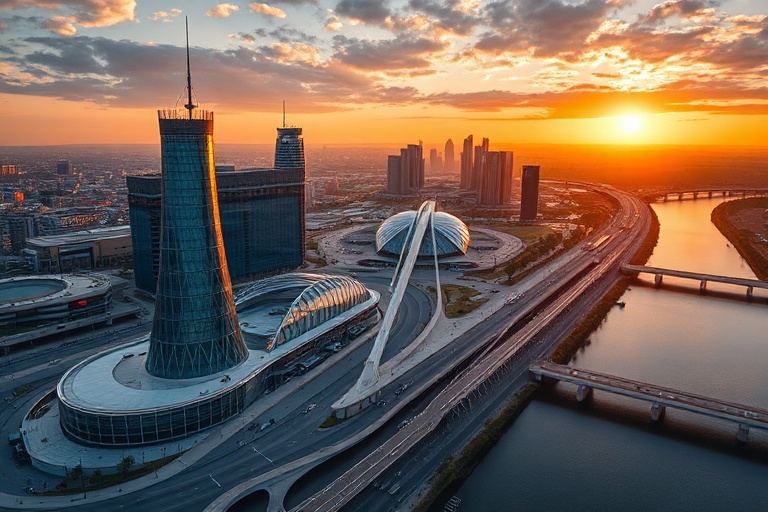
Astana’s skyline is dominated by structures that defy conventional design, earning it comparisons to Dubai and Singapore. The Baiterek Tower, with its golden sphere perched atop a slender stem, serves as a national symbol and observation deck. Nearby, the Khan Shatyr Entertainment Center—a vast, translucent tent-like structure—hovers over a sprawling shopping and leisure complex, offering respite from the steppe’s harsh climate.
The Palace of Peace and Reconciliation, a glass pyramid designed by Norman Foster, hosts the Congress of Leaders of World and Traditional Religions, underscoring Astana’s role as a diplomatic hub. Meanwhile, the Khan Palace and the Nurzhol Bridge, with its wing-like supports, showcase a fusion of Kazakh motifs and contemporary engineering. These landmarks are not merely aesthetic triumphs; they symbolize Kazakhstan’s strategic ambition to position Astana as a global player.
More Than Just a Capital: Astana’s Cultural and Economic Role
Beyond its architectural grandeur, Astana functions as the political and economic engine of Kazakhstan. The city hosts key institutions such as the Presidential Palace, the Supreme Court, and the National Bank, reinforcing its administrative dominance. Its economy thrives on sectors like finance, technology, and logistics, with the Astana International Financial Centre (AIFC) attracting foreign investment by offering a favorable regulatory environment.
Culturally, Astana balances modernity with tradition. The National Museum of the Republic of Kazakhstan, one of the largest in Central Asia, traces the country’s history from ancient nomadic tribes to its Soviet past and post-independence future. The city’s opera house, theaters, and annual events like the Astana Economic Forum and the Eurasian Media Forum highlight its growing influence as a cultural and intellectual crossroads.
Astana’s strategic location also makes it a critical node in global trade. Situated along the historic Silk Road route, it benefits from Kazakhstan’s role as a transit hub between China and Europe. The city’s well-developed transport infrastructure, including the Astana International Airport and an expanding metro system, further cements its position as a logistical powerhouse.
The Challenges of a Rapidly Growing Metropolis
Despite its progress, Astana faces significant challenges. Rapid urbanization has led to housing shortages, traffic congestion, and strains on public services. The city’s extreme climate—scorching summers and sub-zero winters—demands innovative solutions for heating, cooling, and infrastructure resilience. Critics argue that the government’s focus on grandiose projects has sometimes overshadowed social welfare needs, particularly in rural areas.
Environmental concerns also loom large. The steppe ecosystem surrounding Astana is fragile, and the city’s expansion has encroached on natural habitats. Efforts to promote sustainability, such as the development of green spaces and renewable energy initiatives, are underway, but balancing growth with ecological preservation remains a pressing issue.
Astana’s Place in the World
The city’s evolution offers broader lessons about nation-building in the 21st century. Astana demonstrates how a capital city can serve as both a symbol of national identity and a pragmatic tool for economic development. Its success in attracting international events and investors underscores Kazakhstan’s efforts to diversify beyond its traditional reliance on oil and gas.
Yet, Astana’s story is not without controversy. The decision to rename the city in honor of Nazarbayev sparked debates about political legacy and historical memory. Some viewed it as a tribute to a revered leader, while others saw it as an attempt to entrench a personality cult. The subsequent reversal of the name change in 2022 added another layer to the city’s complex identity.
Why Astana Matters
Astana is more than a political capital; it is a laboratory of modernity in a region often overlooked by global audiences. Its ability to reinvent itself while preserving cultural roots offers a model for other nations seeking to balance tradition and progress. Whether through its architectural feats, economic initiatives, or cultural exchanges, Astana embodies Kazakhstan’s aspirations on the world stage.
For travelers, investors, and policymakers alike, the city represents an opportunity to engage with a nation that is redefining its role in Central Asia and beyond. As Astana continues to evolve, it will undoubtedly remain a focal point for those interested in the intersection of geography, politics, and culture.
- Architectural Innovation: Astana’s skyline features some of the most daring structures in the world, blending futuristic design with traditional motifs.
- Economic Hub: The city drives Kazakhstan’s financial and technological sectors, with institutions like the AIFC fostering global connections.
- Cultural Crossroads: From museums to international forums, Astana serves as a platform for dialogue between East and West.
- Strategic Location: Positioned along key trade routes, the city benefits from its role as a transit point between continents.
- Urban Challenges: Rapid growth has strained infrastructure and resources, posing questions about sustainable development.
As Kazakhstan looks to the future, Astana will likely continue to be at the forefront of its ambitions. Whether through hosting global events, pioneering green initiatives, or reimagining urban living, the city remains a work in progress—one that invites the world to take notice.
For those interested in exploring more about global cities and their impact, visit the Travel category on Dave’s Locker for deeper insights into destinations that shape our world.