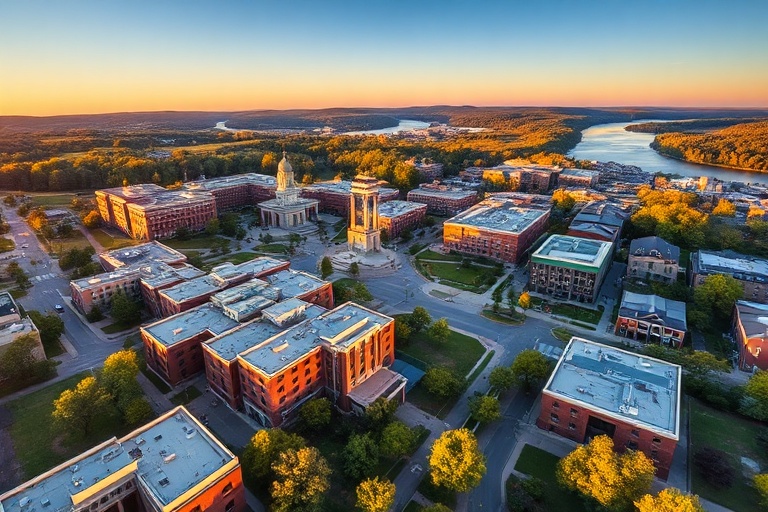
Nestled in the scenic hills of upstate New York, Binghamton University has quietly established itself as one of the most dynamic public research universities in the United States. Since its founding in 1946 as the Triple Cities College, the institution has evolved from a small satellite campus of Syracuse University into an independent powerhouse known for academic rigor, innovative research, and a vibrant student community.
With over 18,000 students across seven schools and colleges, Binghamton offers more than 130 academic programs, attracting learners from all 50 states and over 100 countries. Its reputation for excellence is reflected in consistently high rankings—U.S. News & World Report has placed Binghamton among the top 50 public universities in the nation for years. The university’s commitment to affordability and accessibility further distinguishes it, with in-state tuition well below the national average for top-tier institutions.
Academic Excellence and Specialized Programs
Binghamton University is organized into seven academic divisions: Harpur College of Arts and Sciences, School of Management, Thomas J. Watson College of Engineering and Applied Science, Decker College of Nursing and Health Sciences, School of Education, School of Pharmacy and Pharmaceutical Sciences, and the College of Community and Public Affairs. Each school maintains rigorous standards while fostering interdisciplinary collaboration.
The Thomas J. Watson College of Engineering and Applied Science, in particular, has gained national recognition for its programs in computer science, biomedical engineering, and systems science. The college’s cutting-edge research facilities, including the Center for Advanced Microelectronics Manufacturing and the Watson Institute for Systems Excellence, provide students with hands-on experience in emerging technologies like nanofabrication and artificial intelligence.
The School of Management is another standout, consistently ranked among the top 10% of business schools nationwide by the Association to Advance Collegiate Schools of Business (AACSB). Its undergraduate and MBA programs emphasize real-world applications, with strong ties to industries in New York City and across the Northeast. Students benefit from internships, co-ops, and networking events that connect them with leaders at companies like Goldman Sachs, JPMorgan Chase, and IBM.
- Top-ranked programs: Engineering, Business, Nursing, Computer Science, and Public Affairs
- Research focus: Sustainability, health sciences, data analytics, and social justice
- Global reach: Over 100 study-abroad programs in 40+ countries
- Affordability: One of the best value public universities in the U.S.
Research That Drives Innovation
Binghamton University has positioned itself as a leader in research, particularly in areas aligned with societal needs. The university’s Institute for Materials Research leads interdisciplinary work in sustainable energy materials, while the Center for Collective Dynamics of Complex Systems explores the science behind human behavior and social networks.
One notable initiative is the university’s work in lithium-ion battery technology, led by researchers in the Watson College of Engineering. Their breakthroughs in energy storage have applications ranging from electric vehicles to grid-scale renewable energy systems. This research has attracted significant funding from the National Science Foundation and the Department of Energy, underscoring its national importance.
The university’s health sciences programs are also making strides. The School of Pharmacy and Pharmaceutical Sciences is pioneering research in drug delivery systems and pharmacogenomics, aiming to personalize medical treatments. Meanwhile, the Decker College of Nursing and Health Sciences is addressing critical workforce shortages by expanding its graduate programs and clinical partnerships with regional hospitals.
Campus Life and Student Experience
Life at Binghamton is defined by balance—academic intensity paired with a lively, inclusive campus culture. The university’s 930-acre campus features a mix of modern and historic buildings, including the recently renovated Glenn G. Bartle Library and the innovative Engineering and Science Building. Housing options range from traditional dormitories to themed living communities focused on sustainability, arts, or STEM.
Student engagement extends beyond the classroom. Binghamton boasts over 300 student organizations, from cultural clubs and honor societies to competitive esports teams and recreational sports. The university’s Division I athletic programs, particularly in basketball and soccer, draw strong fan support, while intramural and club sports offer opportunities for all skill levels.
The university’s commitment to diversity is evident in its initiatives like the Multicultural Resource Center, which provides support and advocacy for underrepresented students. Binghamton also hosts annual events such as the Multicultural Festival and the Asian American Heritage Month celebrations, fostering dialogue and inclusion.
The Binghamton Bearcats compete in the America East Conference, with teams like wrestling and tennis earning national accolades. The university’s recreation facilities, including the brand-new Events Center, host concerts, lectures, and athletic competitions, making them central hubs of campus life.
Economic Impact and Community Connections
Binghamton University is more than an educational institution—it’s an economic engine for the Southern Tier region. The university contributes over $1 billion annually to the local economy through direct spending, job creation, and research commercialization. Its partnerships with regional businesses, hospitals, and government agencies drive innovation and workforce development.
One standout example is the university’s collaboration with local manufacturers to develop advanced materials and automation technologies. These partnerships have helped revitalize the regional economy, attracting new industries and retaining talent in upstate New York. The university’s Small Business Development Center also provides free consulting services to entrepreneurs, further stimulating economic growth.
The university’s commitment to sustainability aligns with its broader mission. Binghamton has reduced its carbon footprint by 40% since 2008 and is on track to achieve carbon neutrality by 2030. Initiatives like the Green Dining program, which sources food locally and reduces waste, demonstrate the university’s dedication to environmental stewardship.
Looking Ahead: The Future of Binghamton University
As Binghamton University approaches its 80th anniversary, it stands at a pivotal moment. The university has outlined ambitious goals in its strategic plan, including expanding its research footprint, increasing enrollment diversity, and enhancing global engagement. Plans for new facilities, such as a future health sciences building, reflect its commitment to addressing emerging societal challenges.
Binghamton’s alumni network is another area of growth. With over 120,000 graduates worldwide, the university is strengthening its mentorship and career services programs to better support students and recent graduates. Notable alumni include Pulitzer Prize-winning journalists, CEOs of Fortune 500 companies, and leaders in government and nonprofit sectors.
The university’s focus on accessibility remains unwavering. Through programs like the Educational Opportunity Program (EOP) and the Say Yes to Education initiative, Binghamton provides pathways to higher education for students from underserved backgrounds. These efforts have contributed to a first-generation student population that exceeds the national average for public universities.
As higher education continues to evolve, Binghamton University is well-positioned to adapt while staying true to its mission. Its blend of academic excellence, research innovation, and community engagement sets a standard for public universities nationwide. For students seeking a transformative educational experience, Binghamton offers not just a degree—but a foundation for lifelong success.
Whether you’re drawn to its top-ranked programs, cutting-edge research, or vibrant campus life, Binghamton University provides an environment where ambition and opportunity intersect. In an era of rapid change, it stands as a beacon of progress, proving that greatness is not just about where you come from, but where you’re headed.