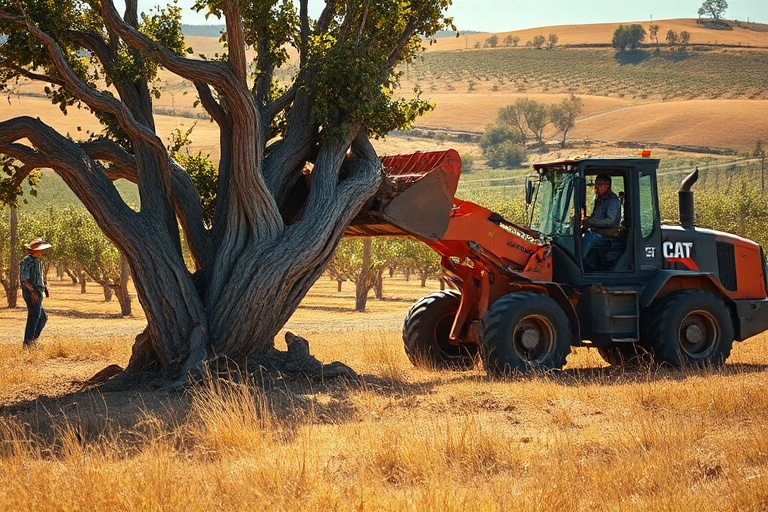
California Peach Tree Removal: Costs, Reasons & Eco-Impacts
California’s orchards have long been a symbol of agricultural abundance, with peach trees dotting the Central Valley’s fertile landscape. Yet in recent years, a quiet transformation has been underway. Farmers are removing peach trees at an increasing rate, reshaping orchard economics and environmental strategies across the state. This shift isn’t just about profits—it reflects deeper changes in water policy, labor costs, and climate resilience.
The decision to remove a peach tree isn’t made lightly. These trees represent years of investment, from soil preparation to irrigation systems and pruning cycles. But when the economics no longer support their growth, removal becomes a pragmatic choice. Understanding this process reveals much about California’s evolving agricultural identity and the pressures facing its farmers.
The Rising Cost of Keeping Peach Orchards Alive
Peach farming in California has always been water-intensive, but recent droughts and stricter groundwater regulations have pushed costs to new heights. Farmers now face a delicate balance between maintaining existing trees and allocating limited water resources to more drought-resistant crops. Water allocations from state and federal sources have been inconsistent, forcing growers to make tough decisions about which trees to save—and which to remove.
Labor is another major factor. Harvesting peaches requires significant hand labor, from thinning blossoms to picking fruit. With rising minimum wages and a shrinking pool of seasonal agricultural workers, the cost of maintaining peach orchards has climbed steadily. Many growers find they can no longer justify the expense when alternative crops offer better returns with less labor input.
- Water scarcity: Reduced allocations and higher costs make irrigation unsustainable for many growers.
- Labor shortages: Rising wages and limited workforce availability increase operational costs.
- Market competition: Cheaper imports and shifting consumer preferences reduce profitability.
- Disease pressure: Peach trees are vulnerable to pests and pathogens, adding to maintenance costs.
These pressures have led to a noticeable decline in new peach plantings across California. According to the USDA, acreage dedicated to peaches dropped by nearly 15% between 2017 and 2022. As older trees age out of productivity, many farmers are opting not to replant, instead shifting to almonds, pistachios, or even row crops that require less water and labor.
Why Farmers Are Choosing to Remove Peach Trees
The decision to remove a peach tree is typically driven by a combination of financial and environmental factors. One of the most common reasons is declining yield. As trees age beyond 15–20 years, their fruit production naturally decreases. While some growers invest in rejuvenation pruning or top-working to extend productivity, others find it more cost-effective to start fresh with younger, high-density plantings of more profitable crops.
Another key factor is land value. In regions like the San Joaquin Valley, farmland prices have surged due to urban sprawl and development pressure. Selling orchard land for residential or commercial use can yield a far greater return than continuing to grow peaches. Even when farmers retain ownership, converting orchards to other uses—such as solar farms or vineyards—can provide better long-term income.
Environmental regulations also play a role. California’s Sustainable Groundwater Management Act (SGMA), enacted in 2014, requires local agencies to manage groundwater basins sustainably. In some areas, this has led to mandatory reductions in water use, making it impossible for peach growers to maintain their orchards without exceeding their allotted water rights. When compliance becomes too costly, removal becomes the only viable option.
“We’ve seen farmers in the Central Valley transition from peaches to almonds or pistachios because the water math just doesn’t work anymore. It’s not just about the crop—it’s about survival.”
— Agricultural economist at UC Davis
Finally, consumer demand has shifted. While California peaches were once a staple in grocery stores, imports from Chile, Mexico, and even Georgia have flooded the market at lower prices. Domestic growers struggle to compete, especially when faced with higher production costs. As a result, some have exited the peach market entirely, focusing instead on crops with stronger export potential or local branding.
The Environmental Impact of Orchard Removal
Removing peach trees isn’t just a financial decision—it has significant environmental consequences. On the surface, fewer peach orchards might seem beneficial for water conservation, especially in drought-prone regions. However, the transition away from orchards can also disrupt local ecosystems. Peach trees provide habitat for birds, bees, and beneficial insects. When they’re removed, these species lose a critical food source and nesting ground.
Additionally, orchard removal can lead to soil degradation. Peach trees, like other fruit-bearing plants, help prevent erosion and maintain soil structure through their root systems. When orchards are cleared without replanting, the soil becomes more vulnerable to wind and water erosion, particularly in areas prone to dust storms like the Central Valley. Farmers must often implement soil conservation measures, such as cover cropping or no-till farming, to mitigate these effects.
The shift toward alternative crops also has mixed environmental outcomes. Almonds and pistachios, for example, require even more water than peaches, exacerbating groundwater depletion in some regions. Meanwhile, row crops like tomatoes or cotton offer different ecological trade-offs, such as increased pesticide use or soil compaction. The broader trend toward diversification means California’s agricultural landscape is becoming more fragmented, with each crop carrying its own environmental footprint.
Another concern is the carbon impact of orchard removal. Mature trees store significant amounts of carbon in their biomass and soil. Clearing orchards releases this carbon into the atmosphere, contributing to greenhouse gas emissions. While young replacement trees can eventually recapture carbon, the transition period leaves a temporary but measurable environmental cost.
Despite these challenges, some environmental benefits do emerge. For instance, removing water-intensive orchards can help restore groundwater levels in over-tapped aquifers. It can also reduce the need for chemical inputs like fertilizers and pesticides, depending on the replacement crop. The key lies in how farmers manage the transition—whether they replace orchards with equally resource-intensive crops or adopt more sustainable practices.
What’s Next for California’s Orchards?
The future of California’s peach industry remains uncertain. While some growers are doubling down on niche markets—such as organic or heirloom varieties—others are leaving the sector entirely. The state’s agricultural diversity means that no single crop will dominate, but the decline of peaches signals broader changes in how California farms its land.
One potential path forward is the adoption of agroforestry systems, where peach trees are integrated with other crops or livestock. This approach can improve biodiversity, reduce soil erosion, and even enhance farm profitability through diversified income streams. However, such systems require careful planning and investment, making them a viable option primarily for larger, well-capitalized operations.
Another trend is the rise of precision agriculture technologies. Drones, soil sensors, and AI-driven irrigation systems can help farmers optimize water and nutrient use, making traditional crops like peaches more sustainable. These tools won’t reverse the decline of peach orchards overnight, but they could extend the lifespan of existing trees and improve yields in remaining groves.
For consumers, the changes in California’s orchards may lead to shifts in what’s available at the grocery store. Local peaches might become a seasonal delicacy rather than a year-round staple, with prices reflecting the true cost of production. Meanwhile, imports could fill the gap, raising questions about food miles and the environmental impact of long-distance produce transportation.
Ultimately, the removal of peach trees in California is a microcosm of the state’s broader agricultural evolution. As climate pressures intensify and economic realities shift, farmers are being forced to adapt—or risk being left behind. The choices they make today will shape the Golden State’s farmland for decades to come.
For those interested in the business side of agriculture, our Business section offers deeper insights into how these economic forces are reshaping rural economies. Meanwhile, for more on environmental trends in farming, visit our Science category to explore how technology and policy are intersecting in California’s fields.