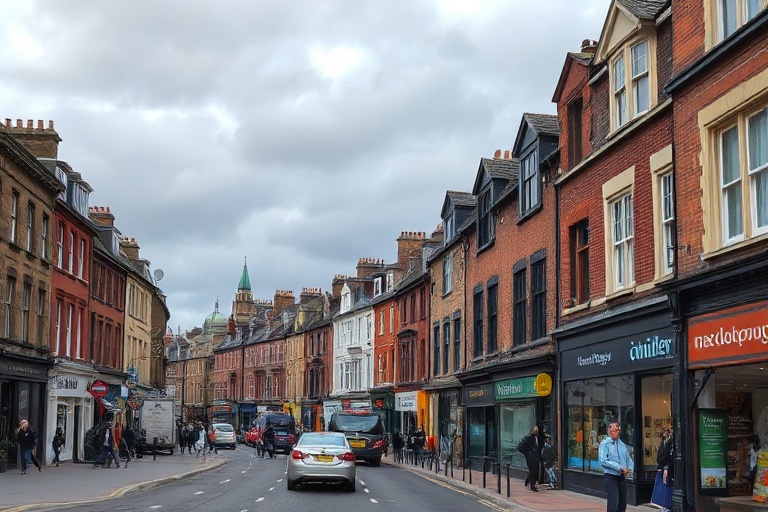
Cambridge Street Scarborough: A Neighborhood Evolving Through Time
Nestled in the eastern part of Toronto, Scarborough’s Cambridge Street has long been a microcosm of the city’s broader transformation. What began as a quiet residential stretch has gradually evolved into a vibrant corridor where history, culture, and urban development intersect. The street’s story reflects Scarborough’s journey from a suburban outpost to a dynamic urban neighborhood.
Today, Cambridge Street stands as a testament to Toronto’s relentless growth. Its sidewalks tell stories of immigrant entrepreneurship, community resilience, and the ever-shifting priorities of a city in motion. To walk its length is to trace the layers of Scarborough’s past while witnessing its future unfold.
The Historical Roots of Cambridge Street
Cambridge Street emerged in the early 20th century as part of Scarborough’s agricultural expansion. Originally farmland settled by British Loyalists and later by European immigrants, the area remained sparsely populated until the post-World War II boom. The street itself was named after the prestigious English university, reflecting the era’s penchant for classical nomenclature in new developments.
By the 1950s, Scarborough began its transition from rural to suburban, and Cambridge Street became a key residential artery. Post-war housing developments, primarily single-family homes and modest apartment buildings, catered to a growing middle class. The street’s proximity to Kingston Road and Highway 401 provided essential connectivity, reinforcing its role as a practical, if unremarkable, neighborhood thoroughfare.
Archival records from the Toronto Public Library reveal that Cambridge Street’s early commercial life centered around small, family-run shops. Grocers, hardware stores, and diners served as the backbone of the community, creating a localized economy that thrived on personal relationships. These businesses were not just commercial hubs but social gathering places, where residents exchanged news and built the bonds that defined the street’s identity.
Economic Shifts and the Rise of Small Businesses
The late 20th century brought significant changes to Cambridge Street. As Scarborough’s population diversified, so did its commercial landscape. By the 1980s and 1990s, waves of immigrants from South Asia, East Asia, and the Caribbean settled in the area, infusing the neighborhood with new energy and enterprise.
Today, Cambridge Street is a mosaic of cultural flavors and entrepreneurial ambition. The street is lined with businesses that reflect its diverse population: halal butchers, bubble tea cafes, South Asian grocery stores, and barbershops catering to a global clientele. This economic vitality is not just a local phenomenon but part of a broader trend in Toronto’s inner suburbs, where immigrant-owned businesses have become cornerstones of community life.
One of the most notable transformations has been the rise of the food scene along Cambridge Street. From family-run restaurants serving traditional dishes to modern fusion eateries, the culinary offerings provide a window into Scarborough’s multicultural fabric. The street’s food culture has even gained recognition beyond local circles, with food critics and influencers highlighting its hidden gems.
Yet, this growth has not been without challenges. Rising commercial rents and the pressures of gentrification loom over small business owners. Many long-time residents and entrepreneurs worry that the street’s unique character could be diluted as newer, larger developments move in. Balancing economic progress with cultural preservation remains a pressing concern for the community.
Urban Development and the Changing Streetscape
In recent years, Cambridge Street has become a focal point for urban redevelopment in Scarborough. The city’s Housing Now initiative and private sector investments have led to the construction of mid-rise and high-rise residential buildings along the corridor. These projects aim to address Toronto’s housing crisis by providing more density and affordable units near transit hubs.
The most significant transformation has occurred at the intersection of Cambridge Street and Kingston Road, where a cluster of new developments has reshaped the skyline. These projects include a mix of condominiums, rental apartments, and mixed-use buildings, designed to cater to young professionals, families, and seniors alike. The influx of new residents has sparked both excitement and apprehension among long-time inhabitants.
Urban planners see Cambridge Street as a model for “transit-oriented development,” a strategy that prioritizes housing and amenities near public transit to reduce car dependency. The street is well-served by the TTC’s 54 Lawrence East and 175 Bluffers Park buses, and future plans for subway extensions could further enhance its connectivity. However, concerns about overdevelopment and the loss of affordable housing persist, highlighting the complexities of urban growth.
Architecturally, the new buildings along Cambridge Street reflect contemporary trends: glass facades, balconies, and ground-floor retail spaces designed to foster street-level engagement. While these designs aim to create a sense of community, critics argue that some developments lack the charm and character of Scarborough’s older, more organic neighborhoods.
Community Resilience and the Future of Cambridge Street
Despite the rapid changes, Cambridge Street retains a strong sense of community. Local organizations, such as the Scarborough Arts Council, have played a pivotal role in preserving the street’s cultural heritage. Events like street festivals, art exhibitions, and farmers’ markets bring residents together, fostering a shared identity in an era of constant flux.
The street’s resilience is also evident in its ability to adapt to crises. During the COVID-19 pandemic, many businesses pivoted to delivery and takeout models, while community groups organized mutual aid networks to support vulnerable residents. These efforts underscored the importance of local networks in times of need and reinforced the street’s role as a lifeline for its inhabitants.
Looking ahead, the future of Cambridge Street will likely be shaped by several key factors:
- Transit Expansion: The proposed extension of the Bloor-Danforth subway line to Scarborough City Centre could further integrate Cambridge Street into Toronto’s transit network, increasing its accessibility and appeal.
- Affordable Housing Initiatives: Ensuring that new developments include affordable units will be critical to maintaining the street’s socioeconomic diversity and preventing displacement.
- Cultural Preservation: Protecting the street’s immigrant-owned businesses and community spaces will help preserve its unique identity amid urban renewal.
- Sustainable Development: Balancing growth with environmental sustainability, such as incorporating green spaces and energy-efficient designs, will be essential for long-term viability.
Cambridge Street’s story is far from over. As Toronto continues to evolve, so too will this vibrant corridor. Its ability to adapt while retaining its core character will determine whether it remains a thriving community hub or succumbs to the homogenizing forces of urbanization. For now, it stands as a microcosm of the city itself—a place where tradition and modernity coexist, where challenges and opportunities collide, and where the future is always in the making.
The street’s history reminds us that neighborhoods are not static entities but living, breathing spaces shaped by the people who inhabit them. Cambridge Street’s journey from a quiet residential stretch to a bustling urban thoroughfare reflects the broader narrative of Scarborough’s growth and the broader narrative of Toronto’s evolution. It is a story worth paying attention to, not just for what it tells us about the past, but for what it suggests about the future of cities everywhere.