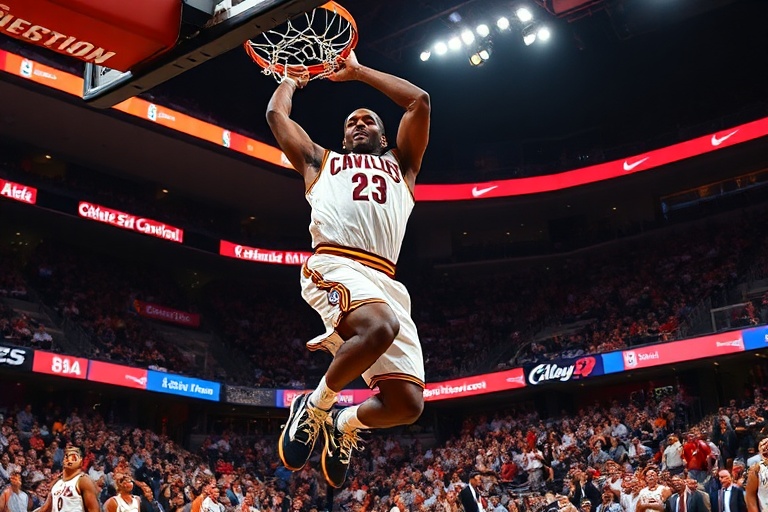
Stephen Curry didn’t just enter the NBA—he rewrote its rules. His rise from a lightly recruited Davidson College standout to a four-time NBA champion and the most influential shooter in basketball history has left an indelible mark on the sport. What began as a niche style of play—curry basketball—has now become the blueprint for modern offense. Teams across the NBA, college ranks, and even youth leagues have shifted their strategies to emulate the spacing, pace, and shooting prowess that Curry popularized.
The Birth of a Revolution: What Is “Curry Basketball”?
Curry basketball refers to a style of play centered around three core principles: unlimited range, constant motion, and offensive versatility. At its heart, it’s a system designed to stretch defenses to their breaking point by forcing them to guard players at distances they’ve never had to before. This approach didn’t emerge overnight. It evolved from Curry’s relentless work ethic, his father Dell Curry’s NBA career, and the influence of coaches like Bob McAdoo, who emphasized shooting in Curry’s development.
The style gained widespread attention during Curry’s 2012-13 season, when he became the first player in NBA history to make 272 three-pointers in a single season. That performance shattered records and proved that a player could dominate without being a traditional seven-foot center or a high-flying dunker. Instead, Curry’s game was built on rhythm, repetition, and an uncanny ability to shoot off the dribble—a skill once considered nearly impossible at an elite level.
By 2015, the Golden State Warriors had fully embraced this philosophy under Steve Kerr, turning Curry’s style into a championship-winning formula. The team’s small-ball lineups, with Curry at the center, redefined how basketball could be played. The Warriors’ 2016 season, in which they set the regular-season wins record (73-9), was a masterclass in curry basketball: unselfish ball movement, relentless three-point shooting, and a defensive identity built on quick rotations rather than size.
How Curry Basketball Changed the NBA’s Offensive Landscape
The ripple effects of Curry’s influence are visible in every corner of the league. Consider these shifts:
- Three-Point Revolution: In 2000, teams averaged 13.7 three-point attempts per game. By the 2022-23 season, that number had risen to 34.5. The average has nearly tripled in less than two decades, a direct result of teams chasing the spacing and efficiency that Curry’s Warriors demonstrated.
- Positionless Basketball: Traditional roles—point guard as distributor, center as rim protector—have blurred. Guards now shoot like wings, and big men stretch the floor like power forwards. Players like Giannis Antetokounmpo and Joel Embiid incorporate Curry-esque shooting into their games, making them nearly impossible to defend.
- Analytics Over Dogma: Old-school coaches once dismissed three-pointers as “not a real shot.” Now, even the most traditional franchises prioritize analytics that prove the value of high-efficiency shots. The Houston Rockets under Mike D’Antoni epitomized this, building an entire offense around threes and layups, a system Curry’s Warriors perfected.
- Youth Development Shifts: AAU and high school programs now emphasize shooting drills from deep. Young players are trained to shoot off the catch, off the dribble, and on the move—skills that were once rare even among college stars. The NBA’s G League has even introduced the “Ignite” team, which mirrors the Warriors’ system to groom prospects for the modern game.
The Defensive Counter: How Opponents Have Adapted (Or Struggled)
For all its offensive brilliance, curry basketball has forced defenses to evolve in ways that have created new challenges. Teams initially struggled to contain Curry’s shooting. Defenses collapsed on him, leaving shooters like Klay Thompson wide open. The solution? Switching everything. The Warriors’ 2017 championship run was built on a defense that could switch 1 through 5, a strategy that has since become standard.
However, this adaptation hasn’t been seamless. Switch-heavy defenses often leave mismatches in the paint, where athletic big men exploit smaller defenders. The Milwaukee Bucks’ Giannis Antetokounmpo, for example, has thrived in these situations, using his size and speed to bully opponents. Meanwhile, teams like the Denver Nuggets have countered by blending switching with drop coverage, a hybrid approach that has become a staple in the modern NBA.
Another defensive response has been the rise of “verticality” rules. The NBA has cracked down on hand-checking and illegal defense to allow shooters more freedom. This has led to debates about whether the league has gone too far in favor of offense. Critics argue that the constant switching has reduced physicality, while proponents believe it has made the game faster and more entertaining.
Beyond the Court: Curry Basketball’s Cultural and Economic Impact
Curry’s influence extends far beyond Xs and Os. His charisma and global appeal have turned him into one of the NBA’s most marketable stars. Under Armour’s Curry-branded shoes have become a cultural phenomenon, outselling even Nike’s Air Jordans in some markets. The “Curry One” and “Curry Two” lines are staples in streetwear, blending athletic performance with fashion trends.
On a broader scale, Curry basketball has globalized the game. The NBA’s international growth has accelerated, with leagues in Europe, Australia, and Asia adopting the three-point heavy style. FIBA, the international basketball governing body, has even adjusted its rules to encourage more shooting, including the introduction of the “no-charge” zone under the basket to promote driving and kicking to open shooters.
Yet, not everyone celebrates this shift. Purists argue that the emphasis on threes has diluted the art of mid-range shooting, a skill once prized for its efficiency and versatility. Players like Dirk Nowitzki and Kevin Durant perfected the mid-range game, but younger players now see it as a relic. The debate over aesthetics versus efficiency continues to rage among analysts and fans alike.
What’s Next for Curry Basketball?
The future of curry basketball is as unpredictable as the game itself. One trend to watch is the rise of “positionless” basketball in Europe and Australia, where teams are experimenting with lineups that defy traditional roles. The NBA’s new “load management” culture also presents challenges, as teams balance rest and performance in a league that demands relentless scoring.
Another frontier is technology. Wearable devices and advanced analytics are giving teams deeper insights into shooting mechanics and defensive positioning. The Warriors’ analytics team, for example, uses data to optimize Curry’s shot selection, ensuring he takes the highest-value shots possible. As AI and machine learning become more integrated into sports, we may see even more personalized training regimens designed to push the limits of curry basketball.
For now, the style remains dominant. The 2023 NBA Finals featured a classic matchup between the Denver Nuggets, who blend traditional post play with modern spacing, and the Miami Heat, whose offense relies on three-point shooting and relentless motion. The fact that both teams incorporated elements of curry basketball underscores its ubiquity.
Curry himself shows no signs of slowing down. At 35, he remains one of the league’s most efficient shooters, proving that his style is sustainable across eras. His legacy isn’t just in the championships or records he’s set—it’s in the way he’s reshaped the game for generations of players who now see basketball through the lens of possibility he introduced.
As the NBA continues to evolve, one thing is certain: curry basketball isn’t a trend. It’s the new normal. And whether you love it or question its long-term impact, its influence is undeniable. The game will never be the same.
Further Reading
To dive deeper into the evolution of basketball strategy, check out our analysis on Sports and Analysis categories. These sections feature expert takes on how the game continues to transform in the modern era.