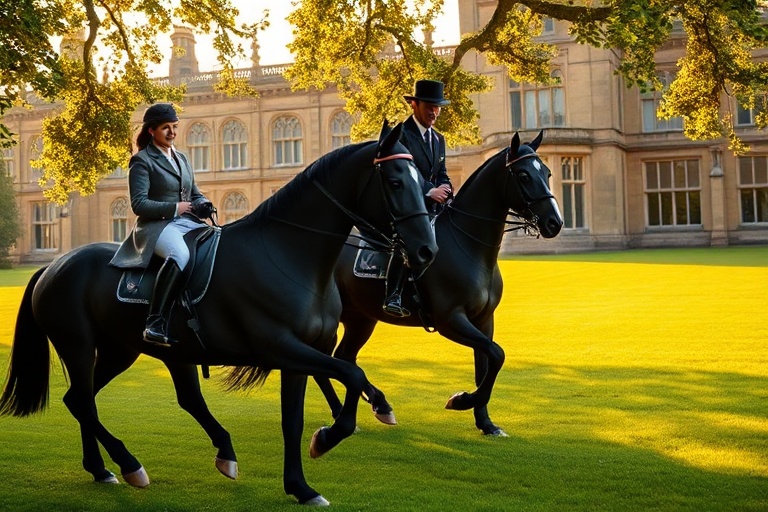
Duke and Duchess of Westminster: Power, Wealth, and Modern Aristocracy
The Duke and Duchess of Westminster represent one of the most enduring and enigmatic aristocratic dynasties in British history. Their title, rooted in vast landholdings and centuries-old tradition, carries implications far beyond the gilded halls of Eaton Hall. The current holders of this prestigious peerage, Hugh Grosvenor, 7th Duke of Westminster, and his wife, Natalia Phillips, navigate a world where old-world opulence meets modern expectations of transparency and philanthropy. This duality shapes not only their public image but also the broader role of hereditary wealth in contemporary society.
The Grosvenor Family: A Dynasty Built on Land
The Grosvenor family’s wealth traces back to the 17th century, when Sir Thomas Grosvenor married Mary Davies, heiress to the Manor of Ebury in London. This acquisition laid the foundation for what would become one of the largest privately owned property portfolios in the world. Today, the family’s assets span London’s most exclusive neighborhoods, including Belgravia and Mayfair, as well as rural estates in Cheshire and Scotland.
Under the leadership of Gerald Grosvenor, the 6th Duke, the family’s wealth was estimated at over £9 billion at the time of his death in 2016. The 7th Duke, Hugh Grosvenor, inherited not only this fortune but also the responsibility of stewarding a legacy that intertwines with Britain’s architectural and social history. Unlike many aristocratic families who have seen their wealth diminish over time, the Grosvenors have expanded their holdings through strategic investments in property, agriculture, and renewable energy.
Key Contributions and Business Ventures
- Property Development: The Grosvenor Group, the family’s primary business arm, manages over 1,600 hectares of land across the UK, Canada, and the US. Their developments often set trends in luxury living, blending historic preservation with modern design.
- Sustainability Initiatives: In recent years, the family has committed to reducing carbon emissions across their estates, investing in renewable energy projects and sustainable agriculture.
- Philanthropy: The Grosvenor Estate Charitable Foundation supports education, arts, and community development, particularly in areas where the family holds significant land interests.
The Current Duke and Duchess: Modern Faces of an Ancient Title
Hugh Grosvenor, who became the 7th Duke in 2016 at the age of 25, is one of the youngest dukes in British history. His marriage to Natalia Phillips, a descendant of the Russian imperial family, added a layer of international intrigue to the family’s narrative. Natalia, a former model and now a prominent philanthropist, has played a key role in reshaping the public perception of the family, emphasizing their commitment to social responsibility.
The couple’s approach to their roles reflects a broader shift among modern aristocrats. While they maintain the trappings of their status—such as hosting lavish events at Eaton Hall—they also engage with pressing social issues. Natalia’s work with refugees and Hugh’s involvement in agricultural innovation demonstrate an effort to align their privileges with contemporary values.
Public Perception and Scrutiny
The Duke and Duchess of Westminster exist in a space where admiration and criticism often collide. On one hand, their wealth and influence are symbols of Britain’s historical social hierarchy. On the other, their philanthropic efforts and modern lifestyles provide a counter-narrative to the stereotype of out-of-touch aristocrats.
This duality is evident in media portrayals. While tabloids often focus on the family’s lavish lifestyle—such as their lavish weddings and high-profile social events—broader discussions about their role in housing policy and urban development reveal deeper complexities. The Grosvenors’ vast landholdings in London, for instance, have sparked debates about affordability and gentrification, forcing the family to engage more openly with public policy.
The Broader Implications of Aristocratic Wealth
The story of the Duke and Duchess of Westminster is not just about one family; it reflects broader questions about inherited wealth, privilege, and the role of the aristocracy in the 21st century. Their story invites comparisons to other historic dynasties, such as the Spencer family (Princess Diana’s lineage) or the Cadogan family, who similarly balance tradition with adaptation.
One of the most significant implications of their legacy is the tension between private wealth and public good. The Grosvenors’ property empire, for example, has the potential to influence urban development trends in ways that could either exacerbate housing crises or provide innovative solutions. Their investments in sustainability also set a precedent for how large landowners can contribute to environmental goals.
Lessons from the Westminster Legacy
- Adaptability: The Grosvenors have successfully transitioned from feudal landowners to modern property developers, demonstrating how historic wealth can evolve with the times.
- Philanthropy as a Bridge: Their charitable efforts help bridge the gap between privilege and social responsibility, though they remain subject to scrutiny over the scale and focus of their giving.
- Public Engagement: Unlike many aristocratic families who remain reclusive, the current Duke and Duchess actively engage with media and public policy, shaping their image in real time.
Conclusion: A Legacy in Transition
The Duke and Duchess of Westminster embody a paradox: they are at once relics of a bygone era and pioneers of a new kind of aristocracy. Their story is one of continuity and change, where centuries-old traditions coexist with modern expectations of transparency and social responsibility. As Britain continues to grapple with issues of inequality and housing affordability, the Grosvenors’ role as stewards of vast landholdings places them at the center of these debates.
Whether their legacy will be remembered for its opulence or its contributions to society remains to be seen. What is clear, however, is that their ability to adapt—whether through sustainable development, philanthropy, or public engagement—will determine how their dynasty is perceived in the decades to come. For now, the Duke and Duchess of Westminster stand as a testament to the enduring, if evolving, power of aristocratic influence.
For those interested in the intersection of wealth, tradition, and social change, their story offers a compelling case study. It challenges us to consider not just who holds power, but how that power is used—and whether it can ever truly be reconciled with the needs of a changing world.
Explore more about the evolving role of aristocracy and wealth in modern society by visiting our Trending and Analysis sections.