Dunfermline: Scotland’s Historic Town with a Modern Future
Nestled in the heart of Fife, Dunfermline stands as one of Scotland’s most storied towns, where medieval grandeur meets modern vibrancy. Known historically as the ancient capital of Scotland, this town has evolved into a cultural and economic hub while preserving its rich heritage. From its royal connections to its thriving local arts scene, Dunfermline offers a unique blend of tradition and contemporary living.
The Royal Legacy of Dunfermline
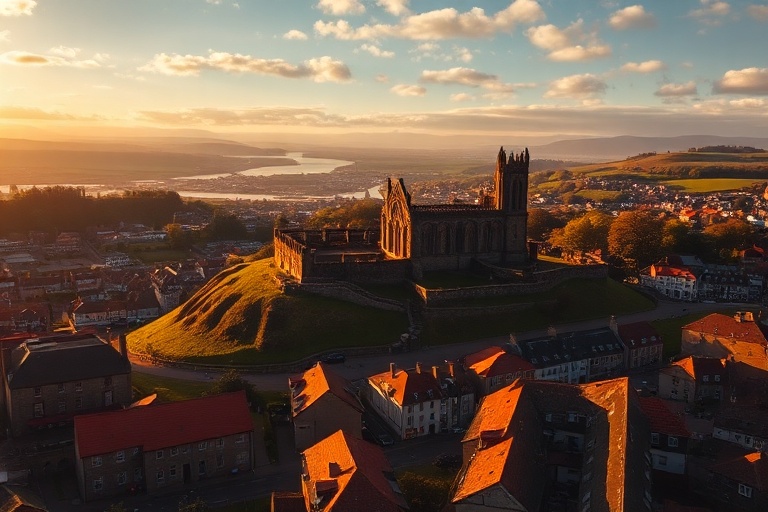
Dunfermline’s most defining feature is its royal history, which stretches back over a thousand years. The town served as the seat of Scottish kings from the 11th century, with Malcolm III and his queen, Saint Margaret, establishing Dunfermline as a center of power and religion. Their palace, though now in ruins, once rivaled Edinburgh Castle in significance. The nearby Abbey Church—a stunning example of medieval architecture—still stands as a testament to this era, its nave and towering arches drawing visitors from across the globe.
The town’s royal associations didn’t end there. Robert the Bruce, one of Scotland’s most celebrated monarchs, chose Dunfermline as his final resting place. His tomb, located in the Abbey, remains a focal point for historians and tourists alike. This legacy isn’t just a relic of the past; it shapes Dunfermline’s identity today. The town’s annual cultural festivals, including the Dunfermline Arts Festival, often pay homage to its royal roots, blending history with modern creativity.
Key Historical Landmarks
- Dunfermline Abbey and Palace: The ruins of the 12th-century abbey and the later palace where royalty once resided.
- Pittencrieff Glen: A sprawling parkland gifted to the town by Andrew Carnegie, offering walking trails and a glimpse of local wildlife.
- Malcolm’s Tower: A reconstructed 12th-century tower linked to King Malcolm III, providing panoramic views of the town.
- Andrew Carnegie’s Birthplace: The modest weaver’s cottage where the philanthropist and steel magnate was born, now a museum.
Dunfermline Today: A Town in Transition
While Dunfermline’s history is undeniable, the town is also undergoing significant transformation. Once a quiet market town, it has grown into a key player in Fife’s economic landscape. The recent expansion of the Dunfermline & West Fife Enterprise Zone has attracted businesses, particularly in tech and renewable energy sectors. This growth is reshaping the town’s skyline, with new housing developments and commercial spaces emerging alongside historic buildings.
Yet, this transition hasn’t been without challenges. Rapid development has sparked debates about preserving Dunfermline’s character. Critics argue that modern construction risks overshadowing the town’s architectural heritage, while others see it as an opportunity to rejuvenate the area. The tension between progress and preservation is a familiar story in many historic towns, but in Dunfermline, it feels particularly acute. The local council’s efforts to balance these interests—such as the restoration of the former City Hotel into luxury apartments—highlight the complexity of the task.
The Cultural Heartbeat of Dunfermline
Dunfermline’s cultural scene is as vibrant as its history. The town has long been a magnet for artists, writers, and musicians, drawn by its inspiring landscapes and rich heritage. The Dunfermline Arts Guild, founded in the 19th century, continues to nurture local talent, while the Carnegie Hall—named after the town’s most famous son—hosts everything from classical concerts to stand-up comedy.
Literature also plays a role in Dunfermline’s cultural identity. The town was home to the poet Robert Henryson, a contemporary of Chaucer, whose works are celebrated in local literary circles. Today, Dunfermline’s libraries and bookshops remain vital community spaces, hosting readings and workshops that keep the written word alive.
For those interested in contemporary culture, Dunfermline’s street art scene offers a fresh perspective. Murals depicting everything from historic figures to abstract designs adorn buildings across the town, reflecting its evolving identity. This blend of old and new is perhaps what makes Dunfermline’s cultural scene so compelling—it doesn’t just look back at its past; it reimagines it for the present.
The Future of Dunfermline: Challenges and Opportunities
Looking ahead, Dunfermline faces both opportunities and obstacles. On one hand, its strategic location—just 30 miles from Edinburgh—positions it as a potential commuter hub, easing pressure on the capital’s housing market. The upcoming expansion of the A92 and improvements to public transport could further enhance its connectivity. On the other hand, the town must address issues like affordable housing and sustainable growth to ensure its transformation benefits all residents.
Environmental concerns are also on the agenda. Pittencrieff Glen, one of Dunfermline’s most beloved green spaces, faces threats from pollution and invasive species. Conservation groups are pushing for stronger protections, emphasizing the need to balance development with ecological preservation. Meanwhile, the town’s commitment to renewable energy—evident in projects like the Fife Energy Park—signals a forward-thinking approach to sustainability.
Ultimately, Dunfermline’s future will be shaped by how well it navigates these challenges. The town’s ability to honor its past while embracing change will determine whether it thrives as a modern community or risks losing the very qualities that make it unique.
Why Dunfermline Matters Beyond Its Borders
Dunfermline’s story is more than a local tale—it’s a microcosm of broader trends in Scottish and British history. Its rise as a royal capital, its transformation into an industrial town, and its current evolution into a cultural and economic hub reflect larger patterns of change and continuity. For historians, Dunfermline offers insights into medieval power structures and the legacy of monarchy. For urban planners, it provides a case study in balancing development with heritage preservation. And for visitors, it serves as a reminder of how places can reinvent themselves without erasing their roots.
In an era where many towns struggle to retain their identity amid globalization, Dunfermline stands out as a place that has managed to hold onto its character while adapting to the times. Whether through its historic landmarks, its cultural institutions, or its ongoing development projects, the town continues to write its story—one that is far from over.
For those who call Dunfermline home, the town’s blend of history and innovation is a source of pride. For outsiders, it’s an invitation to explore a place where the past and present coexist in unexpected harmony. As Dunfermline moves forward, one thing is clear: its legacy is still being written.