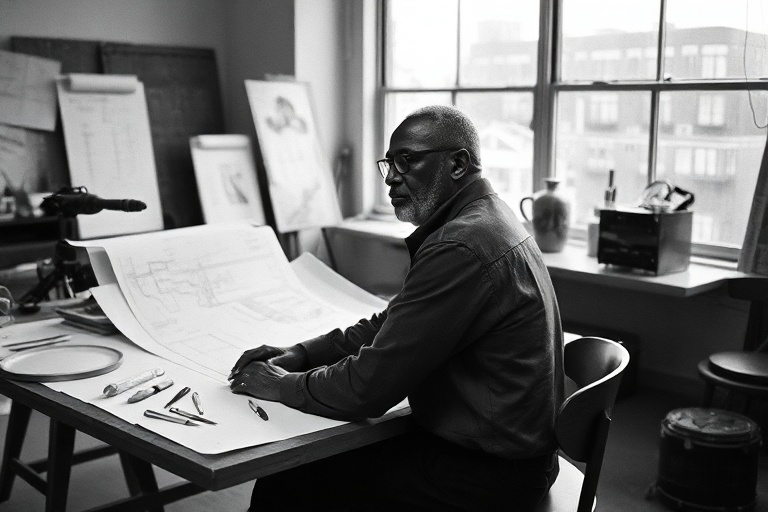
Edward Busby’s name may not roll off the tongue like some of his contemporaries, but his fingerprints are all over the stadiums and arenas where modern sports unfold. While architects like Zaha Hadid and Norman Foster often steal the spotlight, Busby’s work has quietly reshaped how we experience live sports across multiple continents. His designs prioritize fan engagement, sustainability, and adaptability—qualities that have become essential in 21st-century venue construction.
The Architect Behind the Spectacle
Born in Manchester, England, in 1968, Edward Busby studied at the Architectural Association School of Architecture in London before cutting his teeth with firms specializing in large-scale public projects. By the late 1990s, he had established his own practice, Busby & Associates, with a focus on sports infrastructure. His early commissions included minor football clubs and community centers, but his reputation grew as he delivered projects that balanced functionality with aesthetic ambition.
Busby’s approach was unconventional for his time. While most stadium architects prioritized capacity above all else, he argued that venues should serve as civic landmarks—spaces that fostered connection between spectators and the game itself. This philosophy found its fullest expression in projects like the Riyadh Sports City complex in Saudi Arabia and the adaptive-reuse transformation of London’s former Olympic Stadium into the London Stadium.
Key Innovations in His Designs
The following elements define Busby’s signature style:
- Modular Seating: Incorporating retractable sections to adjust capacity for different events.
- Natural Ventilation: Reducing reliance on energy-intensive climate control systems.
- Fan-Centric Layouts: Prioritizing sightlines and social spaces over sheer spectator numbers.
- Modular Facades: Using prefabricated panels to cut construction time and costs.
These innovations weren’t just theoretical. At the Etihad Campus in Manchester, Busby’s design reduced energy consumption by 40% compared to traditional stadiums of similar size. The venue became a benchmark for sustainable sports architecture, earning multiple industry awards.
A Global Footprint
Busby’s work has taken him from Europe to the Middle East and Southeast Asia, reflecting the globalization of sports infrastructure. In Qatar, his firm designed the Khalifa International Stadium, a centerpiece of the 2022 FIFA World Cup. The stadium’s curved roof and semi-transparent facade were engineered to reduce heat gain—a critical consideration in the desert climate.
In Africa, Busby & Associates are currently working on a 60,000-seat stadium in Nairobi, Kenya. The project aims to blend local architectural motifs with modern sustainability standards, using locally sourced materials and passive cooling techniques. This approach aligns with Busby’s belief that stadiums should reflect their communities, not just global sports trends.
The Cultural Impact of His Work
Stadiums designed by Busby often become more than just venues—they become cultural hubs. The London Stadium, for example, has hosted everything from Premier League football to major concerts by Adele and Guns N’ Roses. Its flexible design allows it to pivot between sporting events and entertainment spectacles without losing its identity.
This adaptability speaks to a broader trend in sports architecture. Modern fans expect venues to serve multiple purposes: a place to watch a match, a space for pre-game gatherings, and even a backdrop for social media moments. Busby’s designs anticipate these needs by creating interstitial areas that encourage lingering and interaction.
Critics argue that some of his stadiums prioritize spectacle over intimacy. The vast, open concourses of the Riyadh Sports City complex, for instance, can feel cavernous during smaller events. Yet even here, Busby’s team incorporated movable partitions and adjustable lighting to create more intimate settings when needed.
Challenges and Controversies
No architect operates without scrutiny, and Busby has faced his share of criticism. Some sustainability advocates point out that even his greenest designs rely on substantial material inputs, raising questions about the long-term environmental cost of large-scale venues. Others argue that his focus on flexibility can lead to generic designs that lack character.
A more persistent challenge has been the commercialization of sports architecture. As teams and leagues seek ever-larger revenue streams, stadiums are increasingly designed as marketing tools rather than community assets. Busby has pushed back against this trend, advocating for designs that serve local needs first. His refusal to over-commercialize spaces has sometimes put him at odds with clients prioritizing branding over user experience.
Looking Ahead: The Future of Sports Venues
As technology and fan expectations evolve, Busby’s principles remain relevant. The rise of e-sports and hybrid events demands venues that can accommodate both physical and digital spectators. His recent proposals for modular, pop-up stadiums suggest a future where venues are temporary, adaptable, and deeply integrated with their surroundings.
Meanwhile, climate change is forcing architects to reconsider even the most basic assumptions about stadium design. Busby’s latest projects incorporate rainwater harvesting, solar panel integration, and biodegradable materials—innovations that may soon become industry standards.
Conclusion
Edward Busby may never achieve the household-name status of some architects, but his influence on sports culture is undeniable. From Manchester to Nairobi, his venues have redefined how we gather, celebrate, and experience live events. In an era where stadiums are often seen as mere commercial assets, Busby’s work reminds us that architecture can—and should—elevate the human experience.
As sports continue to globalize, the demand for innovative, sustainable, and fan-centered venues will only grow. If Busby’s career is any indication, the future of sports architecture will belong to those who, like him, prioritize people over spectacle.