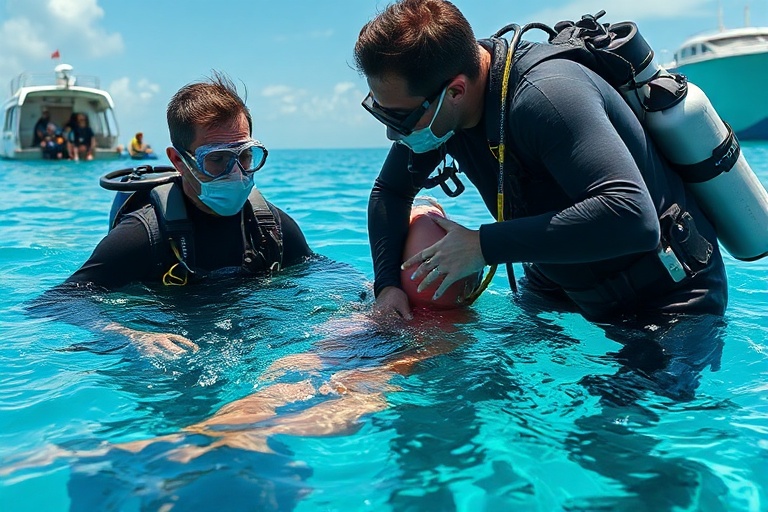
The Maldives, renowned for its crystal-clear waters and vibrant marine life, recently became the center of a tragedy that has raised serious questions about tourist safety standards in the region. A diving accident in the southern atolls left one tourist dead and another hospitalized, prompting swift reactions from local authorities and international observers alike.
The incident occurred during a routine dive excursion near the famous Ari Atoll, a hotspot for underwater enthusiasts. According to preliminary reports, the divers were part of a guided group when one of them experienced sudden equipment failure at a depth of approximately 30 meters. Rescue efforts were complicated by strong currents and limited visibility, highlighting the inherent risks of diving in such environments.
Timeline of Events and Immediate Aftermath
Local dive operators were the first to respond to the emergency, but the remoteness of the location delayed the arrival of advanced medical assistance. A nearby resort dispatched a boat equipped with oxygen tanks and first aid supplies, while emergency calls were made to the Maldives’ national emergency services. By the time a helicopter arrived from Malé, nearly two hours later, the situation had already escalated.
The deceased diver, a 42-year-old German national, was pronounced dead at the scene. The second diver, a 34-year-old Australian, was airlifted to a hospital in Malé with symptoms of decompression sickness. Medical teams worked for over six hours to stabilize the patient before transferring him to a specialized facility in Singapore for further treatment.
In the wake of the accident, the Maldives’ Ministry of Tourism issued a statement expressing condolences to the families involved and pledging a thorough investigation. “Safety is our top priority,” the statement read. “We are reviewing all protocols to ensure such incidents are prevented in the future.”
Understanding the Risks: Why Diving in the Maldives Can Be Dangerous
The Maldives attracts over 1.7 million tourists annually, many of whom are drawn to its world-class diving and snorkeling opportunities. The country’s coral reefs, teeming with marine biodiversity, provide an unparalleled underwater experience. However, the same conditions that make the Maldives a diver’s paradise also contribute to its risks.
Strong currents, unpredictable weather, and varying depths create challenges even for experienced divers. The Ari Atoll, where the accident occurred, is particularly known for its drift diving—a technique where divers rely on currents to carry them along the reef. While exhilarating, this style of diving requires advanced training and vigilance.
Additionally, the remote nature of many dive sites means that emergency response times can be lengthy. Resorts and liveaboard vessels often serve as the first line of defense, but their capabilities are limited by distance and resources. This incident underscores the need for better coordination between dive operators, local authorities, and international emergency services.
Key Factors Contributing to Diving Accidents in the Maldives
- Equipment failure: Malfunctioning gear, particularly regulators or buoyancy control devices, can lead to life-threatening situations underwater.
- Poor training or overconfidence: Many tourists underestimate the risks of diving in the Maldives, assuming that calm surface conditions guarantee safety below.
- Environmental hazards: Strong currents, sudden weather changes, and underwater topography can trap even seasoned divers.
- Delayed emergency response: The remoteness of dive sites often delays the arrival of medical assistance, exacerbating injuries.
- Inadequate supervision: Some accidents occur when tourists dive without proper guidance or in groups that exceed the recommended size for safe supervision.
Broader Implications for Tourist Safety in the Maldives
This accident is not an isolated incident. Over the past five years, the Maldives has seen a steady increase in diving-related incidents, including fatalities. While the country’s tourism industry has flourished, concerns about safety standards have grown louder. Critics argue that the current regulatory framework is insufficient to protect tourists, particularly those who are not experienced divers.
The Maldives’ government has taken steps to address these concerns, including mandatory safety briefings for all divers and stricter licensing requirements for dive operators. However, enforcement remains inconsistent, and many operators continue to cut corners to meet the demands of a competitive market.
International dive certification agencies, such as PADI and SSI, have also weighed in on the issue. While they emphasize the importance of proper training, they acknowledge that tourists often prioritize cost and convenience over safety. “Diving is not a spectator sport,” said a spokesperson for PADI. “It requires preparation, respect for the environment, and an understanding of one’s own limits.”
For the Maldives, the stakes are high. Tourism accounts for nearly 30% of the country’s GDP, and the diving industry is a major draw. A single high-profile accident can tarnish the country’s reputation and deter visitors. The challenge lies in balancing economic interests with the need for robust safety measures.
Lessons Learned and Steps Forward
The Maldives diving accident serves as a stark reminder of the importance of safety in adventure tourism. While the country’s natural beauty is undeniable, its potential dangers must not be overlooked. For tourists planning a diving trip to the Maldives, there are several steps they can take to minimize risks.
First and foremost, divers should ensure they are adequately trained for the conditions they will face. This means not only obtaining a certification but also verifying that it is recognized in the Maldives. Additionally, tourists should research dive operators thoroughly, looking for those with strong safety records and positive reviews from past clients.
For dive operators, the incident highlights the need for better emergency preparedness. This includes investing in equipment, training staff in advanced rescue techniques, and establishing clear communication protocols with local authorities and medical facilities.
The Maldives government, too, must play a more active role in enforcing safety regulations. This could involve unannounced inspections of dive operations, mandatory reporting of near-misses, and partnerships with international organizations to improve emergency response capabilities.
Ultimately, the goal should be to create a culture of safety that permeates every aspect of the diving experience in the Maldives. Tourists deserve to explore the underwater world without fear, and operators have a responsibility to ensure their well-being. The recent accident is a tragedy, but it also presents an opportunity to learn and improve.
Conclusion
The Maldives diving accident is a sobering reminder of the risks inherent in adventure tourism. While the country’s underwater landscapes are breathtaking, they are not without danger. The incident has exposed gaps in safety protocols and emergency response systems, prompting calls for reform from both local and international stakeholders.
Moving forward, the focus must be on prevention. This means better training for divers, stricter oversight of dive operators, and improved coordination between tourism businesses and government agencies. The Maldives has the potential to remain a top diving destination, but only if it prioritizes the safety of its visitors above all else.
For now, the families of the victims and the broader diving community await the results of the investigation. Their hope is that this tragedy will lead to meaningful change, ensuring that no other family has to endure a similar loss.
As the Maldives continues to rebuild its reputation in the wake of this accident, one thing is clear: the beauty of its underwater world must never come at the cost of human life.