Manon Rhéaume: The Woman Who Changed Hockey Forever
Manon Rhéaume’s name remains etched in hockey history not just for her skill on the ice, but for the barriers she shattered during an era when women’s hockey was still fighting for recognition. Born on February 24, 1972, in Lac-Beauport, Quebec, Rhéaume grew up in a family deeply rooted in the sport. Her father, Pierre Rhéaume, was a semi-professional hockey player, and her brother, Sylvain, would later play in the NHL. This environment shaped her passion early, but her journey to greatness required defying expectations at every turn.
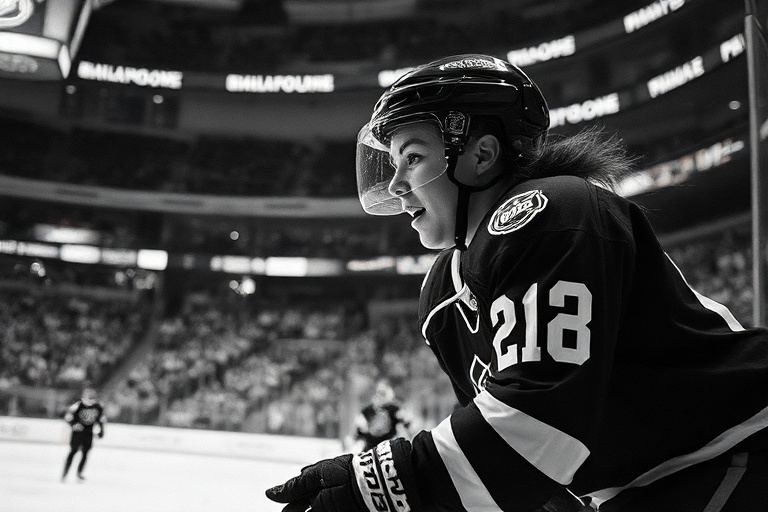
Rhéaume’s most defining moment came in 1992 when she became the first woman to play in an NHL preseason game. At 20 years old, she stepped between the pipes for the Tampa Bay Lightning against the St. Louis Blues, stopping seven of nine shots. While the game lasted only one period, her appearance sent a powerful message: women could compete at the highest levels of hockey. This wasn’t just a symbolic gesture; it was a challenge to the status quo of a sport that had long been dominated by men.
The Journey to the NHL: Overcoming Obstacles
Rhéaume’s path to the NHL was anything but straightforward. As a teenager, she played boys’ hockey in Quebec leagues because organized women’s leagues were nearly nonexistent. Her talent was undeniable, but skepticism followed her everywhere. Coaches and scouts often questioned whether a woman could handle the physicality and speed of men’s hockey. Undeterred, she proved her mettle in the Quebec Major Junior Hockey League (QMJHL) in 1991, becoming the first woman to play in a regular-season junior game.
Her performance caught the attention of the Lightning, who signed her to a contract in 1992. While she didn’t make the roster, her preseason appearance was a watershed moment. Rhéaume later reflected that the support she received from some teammates and coaches balanced the skepticism from others. “They gave me a chance, and I took it,” she said in a 2019 interview. “It wasn’t about proving I was better than anyone else. It was about showing that women belong in these spaces.”
Challenges in a Male-Dominated Sport
The skepticism Rhéaume faced wasn’t limited to her abilities. She also had to navigate the cultural norms of a sport that historically excluded women. Media coverage often focused on her gender rather than her performance, with some outlets questioning whether she was a “novelty” rather than a legitimate athlete. This scrutiny extended beyond the rink. She received death threats and hate mail, a stark reminder of the resistance she faced.
Yet, Rhéaume’s resilience shone through. She played professionally in various men’s leagues, including the International Hockey League (IHL) and the ECHL, where she faced goaltenders who were often twice her size. Her ability to read the game and make saves against larger opponents demonstrated that skill could outweigh brute strength. In 1993, she played for the Atlanta Knights in the IHL, becoming the first woman to win a professional men’s hockey game, a milestone that often goes unmentioned in sports history.
Beyond the NHL: Advocating for Women’s Hockey
While Rhéaume’s NHL stint remains her most famous achievement, her impact on women’s hockey is equally significant. After retiring from professional play in 1999, she transitioned into coaching and mentoring young players. She became a vocal advocate for girls’ hockey, emphasizing the importance of visibility and opportunity. Rhéaume worked with organizations like the Canadian Women’s Hockey League (CWHL) and later the Professional Women’s Hockey Players Association (PWHPA), which fights for better resources and recognition for women’s hockey.
Her advocacy extended to grassroots efforts as well. Rhéaume frequently visited schools and hockey camps to inspire young girls to pursue their dreams, regardless of gender barriers. “I wanted to show them that if they love the game, they should never let anyone tell them they can’t play,” she explained in a 2020 interview. Her work helped pave the way for future generations, including players like Marie-Philip Poulin and Ann-Renée Desbiens, who have carried the torch in women’s hockey.
Legacy and Influence on Modern Hockey
Rhéaume’s legacy is multifaceted. She broke the gender barrier in the NHL, but her influence transcends that singular moment. She challenged the hockey establishment to reconsider its biases and created opportunities for women in a sport that had long excluded them. Today, her impact is visible in the growing popularity of women’s hockey, from the NHL’s embrace of the PWHL to the success of international tournaments like the IIHF Women’s World Championship.
In 2019, Rhéaume was inducted into the IIHF Hall of Fame, a testament to her contributions to the sport. The induction recognized not only her groundbreaking achievements but also her role as a trailblazer for women in hockey. Her story is often cited in discussions about gender equality in sports, serving as a reminder that progress is possible, even in the face of overwhelming odds.
Life After Hockey: A Lasting Impact
Since retiring from competitive play, Rhéaume has remained active in the hockey community. She co-founded the Manon Rhéaume Foundation, which supports underprivileged youth in accessing hockey equipment and training. The foundation reflects her belief that hockey should be a sport for everyone, regardless of socioeconomic background. “Hockey gave me so much,” she said. “I want to give that same opportunity to others.”
Rhéaume has also worked as a broadcaster and analyst, bringing her insights to a broader audience. Her commentary provides a unique perspective on the game, one shaped by her experiences as both a player and an advocate. She has used her platform to highlight the disparities in women’s hockey, from pay equity to media coverage, ensuring that the conversation about gender in sports continues.
Lessons from Manon Rhéaume’s Career
Manon Rhéaume’s career offers several lessons for athletes and advocates alike. First, her journey underscores the importance of perseverance. She faced countless obstacles, from skepticism to outright hostility, yet she never wavered in her belief in her abilities. Second, her story highlights the power of representation. By stepping onto NHL ice, she showed young girls that their dreams were valid, no matter the barriers they faced.
Finally, Rhéaume’s advocacy reminds us that breaking barriers is not a one-time act but an ongoing process. Her work with the PWHPA and her foundation demonstrates that true change requires sustained effort and a commitment to equity. In a sport where women’s teams still struggle for equal funding and visibility, Rhéaume’s legacy serves as both inspiration and a call to action.
As women’s hockey continues to grow, Rhéaume’s role in its development cannot be overstated. From her historic NHL appearance to her tireless advocacy, she has left an indelible mark on the sport. Her story is a testament to the power of resilience, representation, and the belief that barriers are meant to be broken.
For those looking to learn more about the evolution of women’s hockey, Dave’s Locker Sports offers in-depth coverage of the sport’s milestones and current trends. Similarly, Dave’s Locker News provides updates on the latest developments in hockey and beyond.