Outlander Finale Ends Claire and Jamie’s Saga with Emotional Closure
The final season of Outlander concluded with an episode that balanced emotional payoffs with lingering uncertainties. Fans who have followed Claire and Jamie Fraser’s journey since 2014 received a conclusion that honored their love story while leaving some threads deliberately unresolved. The finale, titled “The Last Blood Moon,” delivered a mix of resolution and ambiguity, sparking immediate discussions among viewers.
Character Arcs Reach Their Natural Endings
Claire and Jamie’s relationship has always been the beating heart of Outlander. In this finale, their love story reached a conclusion that felt earned rather than forced. The episode revisited key moments from their decades-spanning journey, from their first meeting in 18th-century Scotland to their final days in the 20th century. The choice to frame their story through Claire’s perspective, both in the past and present, reinforced the idea that their love was the central narrative all along.
The show also gave closure to other major characters. Brianna and Roger’s marriage, tested by time and tragedy, found stability in their shared future. Young Fergus and Marsali’s family dynamic, though briefly addressed, suggested a continuation of the Frasers’ legacy. Even antagonists like Governor Tryon and the villainous Stephen Bonnet received definitive endings, providing narrative satisfaction for long-time viewers.
Yet, not every character arc felt fully resolved. Ian Murray’s storyline, while emotionally charged, ended on a note that left his future with Emily uncertain. The show’s writers chose to prioritize emotional impact over complete closure, which may frustrate some fans but aligns with the series’ tendency to embrace ambiguity.
Themes of Time, Sacrifice, and Legacy Take Center Stage
Outlander has always explored the consequences of stepping through the stones, and the finale doubled down on this theme. Claire’s choice to return to Jamie in the past was framed as the ultimate sacrifice—one that defined her entire life. The show juxtaposed her modern medical career with her 18th-century struggles, emphasizing how her experiences shaped her into the woman she became.
Sacrifice was not limited to Claire. Jamie’s willingness to let Claire go, even when it tore him apart, underscored the depth of his love. Their reunion in the finale’s closing moments felt like a reward for their unwavering devotion, but it also served as a reminder of the cost of their choices. The theme of legacy, too, played a crucial role. The Frasers’ descendants—Brianna, Roger, and their children—represented the continuation of their story, ensuring that their impact would endure beyond their lifetimes.
The finale also revisited the show’s recurring motif of blood and violence. From Jamie’s scars to Claire’s medical skills, the series has always grappled with the physical and emotional toll of survival. The final battle scenes, though brief, served as a reminder of the brutality that defined the Frasers’ lives. Yet, the episode chose to end on a quieter note, focusing on Claire and Jamie’s peaceful moments rather than their battles.
Production Choices Elevate the Emotional Impact
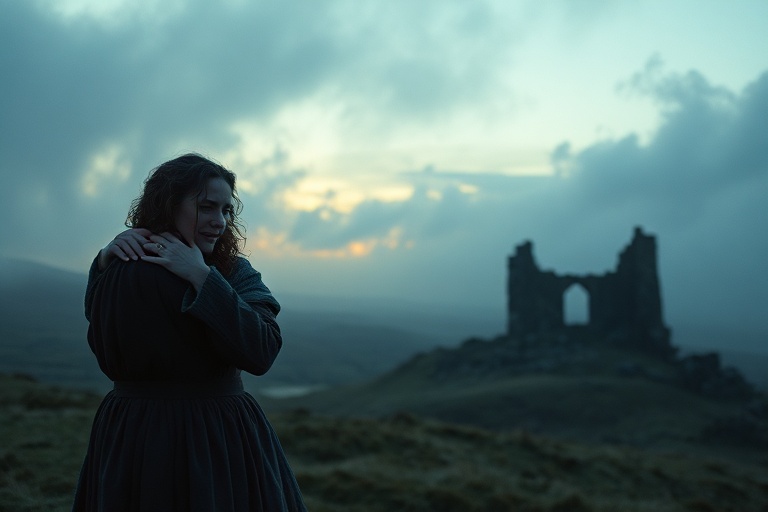
The cinematography in the finale was deliberate and evocative. Wide shots of the Scottish Highlands, bathed in golden light, mirrored the show’s opening scenes, creating a sense of full-circle storytelling. The use of flashbacks—intercutting past and present—reinforced the idea that time, for the Frasers, was both a burden and a gift.
Caitriona Balfe and Sam Heughan’s performances reached their peak in this finale. Balfe’s portrayal of an aging Claire, both weary and content, was particularly moving. Heughan’s Jamie, now an old man, conveyed decades of love and loss in a single glance. Their chemistry remained the emotional core of the series, even as the story shifted to a new generation.
The soundtrack, too, played a pivotal role. The haunting melody of “The Skye Boat Song,” used throughout the series, returned in the finale, evoking nostalgia and finality. The score balanced melancholy with hope, mirroring the duality of the Frasers’ lives.
Fan Reactions and the Future of the Franchise
Reactions to the finale have been mixed but passionate. Some fans celebrated the emotional payoff, particularly the focus on Claire and Jamie’s love story. Others expressed disappointment that certain storylines, like Brianna and Roger’s, felt rushed in the final season. Social media platforms lit up with theories about what could have been, from alternate endings to potential spin-offs.
One recurring question among fans is whether Outlander will continue in some form. Diana Gabaldon, the author of the book series, has hinted at a potential 11th book, which could serve as source material for future seasons. Additionally, Starz has not officially announced the end of the series, leaving the door open for more stories set in the Outlander universe. Entertainment sections on fan sites have already begun speculating about spin-offs, particularly those focusing on Brianna and Roger’s adventures in the New World.
For now, though, the finale serves as a definitive end to Claire and Jamie’s story. Their love, tested by time, war, and separation, remains one of television’s most enduring romances. The show’s legacy lies not just in its sweeping historical drama or its fantastical elements, but in its ability to make audiences believe in the power of love across lifetimes.
What’s Next for Outlander?
While the finale closed the book on Claire and Jamie’s journey, the Outlander franchise is far from over. Here’s what fans can look forward to:
- Potential 11th Book: Diana Gabaldon has confirmed she is working on a new novel, which could introduce fresh conflicts and characters.
- Spin-Off Possibilities: Rumors suggest a series focusing on Brianna and Roger’s life in the American colonies, or even a prequel set in the Jacobite rising.
- Standalone Stories: The Outlander universe is rich with untapped potential, from the Revolutionary War era to the Wild West.
- Legacy Content: Starz may release behind-the-scenes documentaries or bloopers, giving fans a chance to revisit the making of the series.
For now, fans are left to process the finale’s emotional weight. Some may need time to grieve the end of an era, while others will cling to the hope that more stories remain to be told.
A Conclusion That Feels Both Final and Open-Ended
The Outlander finale was a masterclass in balancing closure with ambiguity. It honored the show’s core themes—love, sacrifice, and the passage of time—while leaving room for interpretation. Some fans will argue that certain storylines deserved more attention, but the finale’s strength lies in its emotional honesty rather than its perfection.
As the credits rolled, viewers were left with a bittersweet sense of completion. Claire and Jamie’s story is over, but their legacy lives on through their descendants and the fans who have followed their journey for nearly a decade. Whether the franchise continues or not, Outlander will remain a testament to the power of storytelling and the enduring appeal of a love that defies time.
For now, fans can rewatch their favorite moments, dive into the books, or simply reflect on the journey they’ve taken alongside Claire and Jamie. The stones may have closed, but the story of Outlander is far from forgotten.