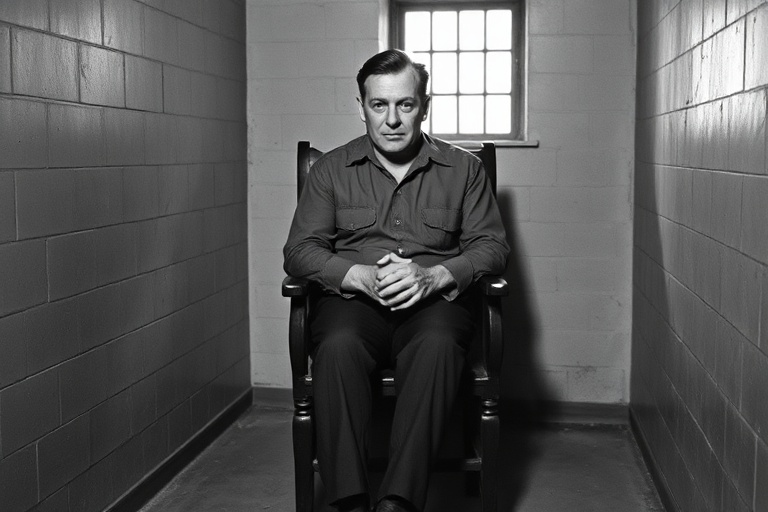
Ronnie Biggs was more than just a British criminal; he was a figure who transcended the boundaries of crime and pop culture, becoming a global symbol of rebellion against authority. His life story—from the audacious 1963 Great Train Robbery to his decades-long exile in Brazil—captured the imagination of millions. Biggs didn’t just commit a crime; he crafted a legend that blurred the lines between outlaw and folk hero, particularly in the countercultural movements of the 1960s and beyond.
Born in 1929 in London’s working-class Lambeth, Biggs grew up during a time of post-war austerity and social upheaval. His early life was marked by petty theft and run-ins with the law, but it was the 1963 robbery of the Glasgow-to-London Royal Mail train that cemented his place in history. Alongside a gang of 15 accomplices, Biggs helped steal £2.6 million (equivalent to over £60 million today), an act that shocked Britain and made him a household name. What followed was a saga of prison breaks, international fugitiveship, and a cultural legacy that endured for decades.
The Great Train Robbery and the Birth of a Legend
The Great Train Robbery wasn’t just a heist; it was a meticulously planned operation that exploited weaknesses in Britain’s postal system. The gang, led by Bruce Reynolds, targeted the Glasgow-to-London mail train by tampering with the track signals and stopping the train near Bridego Railway Bridge in Buckinghamshire. Using brute force and intimidation, they overpowered the train’s crew and made off with the loot—most of which was never recovered.
Biggs, then 34, played a relatively minor role compared to some of his accomplices, but his notoriety grew as the media latched onto his flamboyant personality. Unlike the other robbers, who largely stayed out of the public eye, Biggs embraced the spotlight. He gave interviews, posed for photos, and even appeared on television, becoming the public face of the robbery. His charm and wit made him a media darling, a rare instance where a criminal was celebrated rather than vilified.
Within a year, Biggs was caught and sentenced to 30 years in prison. But his incarceration was short-lived. In July 1965, he pulled off one of the most daring prison escapes in British history, scaling a wall at Wandsworth Prison using a rope ladder. The escape turned him into an international fugitive, and his story became a sensation in the global press.
Exile in Brazil and the Cult of Biggs
After his escape, Biggs fled to Australia under a false identity, but his time there was brief. He soon moved to Brazil, where he spent the next 36 years living as a free man. Brazil in the 1960s and 70s was a haven for fugitives, thanks to its lenient extradition policies and vibrant counterculture. Biggs thrived in this environment, blending into the local community while remaining a celebrity.
His life in Brazil was a mix of exile and adventure. He worked as a carpenter, lived in favelas, and even recorded a samba album titled Ronnie Biggs Sings. He married a Brazilian woman, had children, and became a fixture in Rio de Janeiro’s bohemian scene. Biggs was embraced by Brazil’s countercultural movement, which saw him as a symbol of resistance against the oppressive British establishment. Musicians like Jimi Hendrix and bands like The Rolling Stones referenced him in their work, further cementing his place in global pop culture.
Brazil’s refusal to extradite Biggs to Britain became a point of contention between the two countries for decades. The British government repeatedly demanded his return, but Brazilian courts ruled that he could not be sent back due to his family ties and the length of time he had spent in the country. Biggs, for his part, played up his exile, giving interviews and even appearing in documentaries that framed him as a lovable rogue rather than a criminal.
Biggs and the Counterculture Movement
Biggs’s story resonated deeply with the counterculture movements of the 1960s and 70s. His rebellion against authority, his charm, and his ability to evade capture made him a folk hero to those who saw the establishment as oppressive. In an era when youth culture was challenging traditional norms, Biggs represented the ultimate anti-authority figure—a man who lived by his own rules.
His influence extended beyond crime into music, film, and literature. The 1967 film Robbery, starring Stanley Baker as a fictionalized version of Bruce Reynolds, was loosely based on the Great Train Robbery. Biggs himself appeared in the 2004 documentary Biggs: The Great Escape, which further mythologized his story. Bands like The Kinks and The Who referenced him in their songs, and he was a frequent subject in the underground press.
Even his personal life became part of the legend. His relationships with women, particularly his Brazilian wife, Raquel, were chronicled in the media. His children, born in Brazil, grew up knowing their father as a fugitive but also as a man who lived life on his own terms. This duality—criminal and family man—added to his mystique.
The Final Years and Legacy
Biggs’s return to Britain in 2001 was as dramatic as his escape. After years of living freely in Brazil, he voluntarily returned to Britain, where he was immediately arrested and sent back to prison. His health was failing, and he was suffering from multiple ailments, including a stroke. Yet, even in prison, he remained a media figure, giving interviews and making headlines.
Biggs was released from prison in 2009 on compassionate grounds due to his poor health. He spent his final years in a care home in East Sussex, where he continued to give interviews and sign autographs. He died in December 2013 at the age of 84, but his legacy lived on. His life story became a cautionary tale, a celebration of rebellion, and a testament to the power of mythmaking in popular culture.
Biggs’s Influence on Modern Crime and Pop Culture
Ronnie Biggs’s story has left an indelible mark on both crime and pop culture. His life challenges the traditional narrative of the criminal as a one-dimensional villain. Instead, Biggs was a complex figure—a man who committed a serious crime but also became a symbol of freedom and rebellion. His story raises questions about justice, celebrity, and the blurred lines between hero and outlaw.
In the world of crime, Biggs’s audacity and ability to evade capture for so long have made him a reference point for other fugitives. His story has been referenced in films like Snatch and TV shows like Peaky Blinders, where the Great Train Robbery is often cited as inspiration for other heists. His life also highlights the role of media in shaping public perception of criminals, turning some into celebrities and others into villains.
In pop culture, Biggs’s story continues to inspire artists, musicians, and writers. His image—often depicted as a lovable rogue—has been used in everything from album covers to fashion campaigns. His life serves as a reminder of how crime and celebrity can intersect, creating a legacy that outlasts the crime itself.
For those interested in the intersection of crime and culture, Biggs’s story is a fascinating case study. It’s a tale of rebellion, media manipulation, and the power of myth. Whether viewed as a criminal, a folk hero, or a complex figure, Ronnie Biggs remains one of the most enduring and enigmatic figures of 20th-century Britain.
Where to Learn More About Ronnie Biggs and His Legacy
If you’re interested in diving deeper into Ronnie Biggs’s story, there are several resources and cultural touchpoints to explore. His life has been documented in numerous books, films, and articles, each offering a different perspective on his role as a criminal and a cultural icon.
- Books:
- The Great Train Robbery by Piers Paul Read – A detailed account of the robbery and its aftermath.
- Odd Man Out: The Last Strawberry Thief by Ronnie Biggs – Biggs’s own memoir, offering his perspective on his life and crimes.
- Biggs: The Man Who Stole the World’s Most Famous Train by Robin McKie – A comprehensive biography of Biggs’s life.
- Documentaries and Films:
- Biggs: The Great Escape (2004) – A BBC documentary that follows Biggs’s life in exile.
- Robbery (1967) – A film starring Stanley Baker that loosely fictionalizes the Great Train Robbery.
- The Great Train Robbery (2013) – A BBC TV movie that dramatizes the events of the robbery.
- Music and Art:
- Biggs’s samba album Ronnie Biggs Sings – A unique artifact of his time in Brazil.
- References in songs by The Kinks, The Who, and other 1960s and 70s artists.
For those interested in the broader cultural impact of figures like Biggs, exploring the world of Trending crime stories and Culture can provide additional context. These categories often feature articles that examine how criminals and outlaws shape public imagination and pop culture.
Ronnie Biggs’s life was a paradox—a man who committed a serious crime but also became a beloved cultural icon. His story challenges us to reconsider how we view criminals, celebrities, and the boundaries between the two. Whether you see him as a villain, a hero, or something in between, Ronnie Biggs remains a fascinating figure whose legacy continues to inspire and provoke.