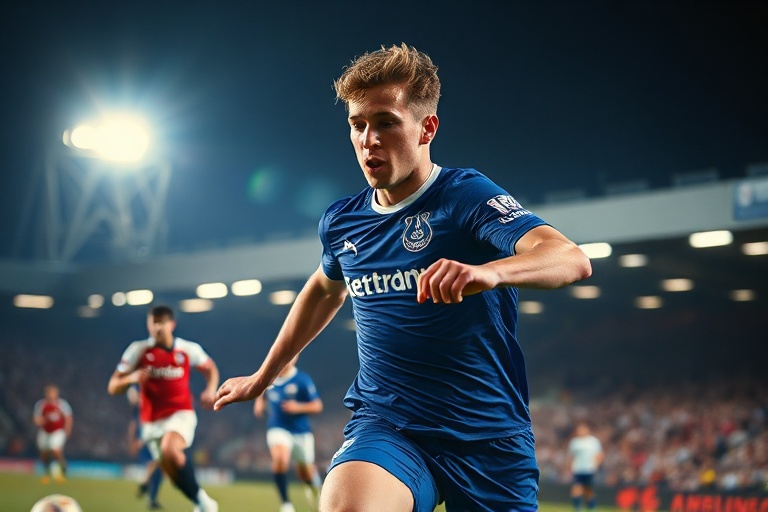
Seamus Coleman: From Donegal Roots to Everton Captain
Seamus Coleman’s journey from the rugged hills of Donegal to the captain’s armband at Everton is a testament to resilience and quiet determination. Born in Killybegs in 1988, Coleman’s early years were shaped by the physical and cultural landscape of Ireland’s northwest. Football, though not yet a professional ambition, was woven into the fabric of his community—a place where local matches drew crowds as large as the parish itself.
His professional career began at Sligo Rovers, where his performances in the League of Ireland caught the attention of scouts. By 2009, he had secured a move to English football, joining Everton. The transition was not seamless. Coleman’s first seasons were marked by loan spells and limited appearances, testing his resolve. Yet, his time at Blackpool and Hull City honed his skills, preparing him for the challenges ahead.
A Leadership Style Forged in Adversity
Coleman’s leadership is often described as understated but impactful. Unlike the vocal, charismatic captains who dominate headlines, he leads through example—consistency, work ethic, and an unwavering commitment to his team. This approach resonates particularly in a sport where leadership styles vary as widely as the cultures of the clubs themselves.
His captaincy at Everton, which began in 2019, coincided with a period of transition for the club. Under managers like Carlo Ancelotti and Frank Lampard, Coleman became a stabilizing force. His ability to adapt, whether as a right-back or in midfield, demonstrated a footballing intelligence that transcends traditional roles. This versatility is rare in modern football, where players are often pigeonholed into specific positions.
- Consistency: Coleman has missed only 15 league matches over the past five seasons—a rarity for a defender in the Premier League.
- Adaptability: His shift from defensive midfield to right-back in 2020 showcased tactical flexibility.
- Longevity: Injuries, including a grueling recovery from a broken leg in 2017, have tested his career, yet he has returned stronger each time.
The Global Influence of Irish Footballers
Coleman’s career reflects broader trends in Irish football. Historically, Irish players were often typecast as hardworking but limited in technical ability. However, the modern era has seen a shift. Players like Coleman, Robbie Keane, and more recently, Conor Coady, have shattered stereotypes by excelling in top European leagues. Their success has inspired a generation of young Irish players to aim higher, both in ambition and skill development.
Irish football’s global influence extends beyond club football. The national team’s performances in recent tournaments, though inconsistent, have highlighted the depth of talent emerging from the island. Coleman’s role as a leader in Everton’s squad—and as a veteran presence in the Irish national team—underscores the importance of experience in navigating the pressures of international football.
Cultural Significance: More Than Just a Footballer
Coleman’s impact is not confined to the pitch. His journey embodies the spirit of Irish resilience, a theme deeply embedded in the country’s cultural narrative. In a nation where emigration has long been a rite of passage, Coleman’s success abroad serves as a source of pride. His story is often cited in discussions about Irish talent retention and the challenges of competing in a globalized football market.
Moreover, Coleman’s leadership style reflects broader societal shifts in Ireland. As the country grapples with issues of identity and globalization, figures like Coleman—who balances local roots with global success—offer a model of rooted cosmopolitanism. His presence in the Premier League, a league dominated by players from across the globe, highlights the interconnectedness of modern football.
The Road Ahead: Legacy and Beyond
As Coleman approaches the twilight of his career, questions about his legacy are inevitable. For Everton, he represents more than just a player; he is a symbol of continuity in an era of constant change. His potential induction into the club’s Hall of Fame would cement his status as one of Everton’s most respected figures. Yet, Coleman’s ambitions may extend beyond football. His involvement in charitable initiatives, including work with the Everton in the Community foundation, suggests a desire to give back to the community that shaped him.
Looking globally, Coleman’s career offers lessons for aspiring footballers in smaller markets. His success demonstrates that talent, when paired with determination and adaptability, can transcend geographical boundaries. In an era where football is increasingly dominated by financial power, Coleman’s story is a reminder of the human element—the players who rise through sheer grit.
“Football is a game of moments, but leadership is about the years in between.” — Seamus Coleman, reflecting on his career in a 2022 interview.
A Final Whistle: What Coleman Represents
Seamus Coleman’s career is a microcosm of modern football’s complexities. It is a story of adaptation, resilience, and quiet leadership. In an era where footballers are often reduced to statistics or social media personas, Coleman stands out for his authenticity. His journey from Donegal to the Premier League is not just a personal triumph but a cultural touchstone for Irish football.
As the sport continues to evolve, Coleman’s legacy will be measured not just by trophies or appearances but by the values he embodied. In a global game often criticized for its commercialism, his career serves as a reminder of football’s power to inspire, unite, and transcend borders.
For more on the intersection of sports and culture, explore our Sports and Culture sections.