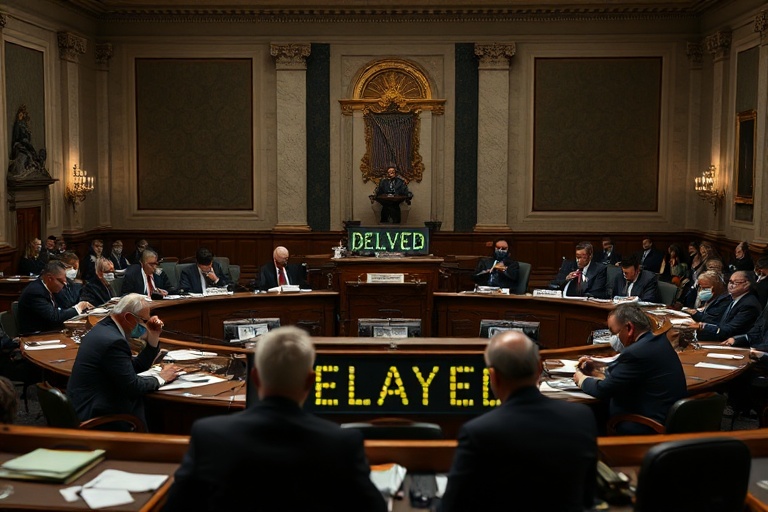
Senate Housing Bill Delayed: What It Means for Americans
The Senate’s latest housing bill has hit a significant roadblock after the House of Representatives delayed its consideration. This legislative setback comes at a time when housing affordability remains a critical issue for millions of Americans. The delay has left both lawmakers and housing advocates scrambling to understand the implications for future housing policy.
According to congressional sources familiar with the matter, the House Rules Committee postponed the scheduled vote without providing an immediate explanation. The move has raised concerns about whether the bill can secure the necessary support to advance. The uncertainty surrounding the legislation’s future has intensified political discussions about housing reform in Washington.
The Legislative Journey So Far
The housing bill, introduced in early spring, aimed to address several key housing challenges. Its provisions included incentives for affordable housing construction, tax credits for first-time homebuyers, and funding for homelessness prevention programs. The bill quickly gained attention as one of the most comprehensive housing initiatives in recent years.
House Speaker Mike Johnson initially expressed confidence in the bill’s prospects, scheduling it for a floor vote within two weeks. However, the sudden delay suggests growing divisions within the Republican conference. Some members have expressed reservations about the bill’s cost, while others question whether it goes far enough to address housing shortages in their districts.
The Senate version of the bill, which passed with bipartisan support in March, included additional provisions for rural housing development. Lawmakers from both chambers had been working to reconcile the differences between the two versions before the House delay occurred. Now, those negotiations face even greater uncertainty.
Key Stakeholders React to the Delay
The housing industry has responded with cautious optimism despite the setback. The National Association of Home Builders issued a statement calling the delay “disappointing but not unexpected.” The organization emphasized the urgent need for housing solutions, particularly in high-cost metropolitan areas where inventory remains critically low.
Affordable housing advocates have been more vocal in their criticism. The National Low Income Housing Coalition released a statement warning that further delays could have “real consequences for families struggling to keep a roof over their heads.” The organization pointed to recent data showing that nearly 20 million low-income households spend more than half their income on housing.
On Capitol Hill, reactions have been mixed. Some Democratic lawmakers see the delay as an opportunity to strengthen the bill’s provisions. Representative Maxine Waters, chair of the House Financial Services Committee, stated that she remains “committed to working with colleagues on both sides of the aisle to deliver meaningful housing reform.”
What Comes Next for the Housing Bill?
With the House delay now complicating the legislative timeline, several potential paths forward have emerged. The most immediate option would involve the House Rules Committee rescheduling the vote, possibly within the next two weeks. However, this would require finding common ground among House Republicans who remain divided on the bill’s merits.
Another possibility involves the Senate taking a more active role in pushing the legislation forward. Senate Majority Leader Chuck Schumer could potentially bring the House-passed version to a vote, though this would likely face significant opposition from House Republicans who prefer their chamber’s version.
If the bill ultimately fails to advance, housing advocates warn that the consequences could be severe. The current housing crisis shows no signs of abating, with home prices continuing to rise faster than wages in many parts of the country. The delay also raises questions about Congress’s ability to address complex domestic policy issues amid increasing political polarization.
The Broader Implications for Housing Policy
This legislative setback occurs against a backdrop of growing housing challenges across the United States. According to the latest census data, more than 1.5 million households are at risk of homelessness, while homeownership rates among young adults have declined significantly over the past decade. The Senate housing bill represented one of the most ambitious attempts to address these issues in recent memory.
The delay also highlights the challenges of bipartisan policymaking in an era of divided government. While both parties generally agree on the need for housing reform, fundamental disagreements persist over the appropriate role of federal intervention versus market-based solutions. These philosophical differences have repeatedly stalled housing legislation in recent years.
For now, housing advocates are urging calm while continuing to press for action. The National Housing Conference has launched a grassroots campaign targeting key congressional districts where housing affordability remains a top voter concern. The organization’s president, David Dworkin, emphasized that “delaying action on housing is not an option when millions of families are struggling.”
As the political wrangling continues, one thing remains clear: the housing crisis will not wait for Congress to sort out its differences. With each passing month, the gap between housing supply and demand widens, pushing more Americans into precarious housing situations. The Senate housing bill’s delay may prove to be more than just a legislative setback—it could represent a missed opportunity to address one of the most pressing domestic policy challenges of our time.
Resources for Further Reading
- Politics Section – Coverage of congressional legislation and policy debates
- Economy Section – Analysis of housing market trends and economic impacts