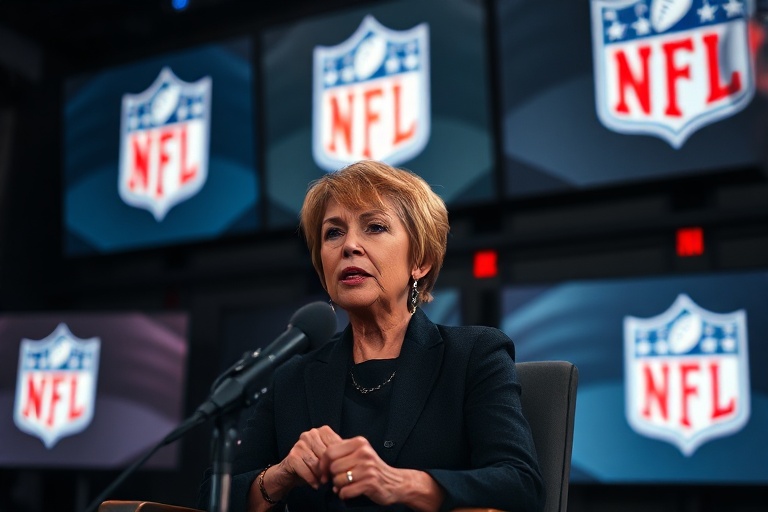
Senator Tammy Baldwin Challenges NFL-Netflix Concussion Series as Distraction
US Senator Tammy Baldwin Criticizes NFL’s Netflix Partnership Over Concussion Reels
Senator Tammy Baldwin of Wisconsin has publicly challenged the NFL’s decision to produce concussion awareness content for Netflix, calling it a distraction from the league’s ongoing legal and ethical obligations. Baldwin, a longtime advocate for athlete safety, issued a formal statement on April 3, 2024, expressing concern that the partnership may prioritize entertainment over evidence-based medical reform. The announcement comes as public scrutiny of sports-related brain injuries intensifies globally, with growing calls for transparency in professional leagues.
The controversy centers on a multi-part documentary series commissioned by the NFL and developed in collaboration with Netflix. The project, titled Game Changers: Protecting the Player, aims to highlight advancements in concussion protocols and player welfare initiatives. While the league frames the series as part of its “commitment to health and safety,” critics argue that it obscures the NFL’s historical resistance to independent research on long-term brain trauma.
Baldwin’s statement did not mince words. “When the NFL uses its influence to shape narratives on its own terms, it risks turning real human suffering into content,” she wrote. “Athletes deserve action—not reassurance packaged as prestige television.” Her comments reflect a broader skepticism toward corporate-led narratives in sports governance, a trend that has gained momentum in Europe and Australia, where public health agencies increasingly scrutinize league-funded safety campaigns.
The Global Rise of Athlete Advocacy and Its Clash With League Narratives
Baldwin’s intervention is part of a larger cultural shift in how brain injuries in sports are discussed, documented, and regulated. In Australia, former rugby players have launched a class-action lawsuit against the National Rugby League (NRL), citing inadequate concussion protocols. In the UK, football’s governing bodies face criticism for failing to adopt FIFA’s concussion substitution rules during domestic matches. These developments underscore a widening gap between league policies and independent medical recommendations.
The NFL’s partnership with Netflix adds a new layer to this debate. Streaming platforms now wield unprecedented influence over public perception, often blurring the line between journalism and promotional content. Baldwin highlighted this risk in her statement: “When a league controls both the message and the medium, accountability becomes a matter of editorial discretion—not ethical obligation.”
This concern is not isolated. In 2022, the World Health Organization (WHO) issued guidelines urging sports organizations to avoid partnerships that could “undermine public trust in independent health research.” The NFL’s collaboration with Netflix appears to contradict this advice, reinforcing perceptions of the league as a media conglomerate first, and a health authority second.
What’s at Stake: Legal, Medical, and Financial Realities
The stakes extend beyond public relations. Over 4,500 former NFL players have filed lawsuits alleging the league concealed evidence linking football-related head trauma to chronic traumatic encephalopathy (CTE). Settlements have exceeded $1 billion, yet Baldwin argues that financial compensation alone is insufficient without systemic change. “Money doesn’t reverse brain damage,” she noted. “Reform does.”
Analysts point out that the NFL’s annual revenue exceeds $20 billion. With such financial power, the league can shape narratives through high-profile collaborations. Netflix, valued at over $250 billion, amplifies this reach. The partnership effectively transforms league policies into entertainment, potentially diluting calls for stricter regulations. In Canada, where the Canadian Football League (CFL) faces similar scrutiny, sports journalists have begun questioning whether league-funded documentaries serve the public or the bottom line.
Baldwin’s critique also touches on a broader ethical dilemma: Who gets to tell the story of athlete safety? Independent filmmakers and journalists have long documented the human cost of sports-related brain injuries. Yet, when leagues commission their own content, critical perspectives are often sidelined. This dynamic mirrors patterns seen in technology and entertainment, where corporate narratives dominate public discourse.
The Road Ahead: Policy, Public Pressure, and Possible Outcomes
Baldwin has called for congressional hearings to examine the NFL’s role in shaping concussion narratives. Her proposal includes a review of all league-funded media projects to ensure they align with recommendations from the Centers for Disease Control and Prevention (CDC) and the National Institutes of Health (NIH). Similar calls for oversight have emerged in the European Parliament, where lawmakers are considering stricter transparency rules for sports organizations receiving public funding.
Possible outcomes from this debate include:
- Increased regulatory scrutiny of league-funded media projects
- Mandatory independent oversight of concussion protocols in professional sports
- Public campaigns led by athletes and medical experts, rather than leagues
- Stronger penalties for leagues found to misrepresent safety data
The NFL has not publicly responded to Baldwin’s statement. However, in a 2023 interview, NFL Commissioner Roger Goodell defended the league’s media strategy, stating that “storytelling can be a powerful tool for change.” Critics counter that such statements ring hollow without concurrent investment in medical research and policy reform.
As the conversation evolves, one thing is clear: the intersection of sports, media, and health is no longer a niche concern. It is a global issue demanding coordinated action. Baldwin’s intervention signals a turning point—not just for the NFL, but for how societies prioritize athlete welfare in an era dominated by corporate storytelling.
A Call for Collective Responsibility
The Baldwin-NFL controversy is more than a political skirmish. It is a referendum on who controls the narrative of athlete safety. In an age where streaming platforms and sports leagues wield immense cultural influence, the public must demand transparency. Athletes, families, and independent experts must have a seat at the table—one not controlled by league marketing departments.
Until then, the risk remains: real lives will be reduced to content, and genuine reform will be overshadowed by polished reels. The question is no longer whether the NFL should tell its story—but whether anyone else will be allowed to tell the truth.