Trump Gold Statue: Art, Politics, and the Power of Controversy
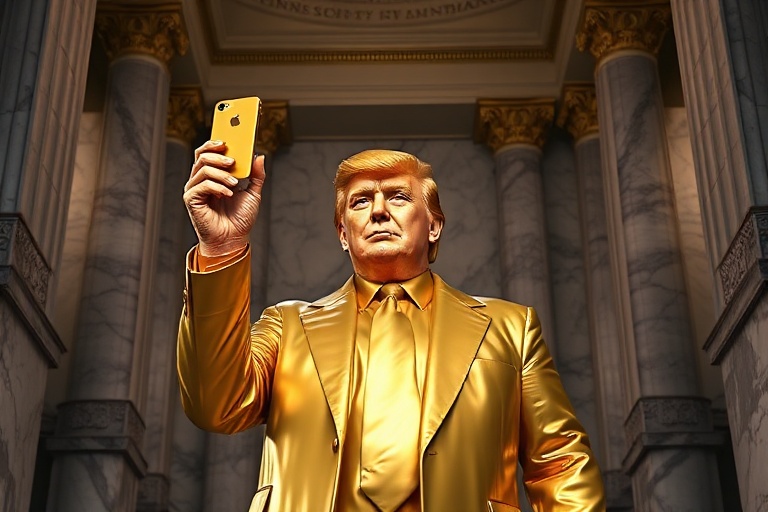
The Trump gold statue has become one of the most polarizing artworks in recent memory. A towering, glittering figure of former President Donald Trump, the statue has sparked debates about art, politics, and public memory. Some see it as a bold satirical statement, while others view it as an endorsement of Trump’s legacy. The piece has traveled to multiple locations, drawing crowds and controversy in equal measure.
Created by an anonymous artist known only as “Duchamp,” the statue first appeared in 2023 at a pop-up exhibit in Miami. Since then, it has been displayed in New York, Los Angeles, and even overseas in London. Its gold-plated surface and exaggerated features—including a comically oversized tie—have made it an instant meme-worthy icon. But beyond the humor, the statue raises serious questions about the intersection of art and politics in today’s polarized climate.
The Artist Behind the Statue
The artist behind the Trump gold statue remains shrouded in mystery. Known only by the pseudonym “Duchamp,” the creator has avoided interviews, instead communicating through anonymous statements and social media posts. This anonymity has fueled speculation about the artist’s motives. Some art critics suggest it’s a form of protest, while others believe it’s a commentary on celebrity culture.
In an interview with The New York Times, Duchamp described the statue as “a mirror held up to society.” The artist added, “Art should challenge, not comfort. If people are upset, that’s part of the point.” The use of gold—a symbol traditionally associated with wealth and power—further complicates the interpretation. Is the statue glorifying Trump, or is it mocking the cult of personality that surrounds him?
The statue’s materials also deserve scrutiny. Made from lightweight foam coated in gold leaf, it’s designed to be portable, allowing it to travel to different cities. This flexibility has made it a moving target for critics and supporters alike, ensuring it remains in the public eye.
Public Reaction: From Meme to Monument
Reactions to the Trump gold statue have been as varied as the audiences it attracts. Supporters of the former president have embraced it as a tribute, with some even posing for photos beside it. Meanwhile, critics argue that it reduces a complex political figure to a caricature, undermining the seriousness of his presidency.
Social media has played a crucial role in amplifying the statue’s reach. Videos of the statue have gone viral on platforms like TikTok and Twitter, with users debating its meaning in comment sections. Memes have emerged, depicting the statue in absurd scenarios—riding a dinosaur, for example, or holding a “Make America Great Again” hat.
Not everyone finds the humor in the statue, though. Protests have broken out at several of its appearances, with activists arguing that it trivializes Trump’s policies, particularly on immigration and social issues. In one incident in Los Angeles, a group of demonstrators tried to cover the statue in red paint, symbolizing blood, before being removed by security.
The statue’s presence in public spaces has also raised legal questions. Some cities have denied permits for its display, citing concerns about public safety or potential unrest. Others have embraced it as a form of free speech, even when the message is controversial.
The Statue as Political Commentary
Art has long been a tool for political commentary, from Picasso’s Guernica to Banksy’s street art. The Trump gold statue fits into this tradition, though its approach is more overtly satirical. By using gold—a material often associated with opulence and power—it critiques the merging of politics and celebrity in modern America.
Some art historians compare the statue to works like Maurizio Cattelan’s America, a fully functional gold toilet exhibited in 2016. Both pieces use precious materials to highlight issues of wealth and access, though Cattelan’s work leaned more toward absurdity. The Trump statue, by contrast, feels more like a direct jab at a specific political figure.
Yet, the line between satire and endorsement can be thin. The statue’s exaggerated features—such as Trump’s signature hair and oversized hands—could be read as mockery, but they could also be seen as reinforcing stereotypes. This ambiguity is part of what makes the piece so compelling (and contentious).
Where Is the Statue Now?
The Trump gold statue continues to tour, with its next stop rumored to be in Las Vegas. Organizers have kept its schedule secret, likely to avoid protests or vandalism. Past exhibitions have included private viewings for collectors, as well as public displays in galleries and pop-up venues.
For those interested in seeing the statue in person, tickets are often sold out within hours. Prices for VIP experiences—such as meet-and-greets or exclusive photo ops—can reach into the hundreds of dollars. This commercialization of the statue has led some to question whether it’s truly a work of art or merely a marketing ploy.
If you’re curious about the statue’s future appearances, the best place to check is its official website, which updates sporadically with new locations. Alternatively, you can follow its social media accounts, though posts are infrequent and cryptic.
For a deeper look at how art intersects with politics, you might explore our Culture section, where we examine the role of art in shaping public discourse. If you’re more interested in the business side of art, our Entertainment page covers how controversial pieces like this one drive engagement and revenue.
Key Takeaways
- The Trump gold statue is a polarizing artwork that blends satire, politics, and celebrity culture.
- Its anonymous creator, “Duchamp,” has avoided the spotlight, adding to the mystery surrounding the piece.
- Public reactions range from adoration to outrage, reflecting deep divisions in American society.
- The statue’s use of gold and exaggerated features invites comparisons to other political artworks.
- Its touring schedule and commercialization raise questions about the intersection of art and commerce.
The Trump gold statue is more than just a shiny object—it’s a cultural flashpoint. Whether you see it as a brilliant commentary or a tasteless gimmick, one thing is clear: it has forced America to confront its relationship with power, wealth, and public memory. As the statue continues its journey, it will undoubtedly keep sparking debate, proving that in the world of art, controversy can be just as valuable as gold.