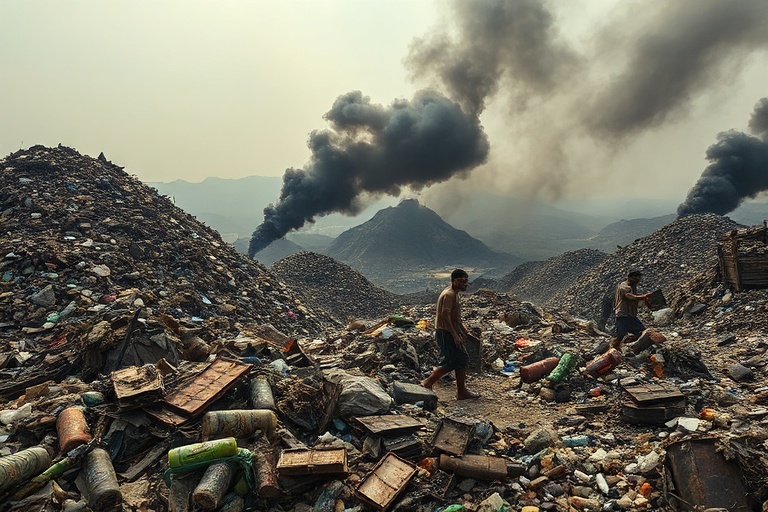
Waste dumps are more than just unsightly piles of trash. They represent a critical failure in how societies manage resources, a visible scar on landscapes, and a growing threat to public health and the environment. As global consumption rises, so does the volume of waste—much of which ends up in these dumps, often in developing nations where regulations are lax or nonexistent.
The problem is not just about aesthetics. Waste dumps contribute to pollution, attract disease vectors, and release harmful chemicals into soil and water. They also exacerbate climate change by emitting methane, a potent greenhouse gas. Yet, despite these consequences, waste dumps remain a necessary evil in many parts of the world, where waste management infrastructure lags behind population growth and urbanization.
The Scale of the Problem
The sheer volume of waste generated annually is staggering. According to the World Bank, the world produces over 2 billion tons of municipal solid waste each year, with at least 33% of that not managed in an environmentally safe manner. This waste often ends up in dumps—some legal, some illegal—sprawling across thousands of acres.
In many low- and middle-income countries, waste dumps are the primary disposal method. For example, in India, over 60% of waste is dumped in open sites, while in Ghana, the Agbogbloshie dump has become infamous for its electronic waste, which contains toxic materials like lead and mercury. These dumps are not just local issues; they have global repercussions.
The environmental impact is severe. Waste dumps leach toxic chemicals into groundwater, contaminate soil, and release methane and carbon dioxide as organic waste decomposes. Methane, in particular, is 25 times more effective than carbon dioxide at trapping heat in the atmosphere, making waste dumps a significant contributor to climate change.
Who Bears the Burden?
The burden of waste dumps is not distributed evenly. Wealthy nations often export their waste to poorer countries, where labor is cheap and environmental regulations are weak. This practice, known as waste colonialism, shifts the environmental and health costs of consumption to communities that did little to create the waste in the first place.
For instance, the United States exports thousands of tons of plastic waste to countries like Malaysia, Indonesia, and Vietnam each year. While some of this waste is technically recyclable, much of it ends up in dumps or is burned in open pits, releasing toxic fumes. The workers in these dumps, often including children, face severe health risks, from respiratory diseases to cancer.
Even within countries, marginalized communities bear the brunt of waste dumps. In the United States, for example, waste facilities and dumps are disproportionately located near low-income neighborhoods and communities of color. This environmental injustice highlights the intersection of waste management and social equity.
Key Issues Surrounding Waste Dumps
- Health Risks: Waste dumps attract pests like rats and mosquitoes, which spread diseases such as dengue fever, malaria, and cholera. Open burning of waste releases toxic fumes, leading to respiratory illnesses and other health problems.
- Environmental Degradation: Toxic leachate from dumps contaminates soil and water, harming ecosystems and wildlife. Plastic waste, which can take centuries to decompose, clogs waterways and harms marine life.
- Climate Change: Waste dumps are a major source of methane emissions, a potent greenhouse gas. Reducing waste and improving waste management could significantly lower these emissions.
- Economic Costs: The health and environmental impacts of waste dumps impose significant economic costs, from healthcare expenses to lost productivity. In developing countries, these costs can stifle economic growth.
- Social Inequality: Waste dumps are often located in marginalized communities, exacerbating existing inequalities. These communities bear the environmental and health burdens of waste while receiving few of the economic benefits of waste generation.
Solutions and the Path Forward
Addressing the problem of waste dumps requires a multifaceted approach. The first step is reducing waste at the source. This can be achieved through policies that encourage recycling, composting, and the use of biodegradable materials. Extended Producer Responsibility (EPR) laws, which hold manufacturers accountable for the end-of-life disposal of their products, are one effective policy tool.
Improving waste management infrastructure is another critical step. This includes investing in modern landfills that capture methane emissions, building recycling facilities, and implementing waste-to-energy programs. In many developing countries, informal waste pickers play a vital role in recycling. Supporting these workers with fair wages and safe working conditions can improve both livelihoods and environmental outcomes.
Public awareness and education are also essential. Many people are unaware of the environmental and health impacts of waste dumps or the simple steps they can take to reduce waste. Campaigns that promote responsible consumption, proper waste disposal, and recycling can drive behavioral change.
International cooperation is needed to address the issue of waste colonialism. The Basel Convention, an international treaty designed to reduce the movement of hazardous waste between nations, is a step in the right direction. However, enforcement remains a challenge, and loopholes allow some countries to continue exporting waste under the guise of recycling.
The Role of Technology and Innovation
Technology and innovation offer promising solutions to the waste dump crisis. For example, advanced recycling technologies can turn plastic waste into raw materials for new products, reducing the need for virgin plastic. Waste-to-energy plants can convert non-recyclable waste into electricity or heat, while capturing methane emissions for use as fuel.
Blockchain technology is also being explored to improve waste tracking and management. By creating a transparent, immutable record of waste flows, blockchain can help ensure that waste is properly managed and recycled, rather than dumped or exported to countries with weak regulations.
Another innovative approach is the development of biodegradable materials. Companies are increasingly investing in plant-based plastics and other sustainable materials that break down naturally, reducing the long-term impact of waste. However, these solutions require investment and consumer buy-in to be effective.
For a deeper look at how technology is transforming waste management, explore Technology on Dave’s Locker. To understand the broader implications of waste on global health, visit the Health category.
Conclusion: A Call to Action
Waste dumps are a symptom of a larger problem: a linear economy that prioritizes consumption over sustainability. To address this issue, societies must transition to a circular economy, where waste is minimized, and resources are reused and recycled. This requires action at all levels—from individuals making responsible choices to governments implementing strong policies and corporations innovating sustainable solutions.
The cost of inaction is high. Waste dumps degrade the environment, harm public health, and contribute to climate change. They also perpetuate social inequalities, placing the burden of waste on the most vulnerable communities. By taking steps to reduce waste, improve waste management, and promote equity, we can mitigate these impacts and create a more sustainable future.
Change won’t happen overnight, but it can start today. Whether it’s recycling a plastic bottle, supporting policies that hold corporations accountable, or advocating for better waste management infrastructure, everyone has a role to play. The time to act is now, before the problem of waste dumps becomes insurmountable.