Understanding the Eclipse Solar Phenomenon
The eclipse solar, often simply called a solar eclipse, occurs when the Moon passes between the Earth and the Sun, casting a shadow on Earth’s surface. This alignment temporarily blocks the Sun’s light either partially or completely, depending on the observer’s location. Solar eclipses are among the most dramatic celestial events visible from Earth, blending science, mythology, and human curiosity.
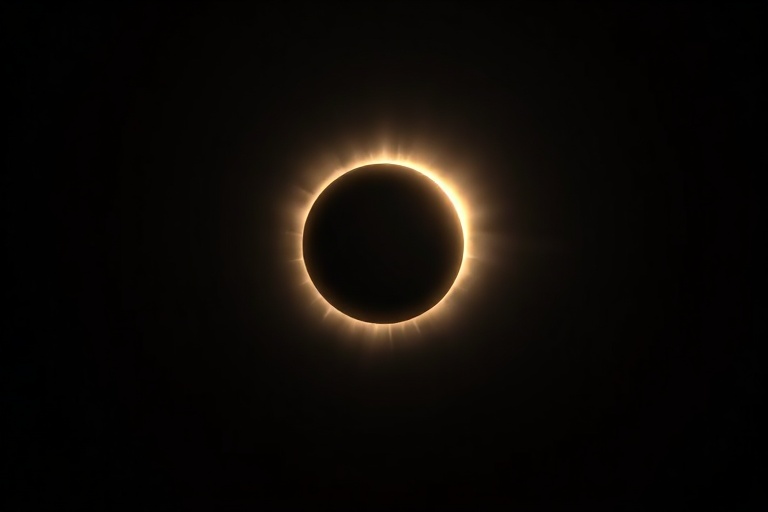
There are three main types of solar eclipses: total, partial, and annular. During a total solar eclipse, the Moon completely covers the Sun, revealing the solar corona—a halo of plasma—visible only during totality. A partial solar eclipse happens when only part of the Sun is obscured, while an annular solar eclipse occurs when the Moon is too far from Earth to fully cover the Sun, leaving a bright “ring of fire” around the edges.
These events are not random. They follow predictable patterns governed by celestial mechanics. Solar eclipses occur during the new moon phase, when the Sun, Moon, and Earth align closely. However, they don’t happen every month because the Moon’s orbit is tilted about 5 degrees relative to Earth’s orbit around the Sun. This tilt means the alignment must be nearly perfect for an eclipse to occur.
Historical and Cultural Significance Across Civilizations
The eclipse solar has been recorded and interpreted for millennia. Ancient cultures often viewed these events with awe, fear, or reverence. The Babylonians kept meticulous records as early as 750 BCE, using eclipses to predict future events. In Chinese tradition, solar eclipses were seen as omens—when the Sun “was eaten,” it signaled the emperor’s need to restore cosmic order.
The ancient Greeks, including Aristotle, used solar eclipses to advance scientific understanding. A total eclipse in 585 BCE reportedly halted a battle between the Lydians and Medes, who interpreted it as a divine sign to cease hostilities. In Hindu mythology, the eclipse solar is linked to the demon Rahu, who attempts to devour the Sun but fails, explaining the temporary nature of the phenomenon.
Indigenous cultures in the Americas also held rich interpretations. The Navajo people traditionally observe eclipses as a time of quiet reflection and respect, avoiding food, drink, and outdoor activities. Similarly, in many African traditions, the eclipse solar is seen as a moment when ancestors or spirits are communicating with the living.
Modern Observation and Scientific Study
Today, solar eclipses are not just cultural events but also critical opportunities for scientific research. Astronomers and citizen scientists alike prepare for these rare moments to study the Sun’s corona, solar flares, and the Earth’s ionosphere. NASA, for example, coordinates extensive observation campaigns during total solar eclipses, deploying telescopes, spectrometers, and even high-altitude balloons.
One of the most famous solar eclipses in modern history occurred in 1919. During this event, British astronomer Arthur Eddington led an expedition to observe how starlight bent near the Sun, confirming Einstein’s theory of general relativity. This pivotal moment transformed how we understand gravity and space-time.
For amateur astronomers and enthusiasts, a total solar eclipse is a bucket-list experience. The 2017 “Great American Eclipse” drew millions of viewers across the United States, creating temporary communities of observers in towns along the path of totality. Events like these highlight the unifying power of celestial phenomena, transcending borders and backgrounds.
Safety and Viewing Guidelines During an Eclipse Solar
While solar eclipses are breathtaking, viewing them requires caution. Looking directly at the Sun—even during a partial eclipse—can cause permanent eye damage. The only safe way to observe a solar eclipse is through certified solar filters, such as eclipse glasses or handheld solar viewers. These must meet the ISO 12312-2 international safety standard.
During totality, when the Sun is fully covered, it is safe to look without protection. However, as soon as the Sun begins to reappear, protective eyewear must be worn again. It’s also important to avoid using unfiltered cameras, binoculars, or telescopes, as these can magnify sunlight and cause serious injury.
For those unable to access proper eyewear, indirect viewing methods are effective. A simple pinhole projector, made from cardboard or paper, projects the Sun’s image onto a surface, allowing safe observation. Community events often provide these tools, making eclipse viewing accessible to all.
Quick Safety Checklist for Eclipse Viewing
- Use ISO-certified eclipse glasses or solar viewers.
- Inspect filters for damage before use; discard if scratched or punctured.
- Supervise children to ensure they keep protective eyewear on.
- Avoid looking at the Sun through cameras, phones, or unfiltered optical devices.
- During totality, remove glasses only when the Sun is completely obscured.
Eclipse Solar in the Digital Age: Community and Education
The digital age has transformed how we experience and share eclipse solar events. Social media platforms become hubs for real-time updates, photos, and live streams. NASA and other organizations broadcast eclipses globally, allowing people in regions without direct visibility to participate virtually. This accessibility fosters a sense of global connection during celestial events.
Educational institutions and science communicators leverage eclipses to inspire interest in astronomy and STEM fields. Museums, planetariums, and educational programs often host viewing parties and workshops. These initiatives encourage curiosity, especially among young learners, who may witness their first eclipse solar.
Citizen science projects also thrive during eclipses. Volunteers help collect data on temperature changes, animal behavior, and cloud cover. For example, during the 2017 eclipse, thousands of citizen scientists contributed to studies on how wildlife reacts to sudden darkness. Such collaborations demonstrate the power of collective observation in advancing scientific knowledge.
Conclusion: A Reminder of Our Place in the Cosmos
The eclipse solar is more than an astronomical event—it is a reminder of the intricate dance between Earth, Moon, and Sun. It bridges ancient traditions and modern science, uniting people across cultures in shared wonder. Whether through the lens of history, mythology, or astrophysics, solar eclipses challenge us to look upward and reflect on our place in the universe.
As technology advances, our ability to study and appreciate these phenomena grows. Yet, the fundamental human response remains unchanged: awe. The next time a solar eclipse graces the skies, take a moment to witness it safely. Let it serve as a reminder of both the fragility and grandeur of our cosmic neighborhood.