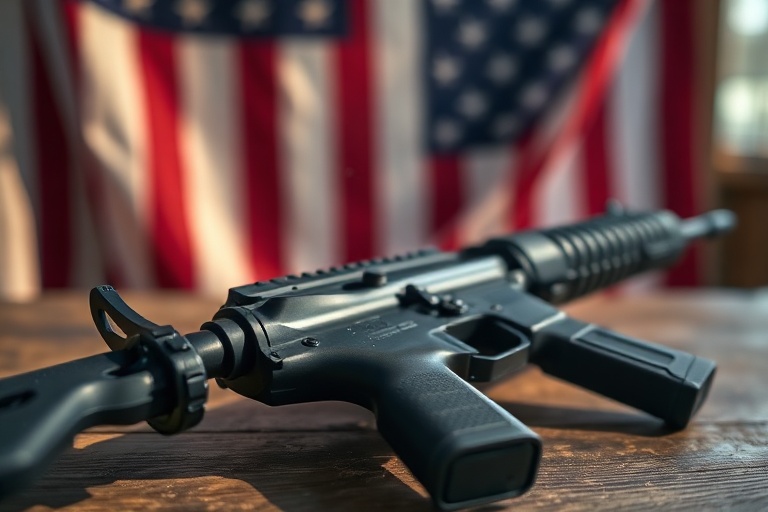
The debate over assault weapons bans has intensified in recent years, fueled by high-profile mass shootings and shifting public opinion. These legislative efforts aim to restrict or prohibit the sale and ownership of firearms designed for rapid fire and high-capacity magazines. While proponents argue such measures enhance public safety, opponents emphasize constitutional rights and the practical limitations of enforcement. This complex issue intersects with gun culture, political polarization, and public health concerns.
The Legislative Landscape of Assault Weapon Restrictions
Federal assault weapons legislation has a contentious history in the United States. The 1994 federal assault weapons ban, officially known as the Public Safety and Recreational Firearms Use Protection Act, prohibited the manufacture, transfer, and possession of certain semi-automatic firearms classified as assault weapons. It also restricted magazines with capacities exceeding 10 rounds. The law expired in 2004 after failing to secure enough votes for renewal.
Since the expiration, several states have enacted their own versions of assault weapon bans. According to the Gun Policy in America database, nine states and the District of Columbia currently ban assault weapons. These laws vary in scope, with some jurisdictions banning specific models while others use feature-based definitions. California’s Roberti-Roos Assault Weapons Control Act, for example, lists prohibited firearms by name and model, while other states rely on criteria such as pistol grips, folding stocks, or barrel shrouds.
Recent legislative efforts at the federal level have gained traction. In 2022, Congress passed the Bipartisan Safer Communities Act, which included provisions to enhance background checks for buyers under 21 and incentivize states to implement red flag laws. While not a full assault weapons ban, it represented a significant step toward stricter gun control measures. Meanwhile, President Biden has repeatedly called for the reinstatement of the federal assault weapons ban, citing its potential to reduce mass shooting fatalities.
Arguments For and Against Assault Weapon Bans
Advocates for assault weapon restrictions point to research suggesting these firearms are disproportionately used in mass shootings. A study published in the Journal of Trauma and Acute Care Surgery found that assault weapons were used in 43% of mass shootings between 1982 and 2017, despite accounting for a small fraction of all firearms in circulation. Proponents argue that banning these weapons could reduce the lethality of such incidents, as assault weapons are designed to fire multiple rounds quickly with high-capacity magazines.
Public opinion data supports this perspective. A 2023 Pew Research Center survey revealed that 63% of Americans favor banning assault-style weapons. Support is particularly strong among Democrats and younger voters, though opinions remain divided along partisan lines. Advocacy groups like Everytown for Gun Safety and the Brady Campaign have made assault weapon bans a central focus of their legislative agendas.
Opponents of assault weapon bans argue that such restrictions infringe upon Second Amendment rights. They contend that assault weapons are commonly used for self-defense and recreational purposes, such as target shooting and hunting. The National Rifle Association (NRA) has consistently opposed assault weapon bans, arguing that they criminalize law-abiding citizens rather than addressing the root causes of gun violence. Legal challenges to state-level bans have emerged, with some courts striking down provisions on constitutional grounds.
Critics also question the effectiveness of assault weapon bans in reducing overall gun violence. A RAND Corporation study examining the 1994 federal ban found that while it may have reduced the use of assault weapons in crimes, its impact on overall firearm homicide rates was inconclusive. Some researchers suggest that offenders may substitute banned weapons with other firearms, limiting the ban’s effectiveness.
Key Points in the Debate
- Definition of Assault Weapons: The term “assault weapon” is itself contentious. Gun control advocates often use it to describe semi-automatic rifles with military-style features, while opponents argue the term is a political construct designed to mislead.
- Enforcement Challenges: Critics of assault weapon bans point to the difficulty of enforcing such laws, particularly in states with high rates of illegal gun trafficking from areas with looser regulations.
- Mental Health vs. Firearm Access: Some policymakers advocate for addressing mental health issues as a more effective strategy than banning specific firearm types.
- Precedent for State-Level Action: States like New York and New Jersey have strengthened their assault weapon laws in response to federal inaction, demonstrating the patchwork nature of gun regulation in the U.S.
The Role of Assault Weapons in Mass Shootings
Assault weapons have been used in some of the deadliest mass shootings in modern U.S. history. The 2017 Las Vegas shooting, in which a gunman fired into a crowd from a hotel window, resulted in 60 deaths and over 800 injuries. The shooter used multiple semi-automatic rifles modified with bump stocks, which allow for rapid fire. Similarly, the 2018 Parkland school shooting and the 2022 Uvalde school shooting both involved assault-style rifles, reigniting calls for stricter regulations.
Research indicates that assault weapons are more lethal than handguns due to their higher muzzle velocity and magazine capacity. A study published in Injury Prevention found that incidents involving assault weapons resulted in an average of 6.85 more fatalities per event compared to other firearms. This lethality has led some researchers to advocate for policies that specifically target these weapons.
However, the relationship between assault weapons and mass shootings is complex. While these firearms are frequently used in high-profile incidents, they account for a relatively small percentage of overall gun deaths. Handguns, which are used in the majority of homicides and suicides, remain the most common type of firearm involved in violent crime.
Economic and Cultural Implications
The firearms industry has experienced significant growth in recent years, with assault-style rifles and accessories representing a major segment of the market. Companies like Smith & Wesson and Sturm, Ruger & Co. have reported record sales, driven in part by fears of impending federal regulations. The industry employs tens of thousands of workers across manufacturing, retail, and distribution sectors, making gun control a politically sensitive issue.
Culturally, assault weapons hold symbolic significance for many gun owners. For some, these firearms represent a connection to military service or a commitment to self-reliance. The AR-15, in particular, has become a cultural icon, with its modular design allowing for customization and personal expression. Gun rights advocates often frame assault weapon ownership as a matter of principle, emphasizing the importance of preserving access to firearms for future generations.
Opponents of assault weapon bans argue that these cultural and economic factors must be considered in any legislative debate. They warn that overly restrictive policies could alienate a significant portion of the population and fuel distrust in government institutions. Meanwhile, gun control advocates counter that the cultural significance of firearms should not outweigh public safety concerns.
Looking Ahead: The Future of Assault Weapon Legislation
The future of assault weapon bans remains uncertain, with legal, political, and social factors shaping the debate. At the federal level, prospects for a new assault weapons ban hinge on congressional dynamics and public pressure. The 2024 elections may influence the trajectory of gun control legislation, with candidates staking out positions on issues like background checks, red flag laws, and assault weapon restrictions.
State-level action is likely to continue, particularly in jurisdictions with Democratic majorities. California, for example, has expanded its assault weapon ban to include additional firearm models and features. Meanwhile, states with Republican-controlled legislatures have moved in the opposite direction, enacting laws that prohibit local governments from regulating firearms and protect gun owners from federal interference.
Technological advancements also pose challenges for policymakers. The rise of ghost guns—unserialized firearms assembled from parts—has complicated efforts to regulate assault weapons. Some manufacturers have begun producing firearms using 3D printing technology, further blurring the lines between regulated and unregulated firearms.
Ultimately, the debate over assault weapon bans reflects deeper divisions in American society. While progress has been made in reducing gun violence through background checks and red flag laws, the question of assault weapon restrictions remains contentious. As lawmakers weigh the competing interests of public safety, constitutional rights, and cultural identity, the conversation is likely to continue for years to come.
For those interested in exploring related topics, the News and Politics sections of Dave’s Locker offer additional insights into the broader context of gun policy in America.