Del Monte Foods: A Global Brand’s Century of Growth and Change
Del Monte Foods: A Century of Nourishing the Globe
Few brands have shaped global food consumption like Del Monte Foods. For over a century, the company has delivered canned fruits, vegetables, and juices to kitchens across continents. Its history reflects broader shifts in agriculture, trade, and consumer habits worldwide. Del Monte’s journey began in the late 19th century, when California’s fertile lands met American industrial ambition—creating a legacy that now spans nearly every country.
The brand’s origins trace back to 1886, when a group of California fruit growers formed the Del Monte Fruit Company. Their goal was simple: to preserve surplus harvests and distribute them efficiently. Within decades, the company expanded into pineapples from Hawaii and tomatoes from the Midwest, becoming a household name in the United States by the 1920s. But Del Monte wasn’t content with domestic success. By the mid-20th century, it had established a global footprint, exporting canned goods to Europe, Asia, and Latin America during a time when processed foods were becoming symbols of modernity and convenience.
Today, Del Monte operates in more than 90 countries. In Japan, its fruit cocktail is a staple during Christmas celebrations. In the Philippines, canned pineapple juice remains a breakfast favorite. And in the Middle East, Del Monte’s tomato products are widely used in regional cuisine. This adaptability highlights the company’s ability to blend standardization with localization—a key factor in its longevity.
From Colonial Agriculture to Global Distribution
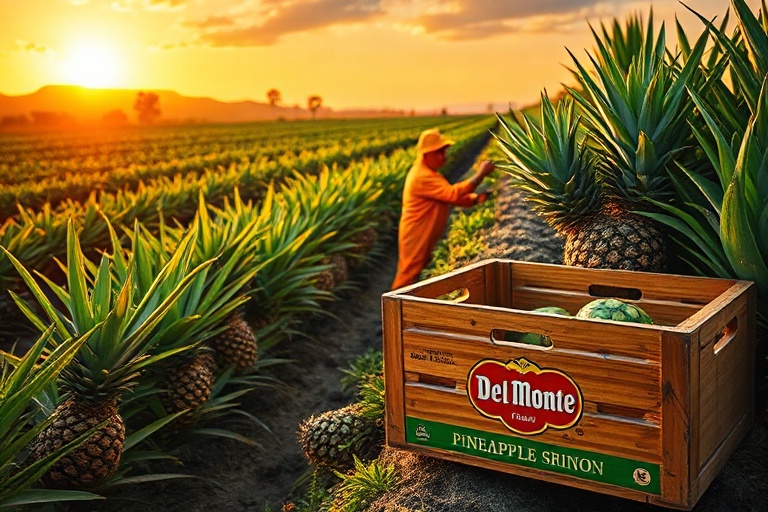
The story of Del Monte is deeply intertwined with the history of colonial agriculture and industrial capitalism. In the early 20th century, American companies often relied on overseas plantations in places like the Philippines and Central America, where labor was cheap and land was abundant. Del Monte was no exception. Its pineapple operations in Hawaii and the Philippines relied on large-scale monoculture farming, a model that raised concerns about environmental sustainability and labor practices.
By the 1970s, labor unions and activists began questioning the conditions on Del Monte’s plantations. Reports emerged about low wages, limited worker rights, and exposure to pesticides. In response, the company initiated reforms in the 1980s and 1990s, including better safety standards and community programs. Today, Del Monte Foods emphasizes sustainability initiatives, such as water conservation and carbon footprint reduction, though critics argue these efforts are still catching up to the scale of its operations.
Despite these challenges, Del Monte’s distribution networks remain unmatched. The company’s supply chain spans multiple continents, using refrigerated shipping and advanced logistics to deliver fresh-tasting canned goods even after years in storage. This reliability made Del Monte a trusted partner for governments during food shortages and crises, including World War II and the 2008 global food price surge.
Cultural Impact: More Than Just a Can on the Shelf
Del Monte’s influence extends beyond grocery aisles into popular culture and culinary traditions. In the United States, the brand became synonymous with post-war convenience. Families relied on its canned vegetables for quick meals during the 1950s and 1960s, a period when women entering the workforce increased demand for time-saving food solutions. The company’s advertising campaigns of the era—featuring smiling housewives and wholesome imagery—reinforced its role as a provider of domestic stability.
In Latin America, Del Monte’s fruit products became embedded in festive traditions. In Mexico, Del Monte mango nectar is commonly served at quinceañeras and weddings. In Brazil, its peach slices are used in desserts like ambrosia. These uses reflect how Del Monte adapted its products to local tastes, often blending them into traditional recipes rather than replacing them.
In India, where fresh fruit consumption was historically seasonal and regional, Del Monte introduced processed fruit products in the 1990s. Its tetra-pack juices became popular among urban consumers seeking convenience without sacrificing taste. The brand’s marketing emphasized health and purity, aligning with India’s growing middle-class aspirations in the 2000s.
Del Monte also played a role in shaping food safety standards. As early as the 1920s, the company invested in canning technology to prevent spoilage and contamination. Its quality control practices influenced government regulations in many countries, setting benchmarks for the canned food industry.
A Modern Evolution: Challenges and Innovations
In recent years, Del Monte has faced new pressures. Rising production costs, competition from fresh and organic brands, and changing consumer preferences toward transparency have forced the company to evolve. In response, it has diversified its product line to include no-sugar-added juices, organic canned vegetables, and ready-to-eat meals. These products target health-conscious millennials and Gen Z consumers who prioritize clean labels and sustainability.
The company has also invested in technology. Its state-of-the-art processing plants use AI-driven sorting systems to reduce waste and improve efficiency. In 2022, Del Monte launched a blockchain pilot to trace pineapple supply chains from farm to shelf, aiming to enhance transparency and trust among consumers.
Yet challenges remain. Climate change threatens fruit harvests in key growing regions. Extreme weather in California and the Philippines has disrupted production cycles, forcing Del Monte to source from multiple locations. Additionally, competition from private-label brands and fresh produce delivery services has eroded market share in mature markets like the U.S. and Europe.
To stay relevant, Del Monte has focused on emerging markets. In Africa, it has partnered with local farmers to grow pineapples and tomatoes under contract farming models that promote economic development. In Southeast Asia, the company has introduced smaller, affordable can sizes to cater to urban consumers with limited storage space.
Conclusion: A Legacy Built on Adaptation
Del Monte Foods endures not because it resisted change, but because it embraced it. From its origins as a California fruit cooperative to its current status as a global food giant, the company has repeatedly reinvented itself while maintaining a core promise: delivering nourishment in every can. Its story is one of resilience, ambition, and cultural integration—qualities that have allowed it to thrive across generations and continents.
As consumers increasingly demand ethical sourcing and environmental responsibility, Del Monte’s next chapter will depend on whether it can balance scale with sustainability. If history is any guide, the company will likely succeed—not by clinging to the past, but by anticipating the future of food.