Emergency Landing: Causes, Procedures, and Industry Impact
The skies are a controlled environment, yet every year, thousands of flights worldwide require emergency landings. These unplanned diversions are rare but command immediate attention from passengers and aviation authorities alike. They are moments where routine travel intersects with urgency, where split-second decisions determine outcomes. Understanding the causes, procedures, and implications of emergency landings provides insight into the resilience of modern aviation.
The Anatomy of an Emergency Landing
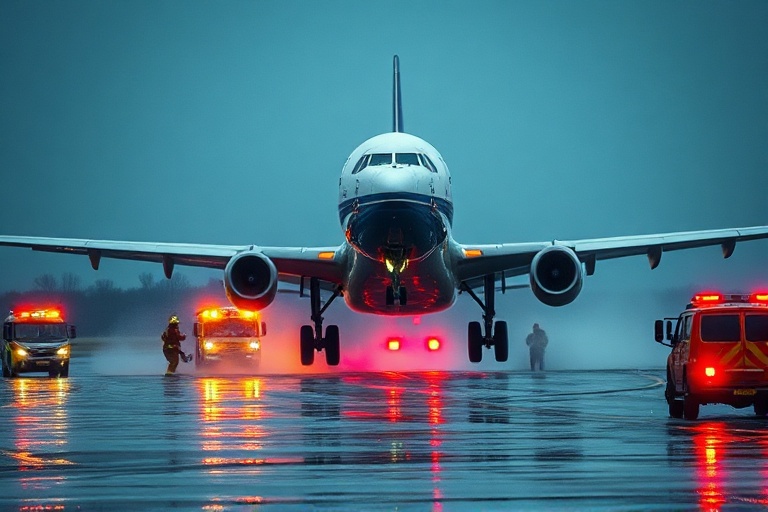
An emergency landing is not a single event but a carefully orchestrated procedure. Pilots train rigorously for such scenarios, which can be triggered by mechanical failure, medical emergencies, or severe weather. Unlike a standard landing, an emergency descent prioritizes speed and safety over passenger comfort. Flight crews follow strict protocols, communicating with air traffic control to secure the nearest suitable runway or open space.
The types of emergency landings vary. A precautionary landing occurs when a potential issue is detected early, allowing time to prepare. A forced landing happens when an aircraft must land immediately due to total system failure. Finally, a ditching—landing on water—is the rarest scenario, typically reserved for extreme emergencies.
Aviation experts emphasize that modern aircraft are built to handle extreme conditions. Redundant systems, rigorous maintenance, and pilot training all contribute to minimizing risk. Yet, when failures occur, the response must be flawless. The Federal Aviation Administration (FAA) requires airlines to conduct regular drills simulating emergency scenarios, ensuring crews remain prepared.
Common Causes of Emergency Landings
While mechanical issues dominate headlines, they are not the sole cause. The following list highlights the most frequent triggers:
- Mechanical or electrical failures: Engine malfunctions, hydraulic issues, or electrical system failures can force pilots to divert. Even minor defects may escalate if unaddressed.
- Medical emergencies: Passengers or crew experiencing heart attacks, strokes, or severe allergic reactions require immediate medical attention, often necessitating a diversion.
- Severe weather: Thunderstorms, high winds, or volcanic ash can render flight conditions unsafe, prompting diversions to avoid turbulence or structural damage.
- Pilot or crew incapacitation: If a pilot becomes unresponsive, co-pilots or automated systems must take over, sometimes requiring an emergency landing.
- Fuel-related issues: Running low on fuel due to unexpected headwinds or delays can force pilots to land at the nearest airport.
In 2023, the FAA reported over 1,200 emergency landings in the U.S. alone. While the majority resulted in no injuries, each incident triggers thorough investigations to prevent recurrence. The aviation industry treats these events not as failures but as opportunities to refine safety protocols.
The Human Factor: Crew and Passenger Response
An emergency landing places immense pressure on both pilots and passengers. Crew members undergo years of training to manage crises, from executing rapid descents to guiding passengers through evacuation procedures. Their ability to remain calm under pressure often determines the outcome.
For passengers, the experience can range from unsettling to terrifying. Clear communication is critical. Flight attendants are trained to provide concise instructions, reassuring travelers while maintaining order. In high-stress situations, panic can spread quickly, making the crew’s role indispensable.
Consider the case of Qantas Flight 32 in 2010, where an engine exploded mid-flight. Despite the chaos, the crew safely landed the aircraft in Singapore. Investigators later credited the pilots’ adherence to procedure and the crew’s disciplined response for the positive outcome. Such examples underscore the importance of preparation.
After an emergency landing, passengers often describe a mix of relief and gratitude. Airlines typically offer support, including medical care, accommodations, and counseling. These measures help mitigate the psychological impact, ensuring travelers feel valued beyond the incident.
Broader Implications: Safety, Trust, and Industry Impact
Emergency landings extend beyond individual flights; they shape public perception of airline safety. High-profile incidents, even when resolved without harm, can erode trust. The 2019 Boeing 737 MAX groundings, triggered by two fatal crashes, exemplify how a single crisis can reshape an entire industry.
Regulatory bodies respond swiftly to incidents. After reviewing data, the FAA or equivalent agencies may mandate design changes, pilot retraining, or revised maintenance schedules. For instance, following a spate of engine failures in the early 2000s, the CFM56 engine underwent extensive upgrades to prevent future malfunctions.
The financial cost of emergency landings is substantial. Airlines face expenses for diversions, passenger compensation, and potential lawsuits. According to the International Air Transport Association (IATA), unplanned diversions cost the industry over $1 billion annually. Yet, these costs pale in comparison to the value of human life.
Aviation remains one of the safest modes of transport, with emergency landings occurring in less than 0.1% of flights. This statistic reflects decades of innovation, from improved engine designs to advanced air traffic management systems. Still, the industry continues to evolve, integrating artificial intelligence and real-time data analytics to predict and prevent failures.
Lessons from History and the Path Forward
The history of aviation is punctuated by emergency landings that reshaped safety standards. The 1989 United Airlines Flight 232 crash in Sioux City, Iowa, where a DC-10 lost all hydraulic control, led to advancements in flight simulator training. Pilots now practice handling such failures in controlled environments, improving their ability to respond.
Looking ahead, the industry is focusing on predictive maintenance. Sensors embedded in aircraft components monitor performance in real time, flagging anomalies before they escalate. Airlines like Delta and Lufthansa have adopted these systems, reducing unplanned diversions by up to 30% in some cases.
Passengers, too, play a role in safety. Simple actions, such as adhering to electronic device regulations or reporting suspicious behavior, contribute to overall security. Aviation authorities, including the FAA, emphasize the importance of passenger vigilance in maintaining a safe environment.
For those who have experienced an emergency landing, the memory often lingers. Yet, these incidents also highlight the dedication of pilots, crew, and engineers who work tirelessly to ensure safe skies. As technology advances and protocols improve, the frequency of such events will continue to decline, reinforcing aviation’s reputation as a model of safety and innovation.
In the end, every emergency landing is a reminder of the fragility and resilience of human ingenuity. It is a testament to the fact that even in the face of the unexpected, preparation and expertise can turn potential disaster into a story of survival.
Further Reading
Explore more about aviation safety and industry trends on Dave’s Locker Technology and Dave’s Locker Travel pages.