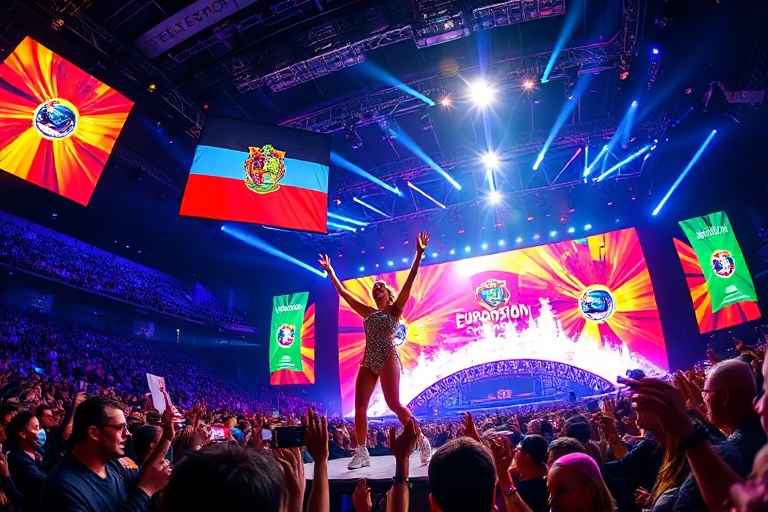
The Eurovision Song Contest isn’t just a music competition—it’s a global spectacle where politics, culture, and voting systems collide. Every May, millions of viewers tune in to watch countries from across Europe (and beyond) battle for supremacy on stage. But behind the glittering performances and dramatic backstories lies a voting system as complex as it is controversial.
Eurovision voting isn’t just about who sings the best song. It’s a carefully calibrated process designed to balance public enthusiasm with jury expertise, while navigating decades of cultural alliances, political tensions, and shifting musical tastes. Understanding how it works reveals much about why Eurovision remains one of the world’s most-watched non-sporting events.
The Two-Part Voting System: Jury vs. Televoting
Since 2009, Eurovision has used a dual scoring system that separates jury votes from public televotes. This approach was introduced to reduce bloc voting and ensure fairness. But it also created a new layer of intrigue—where artistic merit sometimes clashes with audience passion.
The jury vote consists of music industry professionals from each participating country. These jurors evaluate performances based on vocal quality, stage presence, song composition, and originality. Each jury awards points (1–8, 10, and 12) to their top 10 songs. Meanwhile, the televote aggregates votes from the public, giving equal weight to each country’s viewers.
The final score for each song is the sum of these two components. This system was designed to prevent countries from only voting for neighbors or cultural allies—a problem that plagued Eurovision in earlier decades. Yet, even with this safeguard, patterns still emerge.
How Points Are Allocated
The scoring process follows a strict order:
- Jury Votes: Each country’s professional jury ranks 10 songs, awarding points in descending order. The top-ranked song gets 12 points, the second 10, then 8 through 1 in descending steps.
- Televoting: The public votes are tallied per country. The country with the most votes receives 12 points, the second most 10, and so on.
- Combined Score: The jury and televoting scores are added together to produce the final ranking for each country.
In 2023, this system led to one of the most dramatic finishes in Eurovision history. Sweden’s Loreen won with a commanding lead in both jury and public votes, but Finland’s Käärijä came close behind thanks to a surge in televoting from younger audiences. The contrast highlighted how jury scores reward polished performances, while televotes often favor bold, energetic acts.
The Politics of Eurovision Voting: Alliances and Rivalries
Despite reforms, Eurovision voting still reflects deep-seated cultural and political ties. The “Big Five” countries—France, Germany, Italy, Spain, and the UK—automatically qualify for the final due to their financial contributions. This gives them voting power over others, sometimes sparking accusations of favoritism.
Geographic voting blocs also persist. Nordic countries often exchange points, as do former Yugoslav republics and the Baltic states. Greece and Cyprus have a long-standing mutual voting relationship, while Azerbaijan and Turkey frequently support each other. These patterns aren’t always sinister—they reflect shared musical tastes and diaspora connections—but they do shape outcomes.
During the 2010s, Russia’s participation became a flashpoint. After its invasion of Crimea in 2014, neighboring countries reduced their support for Russian entries. By 2022, following Russia’s full-scale invasion of Ukraine, the EBU banned Russia from competing, altering the voting landscape entirely.
Ukraine’s victory in 2022 with “Stefania” by Kalush Orchestra marked a turning point. The song blended folk traditions with modern rap, resonating emotionally with a global audience amid war. Its success underscored how Eurovision voting isn’t just about music—it’s about identity, resistance, and cultural storytelling.
Controversies and Scandals: When Voting Goes Wrong
Eurovision voting has faced repeated scandals, from jury leaks to accusations of ballot-stuffing. In 2016, a leaked document revealed that Azerbaijan had pressured its jury to award zero points to Armenia—a violation of Eurovision rules. The EBU responded by suspending the broadcaster, but the damage to trust had already been done.
Another controversy erupted in 2021 when a whistleblower exposed that some jury members had colluded to influence scores. The EBU launched an investigation, leading to the disqualification of several jurors. The scandal prompted calls for greater transparency, including public disclosure of jury identities.
Perhaps the most persistent issue is the perception of “jury bias.” Professional juries tend to favor ballads and sophisticated performances, while televotes often reward pop anthems and flashy choreography. This divide was on full display in 2015 when Italy’s Il Volo won the jury vote but finished third overall due to weaker televoting support.
Notable Voting Upsets
- 2017 – Bulgaria’s Kristian Kostov: Finished second overall despite a strong jury performance, but lost to Portugal’s Salvador Sobral due to lower televoting scores.
- 2019 – Netherlands’ Duncan Laurence: Won with a minimalist ballad, defying the trend toward high-energy pop.
- 2023 – Finland’s Käärijä: Despite a massive televoting surge, Sweden’s Loreen clinched the win with a narrow jury lead.
These moments reveal that Eurovision voting isn’t just a numbers game—it’s a reflection of evolving musical tastes and cultural expectations.
The Future of Eurovision Voting: Reform and Transparency
As Eurovision expands beyond Europe—with Australia, Israel, and potentially new participants like Kazakhstan joining—the voting system faces increasing scrutiny. The EBU has experimented with changes, such as removing the “Big Five” automatic qualifiers from the jury vote in 2023, but major reforms remain unlikely.
Transparency is the next frontier. Fans now demand clearer explanations for jury decisions, especially when they contradict televoting results. The EBU has started publishing jury feedback, but full voting records remain confidential.
Looking ahead, Eurovision voting may need to adapt to streaming culture. Younger audiences increasingly consume music online, where algorithms and global fanbases shape popularity. Could Eurovision one day incorporate streaming data into its scoring? Some suggest it could, though the contest’s emphasis on live performance makes that unlikely.
What’s certain is that Eurovision voting will continue to evolve—balancing tradition with innovation, artistry with audience engagement, and politics with pure spectacle.
Why Eurovision Voting Matters Beyond the Contest
Eurovision isn’t just entertainment. It’s a cultural barometer, reflecting how nations perceive each other and how music travels across borders. The voting system, with all its flaws and fascinations, offers a rare glimpse into global soft power.
Countries invest millions in staging elaborate performances, not just to win, but to project national identity on a world stage. A strong Eurovision result can boost tourism, enhance a country’s global image, and even influence cultural diplomacy. For instance, Ireland’s multiple wins in the 1990s helped solidify its reputation as a music powerhouse.
Even the controversies have value. They spark conversations about fairness, representation, and the role of art in geopolitics. In an era of polarization, Eurovision remains one of the few spaces where nations come together—however imperfectly—to celebrate music.
As the contest grows, so too will the scrutiny of its voting. But whether you’re a fan of polished ballads or high-energy pop, one thing is clear: the way Eurovision votes are cast will always be as much a part of the story as the songs themselves.
For those looking to dive deeper into the cultural impact of Eurovision, explore our Music section, where we analyze how the contest has shaped pop music across decades. Or, for a behind-the-scenes look at the staging and production, visit our Entertainment category.
One thing is certain: Eurovision voting will keep the world watching—for the music, the drama, and the unexpected alliances it creates.