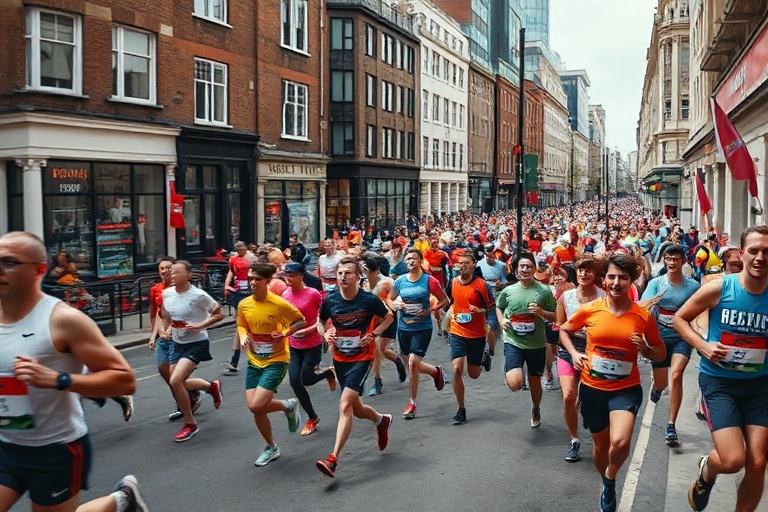
London’s running calendar is set to get another major boost in 2026 with the return of the Hackney Half Marathon. Now in its tenth year, the event has transformed from a local community race into one of the UK’s most anticipated half marathon experiences. With registration opening later this year, runners and spectators alike are already speculating about what the 2026 edition will bring.
The race has carved out a distinct identity in the crowded UK running scene. Unlike traditional marathons burdened by hefty entry fees and extensive qualifying times, the Hackney Half remains accessible. Its flat, fast route through East London’s revitalized streets offers a compelling alternative for both first-timers and seasoned athletes looking to set personal bests. But the event’s appeal extends beyond performance.
Why the Hackney Half Stands Out Among UK Races
The Hackney Half has earned a reputation for blending competitive running with urban culture. The course winds through some of East London’s most dynamic neighborhoods—Hackney Wick, Victoria Park, and the Olympic Park—offering runners a chance to experience the city’s transformation firsthand. While many London races are priced at a premium, the Hackney Half has maintained affordable entry fees, capped at £45 for standard entries in 2025, with a similar figure expected for 2026.
Its timing in late spring also sets it apart. Unlike the autumn marathon season, which sees races like the London Marathon and Manchester Half competing for attention, the Hackney Half occupies a less crowded slot. This strategic positioning allows it to attract runners who may have missed out on other major events or are seeking a tune-up race before summer training peaks.
The event’s community focus is evident in its charitable partnerships. In 2025, the race supported six local charities, including Hackney Quest and St. Joseph’s Hospice. Organizers have hinted at expanding this initiative in 2026, signaling a deeper commitment to social impact alongside athletic achievement.
What Runners Can Expect in 2026
While official details for Hackney Half 2026 won’t be confirmed until later this year, several trends suggest what participants might encounter:
- Increased Participation: With over 10,000 runners crossing the finish line in 2025, the 2026 edition is expected to grow further, potentially reaching capacity earlier than in previous years.
- Enhanced Sustainability Measures: Following the introduction of compostable cups and digital bibs in 2025, organizers are likely to expand eco-friendly initiatives, including carbon offset programs and waste reduction at aid stations.
- Expanded Route Highlights: Rumors suggest a potential extension into the new development zones around Hackney Wick, giving runners even more of a glimpse into the area’s evolving skyline.
- Technology Integration: Expect improvements in race timing and tracking, with real-time splits and live GPS updates for spectators, building on the digital-first approach adopted in recent years.
The Broader Impact of the Hackney Half on UK Running
The Hackney Half’s success reflects broader shifts in the UK running community. Participation in road races has surged post-pandemic, with half marathons now the most popular distance in the country. Events like Hackney Half play a crucial role in democratizing the sport, offering accessible entry points for runners of all levels. Its flat, fast course has also made it a favorite among elite athletes aiming for qualifying times or course records.
But the race’s influence extends beyond individual runners. It has contributed to the revitalization of East London’s sporting infrastructure. The event’s partnership with the London Legacy Development Corporation ensures that proceeds support local sporting facilities, including track upgrades and community running programs. This model of reinvestment has set a precedent for other races in urban areas seeking to balance commercial success with social responsibility.
Moreover, the Hackney Half has become a cultural touchstone for East London’s diverse running community. Its inclusive ethos—championing runners from underrepresented backgrounds and adaptive athletes—has made it a benchmark for diversity in UK road racing. This focus aligns with the broader push within the sport to create more equitable opportunities for participation.
How to Prepare for Hackney Half 2026
For those considering signing up, preparation should begin now. The flat, fast course demands a specific training approach focused on endurance and pacing. Unlike hilly races that reward strength over speed, Hackney Half rewards consistency and pacing strategy. Runners aiming for sub-90-minute times should incorporate tempo runs and interval training into their routines, while beginners should prioritize building a strong aerobic base with long runs on similar terrain.
Nutrition and hydration will also be critical. The race’s aid stations are well-stocked, but runners should practice consuming energy gels and fluids during training to avoid stomach issues on race day. Given the event’s urban setting, finding the right balance between pace and fueling can make the difference between a strong finish and a struggle.
Registration for Hackney Half 2026 is expected to open in September 2025, with early bird pricing likely available. Organizers have confirmed that the ballot system will continue, ensuring a fair distribution of places. Those who miss out may have the option to enter via charity places, which often become available later in the year.
Key Tips for First-Time Participants
If this will be your first Hackney Half, keep these points in mind:
- Arrive Early: The event’s popularity means transport to the start line can be chaotic. Aim to arrive at least 90 minutes before your start time.
- Use the Gear Check: While the course is flat, carrying extra layers can be cumbersome. Utilize the gear check service to store clothing before the race.
- Study the Route: Familiarize yourself with the course map and elevation profile. The flat sections are deceptive—pacing is key.
- Engage with the Atmosphere: The Hackney Half thrives on crowd support. Don’t miss the cheers around Victoria Park or the high-energy finish funnel.
- Plan Your Celebration: With the race finishing near Hackney Wick’s vibrant café scene, many runners use it as an opportunity to refuel with brunch or a celebratory drink.
A Race for the Future
The Hackney Half has evolved from a grassroots event into a cornerstone of London’s running calendar. Its blend of accessibility, urban charm, and community focus offers a template for how road races can thrive in the 2020s. As the 2026 edition approaches, all signs point to another record-breaking year.
For runners, it represents more than just a race—it’s a chance to be part of a movement. For Londoners, it’s a celebration of the city’s diversity and energy. And for the broader running community, it’s a reminder that the best races aren’t just about speed or distance, but about the people and places that bring them to life.
Whether you’re chasing a personal best, supporting a charity, or simply exploring East London’s dynamic streets, the Hackney Half delivers an experience that’s uniquely its own. Mark your calendars, start your training, and get ready to be part of the next chapter.
For more on running events and training tips, explore our Sports and Health categories on Dave’s Locker.