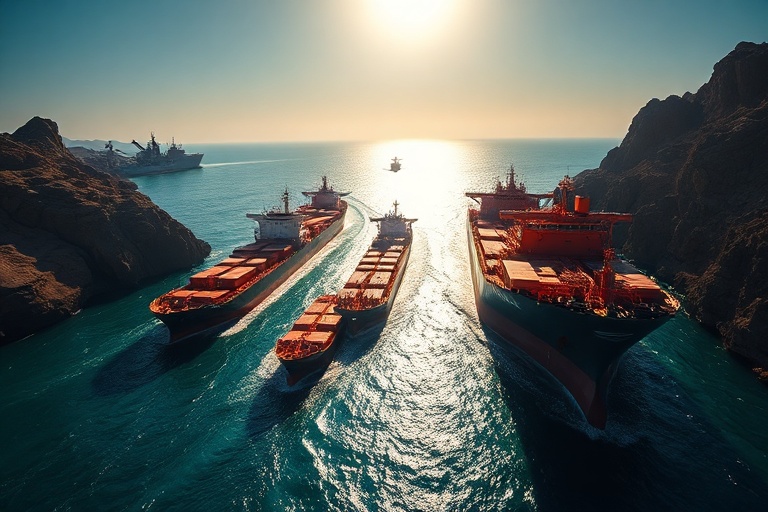
hormuz strait news
The Hormuz Strait, a narrow waterway connecting the Persian Gulf to the Gulf of Oman, remains one of the most strategically vital and geopolitically sensitive maritime routes in the world. Barely 21 miles wide at its narrowest point, this chokepoint sees the passage of approximately 20% of the world’s seaborne oil—nearly 21 million barrels per day—making it indispensable to global energy markets. Recent months have seen a resurgence of military posturing, shadowy attacks on commercial vessels, and diplomatic brinkmanship involving regional powers and global stakeholders. The situation is not just a regional concern; it has ripple effects through supply chains, energy prices, and international security.
In this complex environment, understanding the evolving dynamics around the Hormuz Strait is essential. From Iran’s strategic leverage to the responses of Western powers and Gulf states, the stakes could not be higher. This analysis examines the current landscape, the incidents shaping tensions, and the broader implications for global trade and security.
Recent Escalations: A Pattern of Disruption
Since early 2024, the Hormuz Strait has experienced a noticeable uptick in maritime incidents. In April, two commercial tankers were damaged in separate explosions near the strait, prompting investigations by regional navies and international maritime organizations. While no group immediately claimed responsibility, the attacks followed a familiar pattern associated with Iran-backed proxy groups, particularly in response to U.S. sanctions and regional military drills.
These events are not isolated. Over the past year, there have been at least six confirmed incidents involving damage to ships or interference with navigation, according to reports from the United Kingdom Maritime Trade Operations (UKMTO) and the U.S. Navy’s Fifth Fleet. The incidents have included limpet mine attachments, drone strikes, and GPS spoofing—techniques that are difficult to trace back to their origin but are widely attributed to state or non-state actors operating with plausible deniability.
- April 2024 Attacks: Two tankers—one Marshall Islands-flagged, the other a UAE vessel—suffered hull breaches near the strait. Investigations are ongoing, but satellite imagery shows damage consistent with external explosions.
- May 2024 Seizure: Iranian naval forces briefly detained an oil tanker in Omani waters, citing environmental violations. The ship, owned by a Greek company, was released after diplomatic intervention.
- Ongoing Drone Patrols: The U.S. has increased MQ-9 Reaper drone surveillance in the region, citing the need to monitor “malicious behavior” by Iran.
The recurrence of such events has raised concerns about the long-term stability of the strait. Unlike the 2019 tanker seizures that sparked a brief spike in oil prices, today’s environment is marked by a more persistent and ambiguous threat—one that blends asymmetric warfare with state-level deterrence.
The Strategic Importance of Hormuz: Why It Remains a Flashpoint
The Hormuz Strait’s significance cannot be overstated. It is the only sea passage from the Persian Gulf to the open ocean, and its closure—even temporarily—would have catastrophic consequences for the global oil market. According to the U.S. Energy Information Administration, any disruption could remove up to 17 million barrels per day from global supply, potentially tripling oil prices within weeks.
For Iran, controlling—or at least threatening—the strait is a core element of its deterrence strategy. The Islamic Republic has long argued that its nuclear program and ballistic missile development are defensive measures against perceived Western aggression. However, its ability to disrupt maritime traffic through mines, fast boats, and anti-ship missiles serves as a non-nuclear deterrent, one that can inflict economic pain on adversaries without triggering direct conflict.
Gulf states, particularly Saudi Arabia and the UAE, are acutely aware of this vulnerability. Both nations have invested heavily in alternative trade routes, including the expansion of the Abu Dhabi Crude Oil Pipeline, which can bypass the strait entirely. Yet, these alternatives are limited in capacity and cannot fully compensate for the loss of Hormuz.
The strait also serves as a testing ground for new technologies. Iranian forces have employed increasingly sophisticated drones and cyber tools to monitor and disrupt shipping. In one notable incident, a commercial vessel reported GPS interference that caused it to veer off course—a tactic consistent with electronic warfare used by Iran’s Islamic Revolutionary Guard Corps (IRGC).
For the international community, the challenge is balancing deterrence with de-escalation. While the U.S. and its allies have conducted joint naval patrols and increased intelligence sharing, the risk of miscalculation remains high. A single misstep—such as a mistaken engagement or unintended escalation—could plunge the region into a wider conflict.
International Responses: From Sanctions to Diplomacy
The response to rising tensions in the Hormuz Strait has been multi-faceted, involving military, economic, and diplomatic measures. The United States has taken a particularly assertive stance, reinstating and expanding sanctions against Iranian oil exports while increasing its naval presence in the region. The U.S. Fifth Fleet, based in Bahrain, has conducted regular “freedom of navigation” operations and joint exercises with Gulf allies.
However, these efforts have not deterred Iran. Instead, Tehran has doubled down on its strategy of “strategic patience”—calibrating its actions to avoid direct confrontation while maintaining pressure on its adversaries. This approach was evident in Iran’s calculated response to the April tanker attacks, where it denied involvement but did not condemn the incidents outright, leaving room for plausible deniability.
European nations, meanwhile, have pursued a more diplomatic path. The European Union has called for restraint and re-engagement in nuclear negotiations, though progress has been limited. France and Germany have also expressed concerns about the humanitarian impact of sanctions, particularly on civilian populations in Iran and neighboring countries.
China and Russia, both major importers of Gulf oil, have adopted a more neutral stance. While they have condemned unilateral sanctions and called for dialogue, they have also strengthened economic ties with Iran, including oil purchases and infrastructure investments. This divergence in approach highlights the growing geopolitical fragmentation in the region.
For businesses and insurers operating in the area, the uncertainty has led to increased costs. War risk insurance premiums for vessels transiting the strait have risen by up to 30% in the past year, according to industry reports. Some shipping companies have rerouted vessels around the Cape of Good Hope, adding weeks to voyages and thousands of dollars in fuel costs.
Future Scenarios: What Lies Ahead for Hormuz?
The trajectory of tensions in the Hormuz Strait will depend on several key factors, including the outcome of nuclear negotiations, the stability of regional governments, and the actions of external powers like the U.S. and China. Three plausible scenarios emerge:
- Controlled Escalation: Iran continues its low-level provocations, targeting specific vessels or infrastructure, while avoiding actions that would trigger a full-scale military response. The U.S. and its allies respond with targeted sanctions and naval patrols, but no major conflict erupts. This scenario would likely keep oil prices volatile but manageable.
- Accidental Escalation: A miscalculation—such as a mistaken engagement between U.S. and Iranian forces—leads to a rapid escalation. This could involve missile strikes, blockades, or even limited ground operations. The risk of this scenario is heightened by the presence of asymmetric forces on both sides.
- Diplomatic Breakthrough: Unexpected progress in nuclear talks or a regional security framework leads to a temporary easing of tensions. Iran may scale back its provocations in exchange for sanctions relief, while Gulf states and Western powers agree to confidence-building measures. This scenario would likely calm markets and reduce insurance costs.
Regardless of the path taken, the Hormuz Strait will remain a critical flashpoint. The international community must prepare for both short-term disruptions and long-term strategic challenges. Enhanced maritime security cooperation, investment in alternative trade routes, and sustained diplomatic engagement are all essential to mitigating risks.
For shipping companies and energy traders, vigilance is key. Monitoring real-time intelligence, diversifying supply chains, and maintaining flexible insurance policies will be crucial in navigating the uncertain waters of the Hormuz Strait.
Looking Beyond the Headlines: The Human and Economic Cost
While geopolitical analysis often focuses on state actors and military posturing, the human and economic toll of Hormuz tensions is profound. Fishermen in Oman and the UAE report increased difficulty navigating near the strait due to naval exercises and mine threats. Local economies dependent on trade and tourism have seen a decline in visitors wary of regional instability.
The environmental risks are also significant. A major oil spill or collision in the strait could devastate marine ecosystems and coastal communities. The 2019 sabotage of four tankers in Fujairah, UAE—widely attributed to Iran—served as a stark reminder of how quickly a localized incident can spiral into a regional crisis.
Ultimately, the Hormuz Strait is more than a geopolitical chessboard; it is a lifeline for millions of people. The decisions made by policymakers, military leaders, and corporate executives will shape not only the region’s future but also the stability of the global economy. As tensions persist, the world watches closely—aware that the narrow waters of Hormuz hold the potential to disrupt far more than just oil shipments.