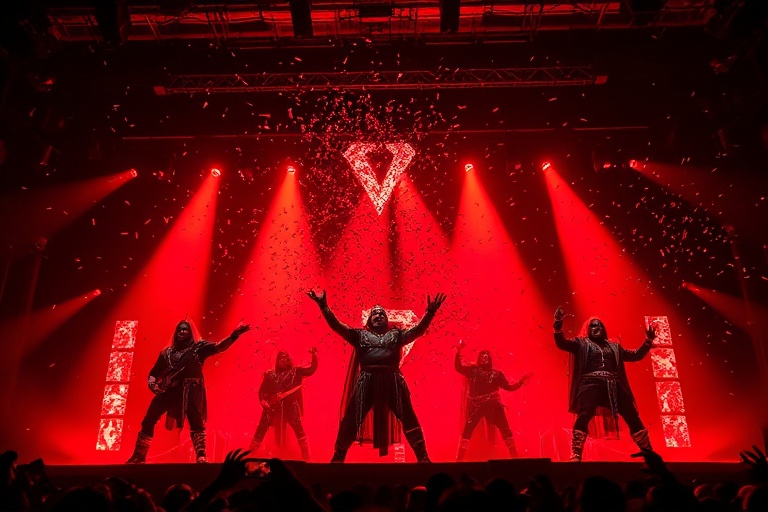
In the late 1990s, Finland’s hard rock scene was thriving underground but struggling for mainstream recognition. That changed in 2006 when a group of masked musicians took the stage in Athens, Greece, and delivered a performance that would rewrite music history. Lordi, Finland’s premiere heavy metal band, didn’t just win the Eurovision Song Contest—they redefined what the competition could be.
Their victory with “Hard Rock Hallelujah” wasn’t just a surprise; it was a cultural earthquake. It proved that rock music could dominate a competition built on pop sensibilities, and it opened doors for genre-defying acts across Europe. More than a decade later, Lordi’s win remains one of the most enduring moments in Eurovision history, celebrated by fans and studied by analysts alike.
From Obscurity to Global Recognition: Lordi’s Early Years
Founded in 1992 by Mr. Lordi (the band’s frontman and only constant member), Lordi began as a project blending horror aesthetics with hard rock. The band’s signature look—elaborate monster costumes and masks—wasn’t just for show. It was a deliberate choice to stand out in a crowded music scene and create a visual identity that transcended language barriers.
For years, Lordi toured Finland and Europe, building a dedicated fanbase but remaining largely unknown outside metal circles. Their breakthrough came with the 2002 album Get Heavy, which featured the hit single “Would You Love a Monsterman?” The song’s success on Finnish radio hinted at the band’s potential, but few could have predicted the scale of their future triumph.
Behind the scenes, Lordi’s members were seasoned musicians with deep roots in Finland’s rock and metal community. Mr. Lordi had previously played in bands like AMI and Sinergy, while guitarist Amen and drummer Kita brought experience from Finland’s thriving extreme metal scene. This combination of talent and theatricality would prove pivotal when Eurovision came calling.
Eurovision 2006: A Performance That Changed Everything
The 2006 Eurovision Song Contest in Athens was a turning point. After years of lackluster results for Finland—including a last-place finish in 2001—something had to change. Enter Lordi, who submitted “Hard Rock Hallelujah” as Finland’s entry. The song was a straightforward, high-energy anthem, but it was the band’s performance that stole the show.
From the moment the stage lights illuminated Lordi’s monstrous figures, the audience knew they were witnessing something different. The band’s choreography, pyrotechnics, and unapologetic rock sound clashed with the polished pop performances dominating the competition. Yet, it worked. Spectators cheered, judges were captivated, and by the end of the night, Finland had secured its first-ever Eurovision victory with 292 points.
The win was met with shock, excitement, and no small amount of controversy. Traditional Eurovision fans questioned whether a rock song could truly represent the spirit of the contest. Pundits debated whether the competition had lowered its standards. But for Lordi and their fans, the victory was a vindication of authenticity over conformity.
Key Factors Behind Lordi’s Eurovision Success
- Visual Distinctiveness: Lordi’s monster costumes made them instantly recognizable. In a competition where image matters as much as music, they stood out from the crowd.
- Strong Songwriting: “Hard Rock Hallelujah” was a well-crafted anthem with a catchy chorus and a message that resonated globally—even if the lyrics were simple.
- Energetic Performance: The band’s on-stage presence was electric. Their movements, facial expressions, and sheer enthusiasm made the performance unforgettable.
- Fan Mobilization: Lordi’s dedicated fanbase campaigned aggressively for their victory, flooding Eurovision’s voting system with support from countries like Germany and the UK.
The Ripple Effect: How Lordi Redefined Eurovision
Lordi’s win didn’t just earn them a place in music history—it transformed Eurovision itself. Overnight, the competition became more open to genre-blending acts. Within years, bands like Norway’s Subwoolfer (2022) and Bulgaria’s Intelligent Music Project (2022) followed in Lordi’s footsteps, proving that rock and metal could thrive in the contest.
The band’s success also boosted Finland’s music industry. After 2006, Finland saw a surge in interest in heavy music, with bands like Children of Bodom and Nightwish gaining international attention. Lordi’s victory helped dismantle the stereotype that Scandinavian music was limited to bubblegum pop or folk traditions.
Beyond music, Lordi’s win had cultural implications. It demonstrated the power of branding and storytelling in entertainment. Their monster personas weren’t just costumes—they were a narrative that fans could engage with. This approach has since been adopted by other artists, from Daft Punk to Gorillaz, proving that personas can elevate music to new heights.
Legacy and Influence: Why Lordi Still Matters
More than 15 years after their Eurovision triumph, Lordi remains a relevant force in music. They’ve continued to release albums, tour internationally, and even compete in national selections for Eurovision again (notably in 2018 with “Your Tongue’s Got the Cat”). While they never replicated the same level of global fame, their influence is undeniable.
For aspiring musicians, Lordi’s story is a masterclass in perseverance. They spent over a decade refining their craft before achieving mainstream success. For Eurovision fans, they represent the contest’s most exciting era—a time when anything seemed possible. And for the metal community, they proved that heavy music could transcend its niche and captivate the world.
Lordi’s victory also highlighted the importance of authenticity in music. In an era where manufactured pop dominates charts, they offered something raw and unfiltered. Their music wasn’t polished for mass appeal; it was loud, proud, and unapologetically themselves. That honesty resonated with audiences and helped pave the way for other alternative acts in mainstream competitions.
What’s Next for Lordi?
As of 2024, Lordi shows no signs of slowing down. The band continues to release new music, including their 2023 album Screem Writers Guild, which blends their signature horror-rock sound with modern production techniques. They also remain active on the festival circuit, headlining events across Europe and occasionally making appearances at conventions and comic book expos.
Fans speculate about another Eurovision bid, though Mr. Lordi has downplayed the idea, emphasizing that the band’s priority is making music they love. Still, the possibility of a Lordi return to the contest remains a tantalizing “what if” for Eurovision enthusiasts.
Regardless of what the future holds, Lordi’s place in music history is secure. They didn’t just win a competition—they redefined what it meant to be a rock band in the 21st century. Their story is a reminder that sometimes, the most unexpected acts can leave the most lasting impact.
For those who witnessed their 2006 victory, it’s a moment frozen in time—a night when monsters took over Eurovision and, for one brief, glorious evening, the world embraced the power of rock ‘n’ roll.
To explore more about Eurovision’s most iconic moments and the bands that defined them, check out our Music and Entertainment categories on Dave’s Locker.