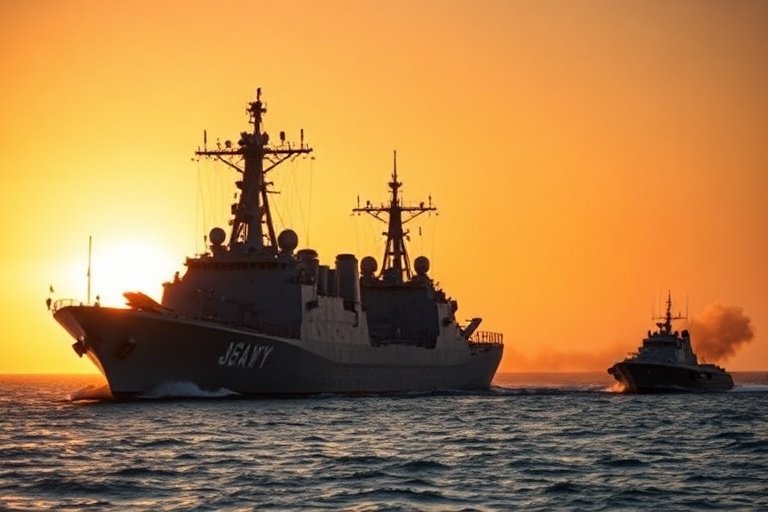
Iran War Threat in Hormuz Strait: Risks to Global Oil and Security
Navigating the Hormuz Strait: A Critical Chokepoint in Regional Conflict
The Hormuz Strait remains one of the world’s most strategically vital waterways, serving as a narrow gateway for roughly one-fifth of the world’s oil supply. When tensions between Iran and neighboring states escalate, the strait becomes a flashpoint with consequences that ripple across global energy markets, military alliances, and diplomatic corridors. Recent escalations have highlighted how quickly Hormuz can transform from a routine shipping lane into a potential flashpoint for broader conflict.
Geographically, the strait is barely 21 miles wide at its narrowest point, with a shipping channel just two miles wide in each direction. This natural bottleneck forces the world’s largest oil tankers to navigate within a few miles of Iranian territorial waters. While the strait is governed by international law under the United Nations Convention on the Law of the Sea (UNCLOS), Iran has repeatedly asserted control over navigation rights, citing historical claims and security concerns. The presence of Iranian naval forces—including the Islamic Revolutionary Guard Corps (IRGC)—along the coast adds a layer of unpredictability to an already volatile environment.
The Historical Roots of Tension in Hormuz
Tensions in the Hormuz Strait are not new. They date back decades, rooted in the 1979 Islamic Revolution, which overthrew the U.S.-backed Pahlavi monarchy and established the Islamic Republic of Iran. Since then, Iran has viewed the Persian Gulf as its sphere of influence, while Western powers and Gulf Arab states see the region as critical to global energy security. The 1980s Iran-Iraq War saw frequent attacks on oil tankers in the Gulf, a conflict that later became known as the “Tanker War.” During that period, both Iran and Iraq targeted commercial shipping to disrupt each other’s economies, drawing in international naval forces.
More recently, Iran has employed a strategy of “gray zone” tactics—actions that fall short of outright war but still intimidate and disrupt. These include seizing commercial vessels, harassing ships with high-speed boats, and deploying naval mines. In 2019, Iran’s seizure of a British-flagged oil tanker, the Stena Impero, in retaliation for the UK’s detention of an Iranian tanker, underscored the fragility of maritime security in Hormuz. Such incidents demonstrate how quickly commercial shipping can become a bargaining chip in broader geopolitical disputes.
Key Factors Driving Current Escalations
Several factors are fueling the latest round of tensions in the Hormuz Strait:
- Regional Proxy Conflicts: Iran’s support for groups like Hezbollah in Lebanon, the Houthis in Yemen, and various militias in Iraq and Syria has drawn it into proxy wars across the Middle East. These conflicts often play out in the Gulf, where Iran uses asymmetric tactics to counter U.S. and allied military presence.
- U.S. Sanctions and Maximum Pressure: Since 2018, the Trump administration’s “maximum pressure” campaign has sought to cripple Iran’s economy through sweeping sanctions. Iran has responded by threatening to close the strait, arguing that it cannot allow oil exports to continue if its own ability to trade is restricted.
- Military Posturing: Both Iran and the U.S. have conducted high-profile military exercises in the Gulf. Iran’s naval drills often simulate attacks on enemy ships, while the U.S. has bolstered its Fifth Fleet presence and formed a maritime security coalition to protect shipping.
- Energy Market Vulnerability: With global oil demand still recovering from the pandemic, any disruption in Hormuz could send prices surging. The strait handles about 21 million barrels of oil per day—nearly 25% of global supply. Even a temporary closure would have immediate effects on fuel costs worldwide.
Broader Implications: Beyond the Strait
The implications of a conflict in Hormuz extend far beyond the Gulf. A sustained disruption to oil flows could trigger a supply shock, pushing prices above $100 per barrel and straining economies still recovering from the COVID-19 pandemic. Countries like China and India, which rely heavily on Gulf oil, would face sudden price hikes and potential shortages. Meanwhile, U.S. shale producers could benefit from higher prices, but only if they can ramp up production quickly—a challenge given current market volatility.
Militarily, a conflict in Hormuz would draw in major powers. The U.S. has already positioned aircraft carriers, destroyers, and mine-clearing ships in the region. Iran could respond by launching ballistic missiles at Gulf states, disrupting shipping with naval mines, or targeting U.S. bases in the region. Such a scenario risks drawing Israel into the conflict, particularly if Iranian-backed groups in Lebanon or Syria launch attacks.
Diplomatically, the crisis could fracture alliances. Gulf states like Saudi Arabia and the UAE have historically relied on U.S. security guarantees, but some are now exploring alternative partnerships with Russia, China, or even Iran. Meanwhile, European nations—already struggling with energy shortages—may seek to mediate, but their influence is limited without stronger military or economic leverage.
What’s Next? Scenarios and Mitigation Efforts
Analysts outline several potential scenarios for the coming months:
- Controlled Escalation: Iran continues its “gray zone” tactics—seizures, harassment, and cyberattacks—without triggering a full-scale military response. This approach allows Iran to pressure adversaries while avoiding direct conflict.
- Accidental Escalation: A miscalculation—such as a U.S. naval vessel misidentifying an Iranian boat or Iran mistaking a commercial ship for a military target—could spiral into a larger confrontation.
- Diplomatic Breakthrough: Backchannel negotiations, possibly brokered by Oman or Qatar, could lead to a temporary de-escalation. However, trust is low, and any deal would likely be fragile.
- Regional War: A direct attack on Iran’s nuclear facilities or a major Iranian strike on Gulf oil infrastructure could draw in multiple countries, including Israel and the U.S.
To mitigate risks, several steps are being explored:
- Enhanced Maritime Security: The U.S.-led International Maritime Security Construct (IMSC) and other coalitions are deploying drones, patrol boats, and intelligence-sharing platforms to monitor the strait. However, these efforts have had limited success in deterring Iranian actions.
- Sanctions Relief Talks: Indirect negotiations between the U.S. and Iran, mediated by Oman, have shown some progress. A return to the 2015 nuclear deal (JCPOA) could ease economic pressure on Iran and reduce its incentive to disrupt shipping.
- Private Sector Safeguards: Oil companies and shipping firms are increasingly using private security contractors, rerouting vessels, and purchasing insurance to cover war risks. However, these measures add costs and do not eliminate the threat.
- Confidence-Building Measures: Track 1.5 and Track II diplomacy—unofficial talks between military and civilian experts—could help reduce misunderstandings. The 2019 incident involving the Stena Impero was resolved partly due to backchannel communications.
A Balancing Act for Global Powers
The Hormuz Strait remains a powder keg, where local conflicts and global interests intersect. For the U.S., the challenge is balancing deterrence with diplomacy. While military presence is necessary to deter aggression, an overreliance on force risks provoking Iran rather than containing it. Meanwhile, Gulf states must navigate a delicate balance between appeasing Iran and maintaining their alliances with Washington.
For the global economy, the message is clear: Hormuz is too critical to fail. But the risks are real. A single misstep—a misidentified ship, a miscalculated strike—could trigger a chain reaction with consequences far beyond the Gulf. The world must prepare for both the immediate threat of disruption and the long-term challenge of de-escalation.
As diplomats and military planners work behind the scenes, the rest of the world watches nervously. The Hormuz Strait is not just a chokepoint for oil—it is a chokepoint for peace. And in a region where tensions are already stretched thin, even a small spark could ignite a fire no one can control.
For ongoing coverage of regional conflicts and defense policy, visit our News and Analysis sections.