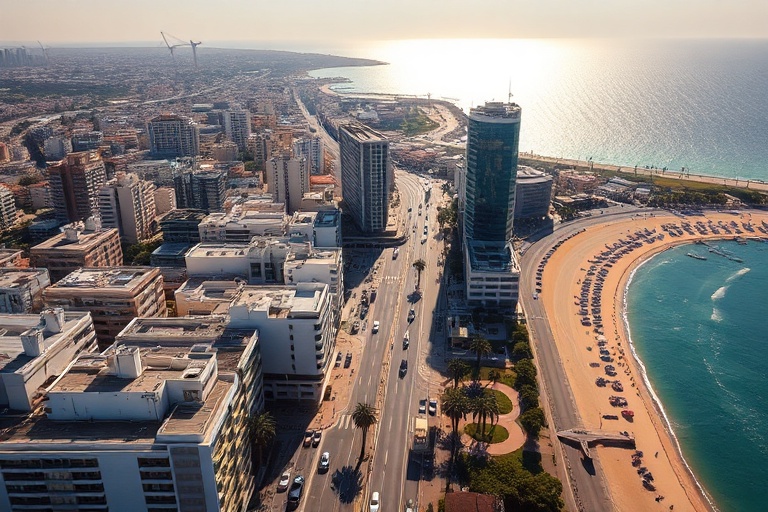
Israel’s Technological Revolution
No country of Israel’s size has made a larger impact on global technology in the past two decades. With a population of just over 9 million people, Israel has become a powerhouse in cybersecurity, artificial intelligence, and agricultural innovation. The country’s reputation as “Start-Up Nation” stems from policies established in the 1990s that encouraged military-trained engineers to commercialize their expertise.
Israel’s tech sector now contributes nearly 20% of the country’s GDP, with exports exceeding $70 billion annually. Companies like Check Point, Mobileye, and Waze have reshaped industries worldwide. The government’s aggressive investment in research and development—spending more on R&D as a percentage of GDP than any other developed nation—creates an ecosystem where military innovations quickly transition to civilian applications.
This technological influence extends beyond Silicon Wadi (Israel’s equivalent to Silicon Valley). Israeli cybersecurity firms protect 40% of the world’s cyber infrastructure. Meanwhile, agricultural technologies developed in the desert—like drip irrigation systems and drought-resistant crops—sustain food production in arid regions from California to sub-Saharan Africa.
The Global Influence of Israeli Culture
Israel’s cultural footprint extends far beyond its borders through music, literature, and film. The country’s Eurovision victories in 1978, 1979, and 1998 introduced Israeli music to European audiences, while contemporary artists like musician Omer Adam and singer-songwriter Noa have achieved international acclaim. Israeli films frequently compete for major awards, with recent Oscar nominations for works like “The Band’s Visit” and “Synonyms.”
Israeli literature has also gained prominence, with authors like Amos Oz and David Grossman achieving global readership. The country’s unique blend of Middle Eastern and Western influences creates a literary voice that resonates internationally. Even Israeli cuisine has entered the global mainstream, with dishes like hummus and shakshuka appearing on restaurant menus worldwide.
This cultural exchange works both ways. Israel has absorbed global influences while maintaining its distinct identity. The country’s mandatory military service creates a shared experience that unites diverse populations, while its status as a Jewish state provides a cultural anchor for diaspora communities worldwide.
Geopolitical Challenges and Strategic Position
Israel’s location at the crossroads of Europe, Asia, and Africa has shaped its geopolitical significance for millennia. Modern Israel maintains complex relationships with both Western allies and regional neighbors. The country’s peace treaties with Egypt and Jordan established it as the only nation in the Middle East with formal agreements with Arab states.
The Abraham Accords of 2020 marked another diplomatic breakthrough, normalizing relations with several Arab nations including the United Arab Emirates and Bahrain. These agreements opened new economic opportunities while maintaining Israel’s military edge in a volatile region. The country’s intelligence-sharing partnerships with Western nations make it an important security partner despite its small size.
Israel’s military capabilities remain unmatched in the region. The Israel Defense Forces’ technological superiority, combined with mandatory conscription that includes both men and women, creates a formidable defense structure. The country’s nuclear ambiguity policy adds another layer to its strategic calculus, though this approach remains controversial on the international stage.
The Humanitarian Dimension
Beyond technology and politics, Israel plays a significant role in global humanitarian efforts. The country’s disaster response teams have deployed to earthquakes in Turkey, floods in Haiti, and tsunamis in Southeast Asia. Israeli medical teams provide emergency care in conflict zones and refugee camps across Africa and the Middle East.
Israeli NGOs operate in some of the world’s most challenging environments. Organizations like Save a Child’s Heart provide life-saving cardiac surgery to children from developing nations, while IsraAID responds to crises from the Syrian civil war to the Rohingya refugee crisis. These efforts demonstrate a commitment to humanitarian values that often goes unrecognized in discussions about the country’s geopolitical challenges.
The country’s agricultural innovations also serve humanitarian purposes. Israel shares its expertise with developing nations through programs like MASHAV (Israel’s Agency for International Development Cooperation). These initiatives help combat food insecurity in regions vulnerable to climate change and political instability.
Key Areas of Israeli Global Influence
- Technology: Cybersecurity, AI, agricultural tech, medical devices
- Culture: Music, film, literature, cuisine
- Diplomacy: Peace treaties, intelligence partnerships, normalization agreements
- Humanitarian: Medical aid, disaster response, agricultural training
A Complex Legacy
Israel’s global presence remains as complex as its history. The country’s achievements in technology and culture stand alongside ongoing conflicts and political controversies. International perspectives on Israel vary widely—seen as both a model of innovation and a source of regional tension. This duality reflects the country’s unique position in global affairs.
For investors and entrepreneurs, Israel represents a land of opportunity where military experience translates directly to commercial success. For cultural observers, it offers a fascinating blend of ancient traditions and modern creativity. In international relations, Israel serves as both a strategic partner and a point of contention. These varied perspectives demonstrate how a small country can maintain outsized influence across multiple domains.
The story of modern Israel is ultimately one of resilience. From its founding in 1948 through decades of conflict and innovation, the country has maintained a presence on the global stage through sheer determination and adaptability. Whether through technological breakthroughs, cultural exports, or strategic partnerships, Israel continues to shape the world in ways disproportionate to its size.
As the 21st century progresses, Israel’s role will likely expand in areas where its unique combination of military expertise, entrepreneurial spirit, and humanitarian commitment can make a difference. The country’s ability to navigate complex global challenges while maintaining its distinctive identity ensures its continued relevance in international affairs.
Explore more tech innovation stories on Dave’s Locker.
Discover cultural analysis and trends in our dedicated section.