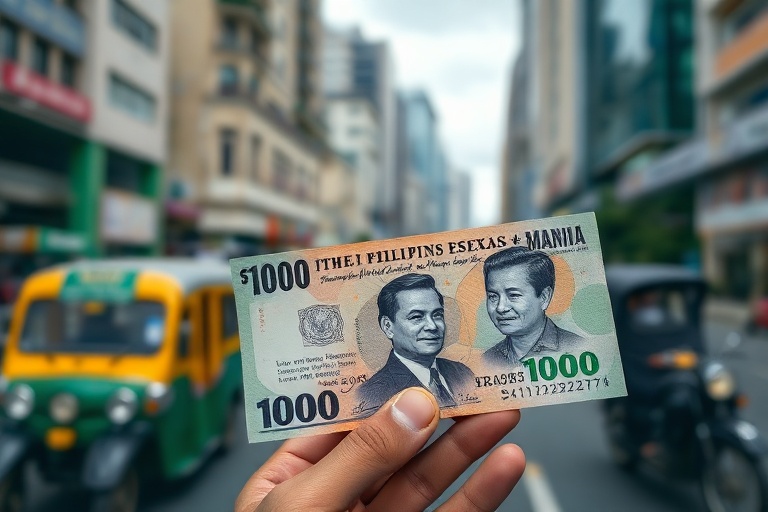
philippine peso
The Philippine peso has emerged as one of Asia’s most closely watched currencies in 2024, reflecting a delicate balance between domestic resilience and global economic headwinds. Once viewed as a barometer of the country’s economic health, the peso now operates under the influence of both local reforms and external shocks—from U.S. monetary policy to regional trade dynamics. Its performance offers more than just financial insight; it reveals how a developing economy adapts in an era of uncertainty.
As the currency faces renewed volatility, understanding its trajectory requires examining historical context, macroeconomic drivers, and policy responses. The peso’s fluctuations are not isolated events but signals of broader economic forces at play, from inflation trends to remittance flows and geopolitical tensions. In this environment, the peso becomes more than a medium of exchange—it becomes a story of adaptation, strategy, and survival in a rapidly changing world.
From Strength to Volatility: The Peso’s Recent Journey
At the start of 2023, the Philippine peso was among the stronger performers in the region, supported by robust remittances, a recovering tourism sector, and strong business process outsourcing (BPO) revenues. The currency hovered around ₱54–₱55 to the U.S. dollar, a level that reflected investor confidence in the country’s post-pandemic rebound. However, this stability began to waver as the U.S. Federal Reserve maintained high interest rates to combat inflation, strengthening the dollar globally.
By mid-2023, the peso had weakened to ₱56–₱57 against the dollar, a trend that accelerated into early 2024. By April 2024, it had breached ₱59, a level not seen since 2022. This depreciation was not unique to the Philippines—many regional currencies faced similar pressures—but the peso’s decline was sharper than most, with a nearly 6% drop against the dollar in the first quarter alone.
Several factors contributed to this shift. First, the U.S. Fed’s delayed pivot toward rate cuts kept global liquidity tight, pushing investors toward safer dollar-denominated assets. Second, persistent trade deficits widened due to surging imports of capital goods and oil, while exports—especially semiconductors and electronics—faced softer global demand. Third, political uncertainty ahead of the 2025 elections introduced caution among foreign investors.
Key Drivers Behind the Peso’s Movement
- U.S. Monetary Policy: The prolonged high interest rates in the U.S. make dollar-denominated investments more attractive, reducing capital inflows into peso assets.
- Trade Imbalance: The Philippines imports more than it exports, especially energy and machinery, creating consistent demand for dollars.
- Remittances: While still strong—over $37 billion in 2023—they are growing at a slower pace, reducing a key source of dollar supply.
- Investor Sentiment: Geopolitical risks and policy uncertainty have led to cautious positioning by foreign portfolio investors.
- Oil Prices: As a net oil importer, higher global crude prices increase import costs, widening the current account deficit.
Policy Responses: Bangko Sentral ng Pilipinas in Action
Faced with depreciation pressures, the Bangko Sentral ng Pilipinas (BSP) has employed a mix of traditional and unconventional tools to stabilize the peso. In early 2024, the central bank raised its key policy rate by 25 basis points to 6.5%, a move aimed at anchoring inflation expectations and defending the currency. This was the first hike in over a year and signaled a shift toward tighter monetary policy.
The BSP also increased the frequency of its dollar auctions, selling foreign exchange to meet demand and smooth volatility. These interventions, though costly in terms of international reserves, helped prevent disorderly market conditions. By June 2024, gross international reserves had declined to $33 billion from $35 billion at the start of the year, but remained above the IMF’s adequacy threshold.
Beyond interest rates and forex sales, the BSP has emphasized structural reforms. It has promoted the use of local currency settlement systems to reduce dollar dependency in trade with key partners like Japan and China. The central bank has also encouraged digitalization of payments to boost efficiency and transparency in the financial system.
Yet, these measures walk a fine line. Aggressive rate hikes risk choking economic growth, especially in sectors like real estate and consumer credit. Meanwhile, prolonged forex interventions deplete reserves, which are ultimately a finite buffer. As the BSP walks this tightrope, its decisions carry implications not just for the peso, but for millions of Filipinos whose livelihoods depend on stable prices and access to credit.
Broader Implications: What the Peso’s Struggle Reveals
The peso’s volatility is more than a financial footnote—it reflects deeper structural issues in the Philippine economy. One of the most pressing is the country’s reliance on external financing. Unlike export powerhouses such as South Korea or Vietnam, the Philippines imports a significant portion of its capital goods, from industrial machinery to semiconductors. This makes it vulnerable to currency swings and global supply chain disruptions.
Another concern is inflation persistence. While headline inflation has eased from its 2023 peak of over 8%, core inflation remains sticky, driven by rising food and transport costs. A weak peso amplifies these pressures by making imports more expensive, creating a feedback loop where inflation and depreciation reinforce each other.
On the social front, the peso’s decline erodes purchasing power, particularly for low-income families who spend a large share of income on food and fuel. Remittance-dependent households—over 10% of Filipino families—feel the pinch when the peso weakens, as their dollar earnings convert to fewer pesos. This can slow domestic consumption, which accounts for nearly 75% of the country’s GDP.
Yet, not all effects are negative. A weaker peso can benefit exporters, especially in sectors like agriculture, handicrafts, and outsourcing. The BPO industry, which generates nearly $30 billion annually, also becomes more competitive when the peso weakens, as costs in dollars translate to higher margins in peso terms. Tourism, another key sector, stands to gain as foreign visitors find the Philippines more affordable.
Ultimately, the peso’s story is one of duality: a currency under pressure, yet with latent strengths. Its resilience will depend not only on central bank policy, but on deeper reforms—improving export competitiveness, reducing energy dependence, and attracting long-term foreign direct investment (FDI) in manufacturing.
Looking Ahead: What’s Next for the Peso?
The peso’s trajectory in late 2024 and into 2025 will likely hinge on three critical developments: the timing of U.S. rate cuts, the pace of global economic recovery, and domestic policy clarity. If the Fed begins easing rates by mid-2024, as many analysts expect, the dollar could soften, easing pressure on the peso. A rebound in global semiconductor demand could also boost exports and improve the trade balance.
Domestically, the outcome of the 2025 elections may either stabilize or unsettle investor sentiment. A smooth transition with clear economic priorities could restore confidence, while policy missteps could trigger further capital outflows. Meanwhile, structural reforms—such as easing restrictions on foreign investment in utilities and infrastructure—could attract long-term FDI, reducing reliance on short-term portfolio flows.
The BSP’s ability to manage expectations will be crucial. Clear communication, data-driven decisions, and prudent use of reserves can help avoid panic. But the central bank cannot act alone. Fiscal policy must complement monetary tightening—through targeted subsidies, energy efficiency programs, and support for export industries.
For Filipinos, the peso’s fluctuations are a daily reality. From the jeepney driver filling up his tank to the overseas worker sending money home, the value of the peso shapes lives. In a world where global forces often feel distant, the peso serves as a tangible reminder of how local economies are intertwined with distant decisions—whether in Washington, Beijing, or global commodity markets.
As the Philippines charts its path forward, the peso will remain both a mirror and a compass—reflecting challenges, but also pointing toward opportunities. The goal is not to resist depreciation at all costs, but to ensure that when the peso moves, it moves in service of a stronger, more inclusive economy.
For more analysis on currency trends and economic shifts, visit Dave’s Locker Finance and Business sections.