The Backrooms Movie: Can It Escape the Static of Internet Horror?
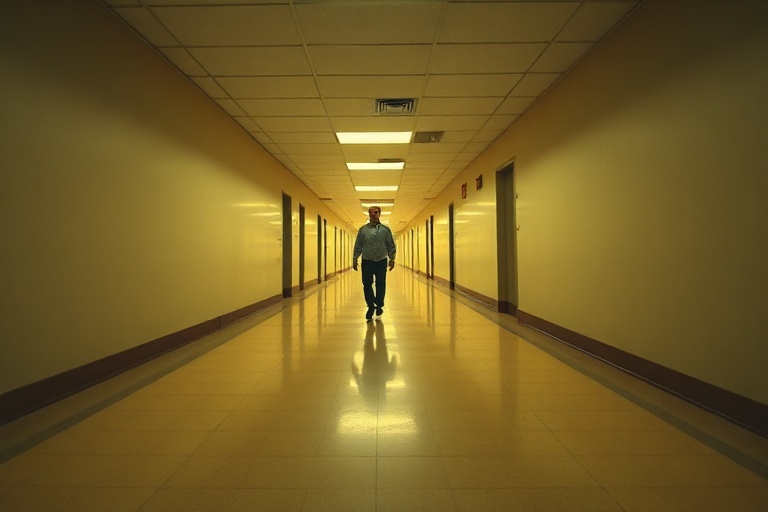
The horror genre has always thrived on the unknown, but few concepts have captured the collective imagination quite like The Backrooms. Originating as a creepypasta on 4chan in 2018, this liminal space—a maze of yellow-lit office corridors and flickering fluorescent lights—has since evolved into a cultural touchstone. Now, with the upcoming Backrooms Movie from Atlas Entertainment and director Jeremy Saulnier, the franchise is poised to transition from internet mythos to mainstream cinema. This isn’t just another horror flick; it’s a test of whether digital-era storytelling can successfully leap to the silver screen.
The Backrooms Phenomenon: From Creepypasta to Cultural Icon
The Backrooms began as a simple but haunting concept: a series of interconnected, windowless rooms where reality distorts. The original 4chan post described it as a place “where the walls are made of static” and “the air smells like wet cardboard.” What started as a niche horror story quickly spread across TikTok, YouTube, and Reddit, with users expanding the lore through fan art, ARG-style games, and even indie games like Enter the Backrooms.
Its appeal lies in its ambiguity. Unlike traditional horror, which often relies on jump scares or gore, The Backrooms preys on the fear of the unknown. The setting—endless fluorescent corridors—is familiar yet unsettling, tapping into the universal dread of being lost in a place that shouldn’t exist. This minimalist approach made it ripe for adaptation, but also a challenge: how do you translate a digital nightmare into a visceral cinematic experience?
Why the Backrooms Resonates in the Digital Age
Several factors contribute to the Backrooms’ enduring popularity:
- Accessibility: Anyone can imagine the Backrooms. The lack of a strict narrative allows for personal interpretation, making it relatable across cultures.
- Community-Driven Expansion: Unlike corporate-owned franchises, the Backrooms grew organically through fan contributions, keeping it fresh and unpredictable.
- Psychological Horror: The Backrooms thrive on dread rather than explicit scares, aligning with modern horror trends like Hereditary and The Babadook.
- Nostalgia Factor: For millennials and Gen Z, the aesthetic evokes childhood memories of school hallways and office buildings—places that were once safe but now feel sinister.
This grassroots appeal is both a strength and a hurdle for filmmakers. The Backrooms’ power lies in its ambiguity, but cinema demands structure. Will the movie retain the eerie atmosphere of the original concept, or will it succumb to the trappings of conventional horror?
Behind the Scenes: Atlas Entertainment and Jeremy Saulnier’s Vision
Atlas Entertainment, known for producing films like American Sniper and 13 Hours, acquired the rights to The Backrooms in 2022. Their choice of director Jeremy Saulnier—a filmmaker celebrated for gritty, character-driven horror like Green Room and Hold the Dark—suggests a commitment to staying true to the source material’s unsettling tone.
Saulnier has spoken about his approach in interviews, emphasizing practical effects and minimal CGI. “The Backrooms aren’t just a setting; they’re a character,” he told The Hollywood Reporter. “We’re not trying to rely on CGI to scare people. We want the audience to feel the weight of every flickering light and distant scream.”
The Challenges of Adapting a Digital Horror Concept
Adapting The Backrooms presents unique difficulties:
- Visualizing the Unseen: The original concept is abstract. How do you show a hallway that shouldn’t exist without losing its mystique?
- Balancing Lore and Originality: Fans have spent years expanding the Backrooms’ mythology. Will the movie incorporate these ideas, or forge its own path?
- Pacing in a Found-Footage Framework: The Backrooms lore often relies on slow-building dread. Can a feature film sustain this tension without relying on traditional horror tropes?
- Marketing a Non-Traditional Horror Film: How do you sell a movie that’s essentially about “being lost in a bad fluorescent lighting job” without oversimplifying it?
Atlas Entertainment’s strategy appears to focus on authenticity. Early set photos and concept art reveal a commitment to practical effects, with real corridors dressed to look like the Backrooms. If executed well, this could set a new standard for horror realism.
The Broader Implications: Can Found-Footage Horror Survive on the Big Screen?
The Backrooms Movie isn’t just another horror flick—it’s a test case for the future of found-footage horror. Found-footage films like Paranormal Activity and The Blair Witch Project proved that low-budget, high-concept horror could be wildly profitable. But as the genre has matured, so has audience skepticism. Today’s horror fans demand more than just shaky cam and screaming.
The success of The Backrooms Movie could redefine the genre. If it captures the original’s eerie atmosphere while delivering a satisfying narrative, it could pave the way for more experimental horror adaptations. Conversely, if it leans too heavily on jump scares or convoluted lore, it risks alienating the very audience that made the Backrooms a phenomenon in the first place.
What’s Next for the Backrooms Franchise?
Beyond the film, the Backrooms’ universe continues to expand. Atlas Entertainment has hinted at a potential franchise, with talk of sequels, spin-offs, and even video game adaptations. But the challenge will be maintaining the balance between commercial appeal and the raw, unsettling creativity that made the Backrooms special in the first place.
For fans, the anticipation is electric. For skeptics, the Backrooms Movie represents a gamble—a chance to see if digital-era horror can truly translate to the big screen. For filmmakers, it’s an opportunity to prove that the most terrifying stories aren’t always the ones with the biggest budgets, but the ones that tap into our deepest fears of the unknown.
Conclusion: A New Chapter for Horror, or Another Failed Experiment?
The Backrooms Movie stands at a crossroads. It has the potential to redefine horror cinema, but it also risks becoming a footnote—a cautionary tale of a great idea poorly executed. What’s certain is that its success or failure will be closely watched by both horror enthusiasts and industry professionals alike.
One thing is clear: the Backrooms have already left an indelible mark on internet culture. Whether on screen or in our collective nightmares, they’re here to stay. The question now is whether the movie can do justice to the mythos—or if it will simply add another layer of static to the walls.
For now, all we can do is wait—and hope we never end up in Level 0.
Explore more trending horror content on Dave’s Locker or dive into analytical takes on genre evolution to stay ahead of the curve.