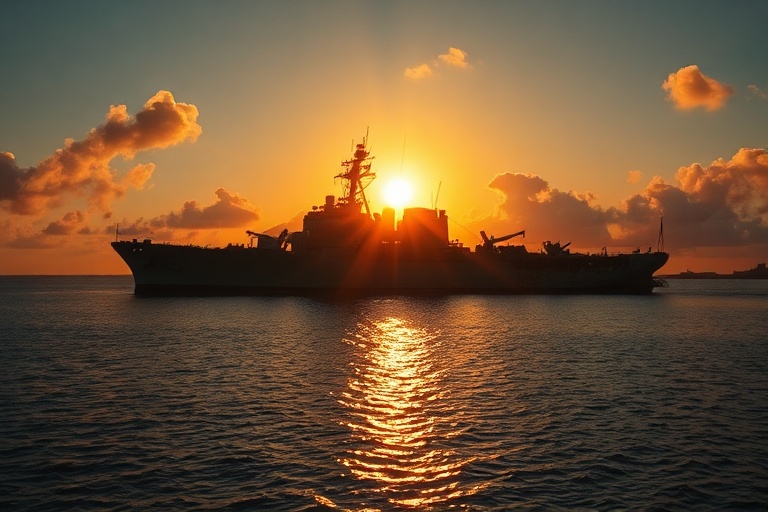
uss arizona
USS Arizona: From Battleship to Eternal Memorial
The USS Arizona (BB-39) stands as one of the most enduring symbols of American military history and sacrifice. Commissioned in 1916, the Pennsylvania-class battleship served with distinction during World War I before becoming a permanent reminder of the attack on Pearl Harbor. Its wreck remains submerged in the waters of Hawaii, carefully preserved as a war grave and memorial to the 1,177 crewmen who perished aboard her on December 7, 1941.
More than eight decades after the attack, the USS Arizona continues to draw millions of visitors annually. The memorial built above its submerged hull serves as both a tribute to the past and a solemn reminder of the cost of war. Its story encompasses naval innovation, tragic loss, and the enduring power of remembrance.
The Battleship’s Construction and Early Service
Constructed at the Brooklyn Navy Yard, the USS Arizona was one of the last of the pre-World War I “super-dreadnoughts,” designed to dominate naval engagements with its massive 14-inch guns and thick armor plating. Launched in 1915 and commissioned the following year, she represented the pinnacle of naval engineering at the time. Her name honored the 48th state, which had achieved statehood just months before her commissioning.
During World War I, the Arizona served as part of Battleship Division Nine, patrolling the North Sea and participating in exercises designed to counter German naval threats. Though she saw no combat during the war, her presence reinforced American naval power during a critical period. After the war, she underwent modernization in the 1920s and 1930s, receiving improved fire control systems and upgraded armor.
By the time of the Pearl Harbor attack, the Arizona had become a veteran warship, though she was no longer the most advanced battleship in the fleet. Nevertheless, she remained an important symbol of American naval strength, positioned in Battleship Row during the fateful morning of December 7, 1941.
The Attack on Pearl Harbor and the Ship’s Destruction
The morning of December 7, 1941, began like any other for the crew of the USS Arizona. Many sailors were still asleep or enjoying breakfast when the first Japanese bombs struck at 7:48 a.m. Within minutes, the Arizona became one of the primary targets of the surprise attack, struck by multiple armor-piercing bombs.
The most devastating hit occurred at 8:10 a.m., when a 1,760-pound bomb penetrated the ship’s forward ammunition magazine. The resulting explosion tore through the battleship, igniting a catastrophic fire that burned for two days. The force of the blast lifted the ship’s forward hull out of the water before it settled beneath the surface, trapping hundreds of crewmen inside.
In total, 1,177 sailors and Marines perished aboard the Arizona—nearly half of all American casualties at Pearl Harbor. Only 334 crew members survived, many rescued from the burning waters of the harbor. The ship’s destruction marked the beginning of America’s entry into World War II and transformed the Arizona into an enduring symbol of sacrifice.
The USS Arizona Memorial: A Place of Reflection and Remembrance
In the years following the attack, the wreck of the Arizona was left undisturbed as a war grave. Oil continues to leak from the ship’s hull, creating a “black tears” effect that many interpret as the ship weeping for her lost crew. In 1950, Admiral Arthur W. Radford, commander of the Pacific Fleet, initiated efforts to establish a permanent memorial over the wreckage.
The USS Arizona Memorial, designed by Honolulu architect Alfred Preis, was dedicated in 1962. The structure spans the ship’s submerged hull, allowing visitors to stand directly above the remains of the battleship. The memorial includes three main sections: the entry room, the assembly room, and the shrine room, where the names of the lost crewmen are inscribed.
Visitors to the memorial are provided with a sense of the ship’s scale and the enormity of the disaster. The white memorial structure contrasts with the dark hull beneath, creating a powerful visual representation of the lives lost. The National Park Service, which manages the site, offers interpretive programs that explore the history of the Arizona and the broader context of the Pearl Harbor attack.
Preservation and Controversies Surrounding the Memorial
Maintaining the USS Arizona as a memorial has required careful preservation efforts. The ship’s wreck has deteriorated significantly over the decades, with concerns about structural integrity and environmental impact. In 1999, the National Park Service began a long-term stabilization project to prevent the hull from collapsing.
Controversies have also arisen regarding the memorial’s management and interpretation. Some veterans and historians have criticized the National Park Service for focusing too much on the attack itself rather than the broader history of the Arizona and its crew. Others have debated the appropriateness of allowing tourists to visit a site that remains a war grave.
Despite these challenges, the USS Arizona Memorial remains one of the most visited historic sites in the United States. In 2022, it welcomed over 1.5 million visitors, many of whom leave offerings such as leis in honor of the fallen sailors. The memorial serves as a powerful reminder of the human cost of war and the importance of remembering history.
The Legacy of the USS Arizona
The story of the USS Arizona extends beyond its role in World War II. The ship’s bell, recovered from the wreck, was later installed on the battleship USS Missouri and rung to mark the Japanese surrender in 1945. The Missouri, now a museum ship at Pearl Harbor, stands as a symbol of the war’s conclusion, completing the narrative arc begun by the Arizona.
In the decades since the attack, the Arizona has become a focal point for discussions about remembrance, reconciliation, and the lessons of history. Survivors of the attack, known as “Arizona survivors,” have played a crucial role in sharing their stories and ensuring that the memory of the ship and her crew endures. Their efforts have helped shape the memorial’s mission and its approach to education and interpretation.
The USS Arizona also serves as a reminder of the broader impact of Pearl Harbor. The attack galvanized American public opinion and led to the country’s entry into World War II, reshaping global politics and military strategy. The Arizona‘s story is intertwined with the story of the war itself, making it a vital part of America’s collective memory.
For those interested in exploring more about naval history and military memorials, the History and Military sections of Dave’s Locker offer additional resources and insights.
Visiting the USS Arizona Memorial Today
The USS Arizona Memorial is accessible to the public through the Pearl Harbor National Memorial, operated by the National Park Service. Visitors begin their experience at the Pearl Harbor Visitor Center, where they can view exhibits about the attack and the ship’s history. From there, they board a Navy-operated launch that takes them to the memorial.
Visiting hours are subject to change, but the memorial is typically open daily from 8:00 a.m. to 5:00 p.m. Admission is free, though timed tickets may be required during peak periods. The experience is a solemn one, with visitors encouraged to reflect on the sacrifices made aboard the Arizona and the broader implications of the Pearl Harbor attack.
The memorial also offers opportunities for further exploration, including the nearby Battleship Missouri Memorial and the Pacific Aviation Museum. These sites provide additional context about the events of December 7, 1941, and the war that followed.
For those unable to visit in person, virtual tours and online resources offer a way to engage with the history of the Arizona. The National Park Service website provides detailed information about the memorial, its history, and its significance, ensuring that the story of the Arizona continues to reach audiences around the world.
Conclusion
The USS Arizona remains one of the most powerful symbols of American history and sacrifice. From her construction as a symbol of naval power to her destruction in one of history’s most infamous attacks, the battleship’s story encapsulates the triumphs and tragedies of the 20th century. Today, the memorial built above her wreck serves as a place of reflection, education, and remembrance.
The legacy of the Arizona extends beyond the individual lives lost aboard her. She represents the resilience of a nation that endured tragedy and emerged stronger. Her story is a reminder of the human cost of war and the importance of honoring those who have made the ultimate sacrifice. As long as the oil continues to leak from her hull and visitors stand in silent tribute above her remains, the USS Arizona will continue to teach future generations about the past.
In an era where history is often reduced to statistics and headlines, the USS Arizona offers a deeply human story. It challenges us to remember not just the events of December 7, 1941, but the individuals who lived, fought, and died aboard the battleship. Their memory lives on in the memorial that bears her name, ensuring that the legacy of the USS Arizona will never be forgotten.