Virginia’s Redistricting Battle: Power, Maps, and Political Consequences
Every decade, the process of redistricting reshapes the political landscape of the United States. In Virginia, this once-a-decade ritual has taken on heightened significance as the state grapples with shifting demographics, legal challenges, and the enduring tension between partisan control and fair representation. The stakes are high: new district maps could determine which party dominates the state legislature, influence congressional elections, and redefine the balance of power in Richmond.
Redistricting in Virginia is not just about drawing lines on a map—it’s about who gets a voice in government and who gets left out. The process has become a flashpoint for debates over fairness, transparency, and the role of independent commissions versus legislative control. With the 2024 elections looming, the outcome of this redistricting cycle could ripple across the state for years to come.
The History of Redistricting in Virginia: From Gerrymandering to Reform Efforts
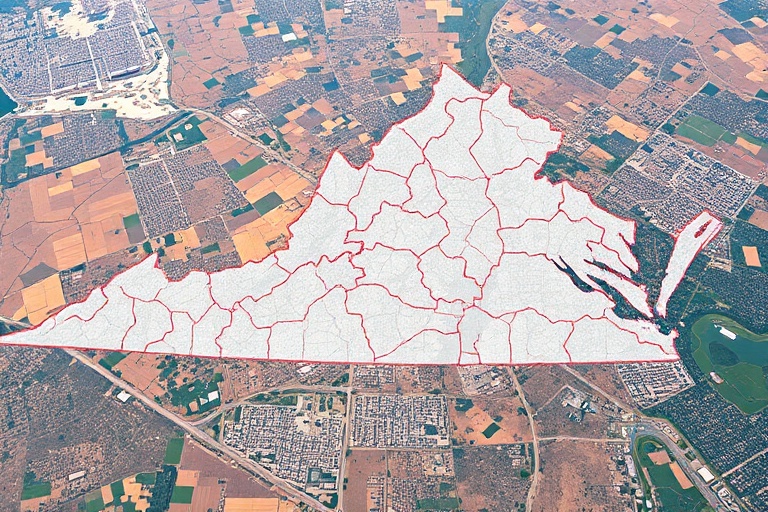
Virginia’s history with redistricting is a story of gerrymandering, legal battles, and gradual reform. For decades, the state was notorious for partisan gerrymandering, where whichever party controlled the legislature would draw district lines to maximize their advantage. This practice often led to bizarrely shaped districts that packed opposing voters into a few areas or diluted their influence across many.
One of the most infamous examples was the 3rd Congressional District under former Rep. Bobby Scott, which snaked across several cities to connect Black communities and ensure Democratic representation. While such gerrymanders served partisan goals, they also sparked criticism for disenfranchising voters and undermining competitive elections.
In 2019, Virginia took a significant step toward reform by approving a constitutional amendment to create a bipartisan redistricting commission. The commission, composed of lawmakers and citizens, was tasked with drawing new legislative and congressional maps. However, the process faced immediate challenges, including disagreements between Democrats and Republicans, accusations of partisan maneuvering, and legal scrutiny over transparency.
Key Moments in Virginia’s Redistricting History
- 2011: Republicans controlled the legislature and drew heavily gerrymandered maps, leading to lawsuits alleging racial discrimination.
- 2019: Virginia voters approved a constitutional amendment to create a bipartisan redistricting commission, a response to years of partisan gridlock.
- 2020: The commission deadlocked, failing to produce new maps and forcing the Supreme Court of Virginia to draw them instead.
- 2021: The Supreme Court approved new legislative maps that slightly favored Democrats, though the congressional maps remained unchanged due to delays.
- 2023: Virginia’s Republican-led House of Delegates moved to take control of the redistricting process, reigniting debates over who should draw the maps.
Who Holds the Power? The Battle Over Redistricting Control
The question of who should control redistricting in Virginia has become a central battleground in recent years. Traditionally, the state legislature has held this power, but critics argue that this leads to partisan gerrymandering and a lack of accountability. In response, advocates for reform have pushed for independent commissions or judicial oversight to ensure fairness.
In 2023, the Virginia House of Delegates, controlled by Republicans, passed a bill that would give the legislature sole authority over redistricting, stripping the Virginia Redistricting Commission of its role. The bill was met with fierce opposition from Democrats and good-government groups, who argued that it would return the state to the era of partisan gerrymandering. The bill ultimately stalled in the Senate, but the debate highlighted the ongoing struggle over redistricting power.
Meanwhile, the Virginia Senate, controlled by Democrats, has supported the use of independent commissions. In 2021, when the bipartisan commission failed to agree on maps, the Supreme Court of Virginia stepped in to draw the legislative districts. This intervention underscored the risks of leaving redistricting in the hands of politicians who may prioritize their own interests over fairness.
Arguments For and Against Legislative Control
- For Legislative Control:
- Elected officials have the most direct accountability to voters.
- The legislature is the most transparent body, with public hearings and debates.
- Partisan balance can lead to compromise and more competitive districts.
- Against Legislative Control:
- Politicians have a vested interest in protecting their own seats.
- Gerrymandering can silence opposition voices and reduce competition.
- Independent commissions are less likely to face legal challenges over fairness.
The Broader Implications: What’s at Stake in Virginia’s Redistricting Fight
The outcome of Virginia’s redistricting battle will have far-reaching consequences beyond the state’s borders. Virginia is often seen as a bellwether for national trends, and its political shifts can influence elections across the country. The new maps could determine whether Democrats maintain their slim majorities in the state legislature or whether Republicans regain control, potentially affecting policy debates on issues like abortion, voting rights, and education.
At the congressional level, Virginia’s maps could influence the balance of power in the U.S. House of Representatives. In 2022, the state’s congressional delegation was evenly split between Democrats and Republicans, but redistricting could tip the scales in favor of one party. This is particularly significant given the narrow margins in the House, where a few seats can determine which party holds the majority.
Beyond partisan politics, redistricting also has implications for representation. Virginia’s population has grown increasingly diverse, with significant increases in Black, Hispanic, and Asian communities. Fair redistricting could ensure that these communities have a stronger voice in government, while gerrymandering could dilute their influence. The Voting Rights Act has played a key role in protecting minority voting power, but legal challenges to new maps could test its limits.
National Context: How Virginia’s Redistricting Fits Into a Larger Trend
Virginia’s redistricting saga mirrors broader national trends. Across the country, states are grappling with how to balance partisan interests with the demand for fair, transparent processes. Some states, like California and Michigan, have adopted independent commissions to draw district lines, while others, like Texas and North Carolina, have faced criticism for partisan gerrymandering. The U.S. Supreme Court’s 2019 decision in Rucho v. Common Cause effectively ended federal challenges to partisan gerrymandering, leaving states to police themselves.
In this environment, Virginia’s experience serves as a case study in the challenges of redistricting reform. The state’s bipartisan commission, while a step forward, has struggled with deadlocks and partisan infighting. The Supreme Court’s involvement in 2021 highlighted the risks of leaving redistricting to the courts, which are not equipped to handle the political nuances of map-drawing. Meanwhile, legislative efforts to regain control of the process risk undoing years of reform.
What’s Next for Virginia? The Road Ahead for Redistricting
As Virginia approaches the 2024 elections, the redistricting process remains unresolved. The state’s current legislative districts, drawn in 2021, will remain in place for the upcoming cycle, but the congressional maps could still be redrawn if new legal challenges arise. Meanwhile, the debate over who should control redistricting shows no signs of abating.
For advocates of reform, the focus is on building support for independent commissions and ensuring that the public has a meaningful role in the process. Organizations like the Virginia League of Women Voters and Common Cause Virginia have pushed for greater transparency and citizen involvement. They argue that redistricting should be about creating competitive, fair districts—not about protecting incumbents or partisan interests.
On the other side, Republicans in the legislature are likely to continue their efforts to regain control of the process. Their argument hinges on the idea that elected officials, not unelected commissions or judges, should have the final say over how districts are drawn. This debate will play out in the courts, the legislature, and the court of public opinion in the coming years.
The outcome of this struggle will shape Virginia’s political landscape for the next decade. Will the state embrace reform and create a more inclusive, competitive system? Or will it revert to the old ways of partisan gerrymandering, where power trumps fairness? The answer will depend on whether Virginians demand better and whether their leaders are willing to listen.
One thing is clear: redistricting is not just about maps. It’s about who gets to participate in democracy, whose voices are heard, and who gets to decide the future of the Commonwealth. In Virginia, the fight over redistricting is far from over—and the stakes couldn’t be higher.