we bury the dead
We Bury the Dead: Rituals That Shape Humanity
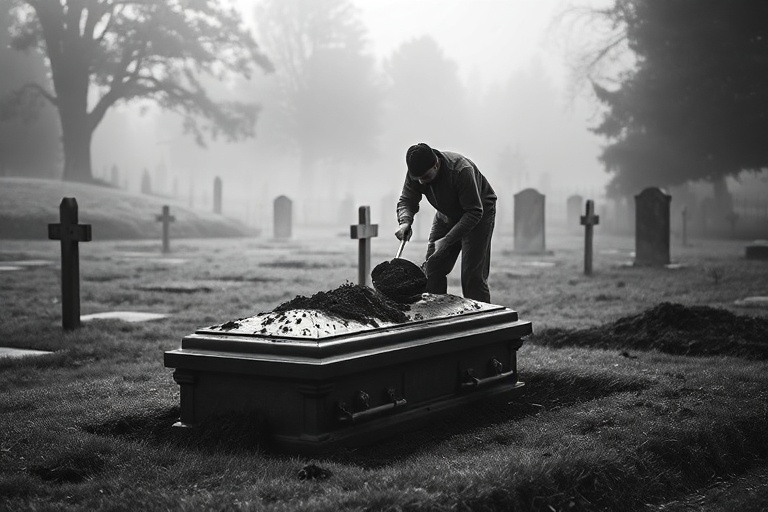
The act of burying the dead is one of the oldest and most universal practices in human history. From the earliest known graves in archaeological records to modern funeral customs, this ritual transcends cultures, religions, and eras. It serves not just as a way to honor the deceased but as a fundamental expression of our shared humanity.
What happens when societies stop burying their dead in traditional ways? The question isn’t just about cemeteries or cremation—it’s about how we grapple with loss, memory, and the boundaries between life and death. Around the world, these practices reveal as much about the living as they do about the dead.
The Roots of Burial Rituals
Some of the earliest evidence of deliberate burial comes from Neanderthal sites in Europe, where flowers and tools were placed alongside the deceased as far back as 100,000 years ago. These acts suggest an understanding of death beyond mere disposal—a recognition that the dead deserve more than oblivion.
In ancient Egypt, burial wasn’t just practical; it was sacred. The pyramids and elaborate tombs were designed to ensure the pharaoh’s journey into the afterlife. The Book of the Dead, a collection of spells and instructions, guided the deceased through the underworld. This wasn’t just about death—it was about continuity, legacy, and the belief that the soul endured.
Meanwhile, in Indigenous cultures across the Americas and Australia, burial practices were deeply tied to the land. The Lakota, for example, believe the earth itself is a living entity, and burial sites are places of spiritual connection. In some traditions, bodies were placed on scaffolds or in trees, allowing the spirit to depart while the bones returned to the earth.
Modern Shifts and Environmental Concerns
Today, burial practices are evolving rapidly. Cremation rates have risen sharply in many Western countries, driven by cost, space constraints, and shifting attitudes toward death. In Japan, over 99% of funerals now involve cremation, a tradition that reflects both Buddhist influence and the country’s urban density.
But environmental concerns are pushing boundaries further. Natural or “green” burials—where bodies are buried without embalming chemicals or concrete vaults—are gaining traction. These methods allow decomposition to occur naturally, returning the body to the earth without leaving a lasting ecological footprint.
Some innovators are exploring even more radical options:
- Human composting: Companies like Recompose in Washington State turn human remains into nutrient-rich soil through a process called natural organic reduction.
- Aquamation (alkaline hydrolysis): This water-based process breaks down the body using heat and chemicals, producing a sterile liquid and bone residue. It’s legal in several U.S. states and parts of Canada.
- Sky burial: Practiced in Tibetan Buddhism, the body is left on a mountaintop to be consumed by vultures. This reflects beliefs about impermanence and the cycle of life.
These alternatives challenge long-held norms, forcing societies to confront uncomfortable questions: What does it mean to dispose of a body responsibly? How do we balance tradition with sustainability?
Cultural Clashes and Legal Battles
Burial practices aren’t just personal—they’re political. In 2020, the U.S. Supreme Court ruled on a case involving a Jewish family’s request to bury their loved one in a cemetery that refused interfaith burials. The decision reinforced the principle that cemeteries must comply with anti-discrimination laws, but it also highlighted tensions between religious freedom and secular governance.
In India, cremation is the dominant practice, but exceptions exist. The Parsis, a small Zoroastrian community, traditionally laid their dead in Towers of Silence, where vultures would consume the bodies. As vulture populations collapsed due to poisoning, the Parsis were forced to adapt, adopting solar funerals or burial in concrete-lined graves.
In some cases, burial practices clash with urban development. In New York City, the construction of new buildings often uncovers forgotten cemeteries. In 2015, workers renovating a Brooklyn lot discovered the remains of 200 people from the 19th century. The discovery led to a months-long archaeological project and a reevaluation of how cities handle historical burial grounds.
The Psychology of Burial
Why do humans bury their dead at all? Some anthropologists argue that burial is a key marker of civilization—it signals that a group has moved beyond mere survival to consider meaning, memory, and legacy. Others suggest that burying the dead is a way to manage grief, providing a physical space to visit and mourn.
Forensic psychologist Dr. Carla Sofka notes that rituals like burial help survivors process loss. “When we bury someone, we’re not just dealing with the body,” she says. “We’re creating a narrative around their life and death. That narrative gives us a sense of control in the face of something uncontrollable.”
The act of visiting a grave or memorial site can also serve a therapeutic function. Studies show that rituals like placing flowers or lighting candles provide a sense of closure and connection. In cultures where the dead are believed to remain present in some form—whether as ancestors or spirits—these practices reinforce social bonds and cultural identity.
What the Future Holds
As societies become more secular and environmentally conscious, burial practices will likely continue to diversify. Digital memorials, where loved ones share photos and stories online, are already supplementing traditional gravesites. Some companies even offer “memorial diamonds,” where ashes are compressed into gemstones for keepsakes.
Yet despite these innovations, the core purpose of burial remains unchanged: to honor the dead and comfort the living. Whether through a quiet forest interment, a bustling city cemetery, or a ceremonial sky burial, the act of burying the dead is a thread that connects humanity across time and space.
In the end, the way we bury our dead says as much about us as it does about them. It reveals our fears, our hopes, and our deepest beliefs about what comes after life. And perhaps that’s why, even as the world changes, this ancient ritual endures.