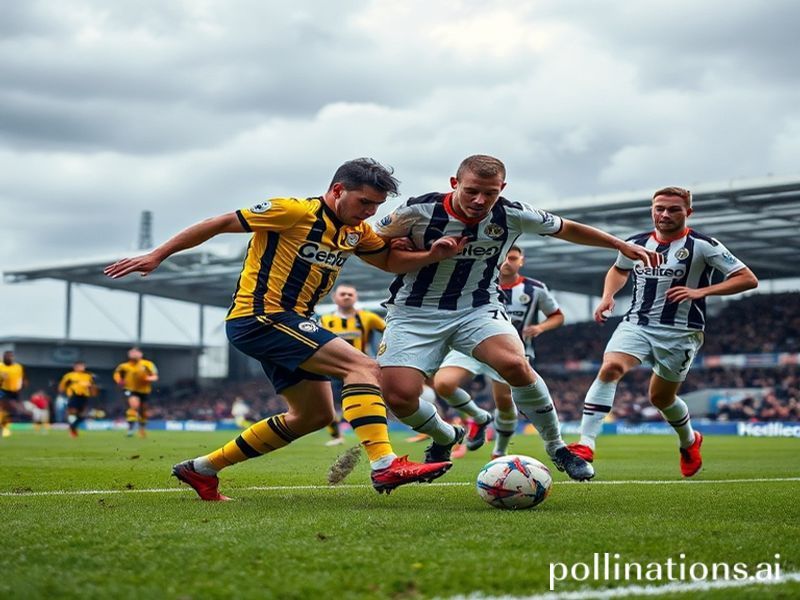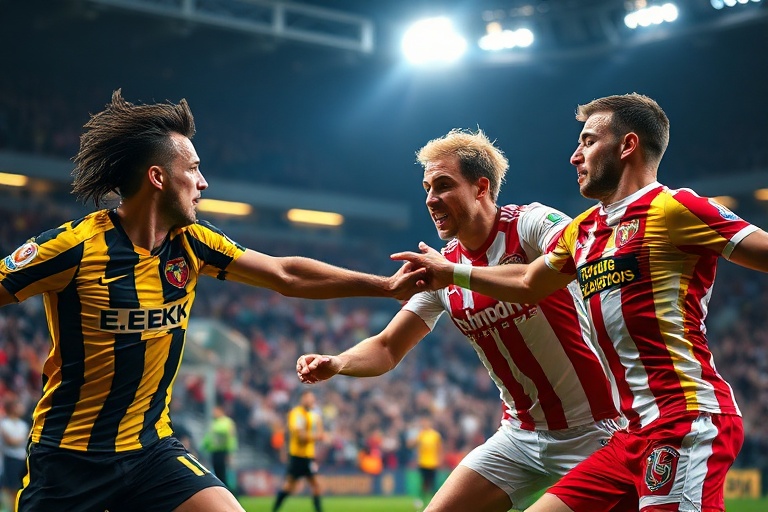
The clash between AEK Athens and Olympiacos is more than just a football match. It is a cultural fault line, a social divider, and a unifying force all at once. Known as the “Derby of the Eternal Enemies,” this fixture transcends sport, embedding itself in the identity of Athens and the broader Greek psyche. While football rivalries exist worldwide, few match the intensity, history, and societal impact of this particular fixture.
AEK Athens, founded in 1924 by Greek refugees from Constantinople, carries the weight of a diaspora’s dreams. Olympiacos, established in 1925 in the port of Piraeus, represents the working-class spirit of Greece’s maritime heartland. Their rivalry is not merely about points on the table; it’s about heritage, geography, and ideology. This is why matches between them are followed as closely in Sydney and Toronto as they are in Athens and Thessaloniki.
The Historical Roots of a Bitter Rivalry
The origins of this rivalry stretch back nearly a century, rooted in social and political divisions that mirrored Greece’s turbulent 20th century. AEK was formed by Greek refugees fleeing the Asia Minor Catastrophe, giving it an identity tied to displacement and resilience. Olympiacos, meanwhile, emerged from the industrial docklands of Piraeus, a symbol of proletarian pride. These contrasting narratives set the stage for a rivalry that would grow beyond football into a reflection of Greek society itself.
The first official match between the two sides took place in 1930, but the rivalry truly intensified in the 1950s and 1960s. During this period, Greece was grappling with post-war recovery, political instability, and the specter of civil war. Football became a battleground for these tensions. AEK, associated with the urban middle class and intellectuals, faced Olympiacos, the team of the working class and the port workers. The division was not just on the pitch but in the streets.
By the 1980s, the rivalry had reached new heights. Olympiacos dominated domestically, while AEK became the team of the Greek diaspora—especially in Australia, where a large community of Greek immigrants saw AEK as their team. This global dimension ensured that the rivalry was not confined to Greece. Matches were broadcast across Europe and Australia, turning the fixture into an international spectacle.
What Makes This Derby Unique in Global Football
Few football rivalries carry the cultural and emotional weight of AEK Athens vs Olympiacos. Unlike the Old Firm derby in Glasgow or the Superclásico in Buenos Aires, this match is deeply intertwined with modern Greek history and identity. It is a fixture where football intersects with migration, class, and national memory.
- Class and Identity: Olympiacos fans are often associated with the working class and left-wing politics, while AEK has historically been linked to the middle class and a more cosmopolitan identity. This divide reflects broader societal tensions in Greece.
- Diaspora Connection: AEK has a strong following among Greek communities abroad, particularly in Australia, Canada, and Germany. Olympiacos, though also supported internationally, has a more localized following centered in Piraeus and working-class neighborhoods.
- Political Undertones: The rivalry has, at times, been politicized. During periods of political unrest in Greece, the derby took on symbolic significance, with fans using the match to express broader grievances.
- Global Reach: Matches between AEK and Olympiacos are broadcast in over 50 countries. In cities like Melbourne and New York, fan gatherings mirror the passion seen in Athens, creating a transnational community of supporters.
This global reach is partly due to the internet and satellite television, which have transformed local rivalries into international events. Greek expatriates, regardless of where they live, feel a visceral connection to the outcome. A win for AEK or Olympiacos is not just a football result—it’s a validation of identity, a moment of pride in a distant land.
The Modern Era: A Rivalry Reimagined
The 21st century has brought new dynamics to the AEK-Olympiacos rivalry. Financial crises, political upheavals, and the rise of social media have all left their mark. Olympiacos has remained a dominant force in Greek football, with numerous league titles and consistent European campaigns. AEK, meanwhile, has experienced periods of decline followed by resurgence, particularly after financial troubles in the early 2010s.
The 2017–18 season marked a turning point. AEK, under the management of Portuguese coach José Morais, mounted a serious title challenge against Olympiacos. Their 2-0 victory in the Olympic Stadium in April 2018 was celebrated not just as a win, but as a symbolic reclaiming of Athens’ football crown. The match was played in front of a near-capacity crowd, with fans draped in blue and yellow creating an electric atmosphere.
In recent years, the rivalry has also become a stage for tactical innovation. Olympiacos, under coaches like Pedro Martins and now Carlos Carvalhal, has blended experienced international players with young Greek talents. AEK, under arms such as Manolo Jiménez and now Gustavo Poyet, has emphasized youth development and a high-pressing style. These tactical battles add another layer to the spectacle.
Social media has amplified the rivalry’s intensity. Fans now engage in digital banter, memes, and even virtual watch parties. The hashtags #AEKOlympiacos and #DerbyOfTheEternalEnemies trend globally whenever the two teams meet. This digital dimension has turned the rivalry into a year-round conversation, not just a twice-yearly event.
The Broader Impact on Greek Football and Culture
The AEK-Olympiacos rivalry is a double-edged sword for Greek football. On one hand, it generates unparalleled passion, drawing large crowds and media attention. The derby is often the highlight of the domestic season, with ticket sales outstripping those of many European fixtures. This level of engagement is crucial for the financial health of Greek clubs, which often struggle with revenue compared to their European counterparts.
On the other hand, the intensity of the rivalry can have negative consequences. Violence between ultras—hardcore fan groups—has occasionally marred matches. Instances of flares, clashes with police, and stadium bans have drawn criticism from UEFA and FIFA. The Greek state has at times intervened, imposing restrictions on fan attendance or even postponing matches to maintain public order.
Yet, for all its controversies, the rivalry remains a cornerstone of Greek football’s identity. It is a reminder that football is not just about sport; it is about community, history, and belonging. In a country where national pride has often been fragile, the AEK-Olympiacos derby offers a sense of continuity and passion.
Moreover, the rivalry has inspired generations of Greek footballers. Many stars of the Greek national team—from Stathis Manolas to Kostas Mitroglou—cut their teeth in this fierce derby. The experience of playing in such an intense environment prepares players for the pressures of international football.
Looking Ahead: What the Future Holds
The next chapter of the AEK-Olympiacos rivalry will be shaped by several factors. Financially, both clubs are under pressure to compete with wealthier European teams. AEK, in particular, has faced scrutiny over its financial management in the past, while Olympiacos has relied on wealthy owners to maintain its dominance. The balance of power could shift if AEK continues its resurgence or if Olympiacos faces internal turmoil.
On the pitch, the rivalry may evolve tactically. Younger managers and a new generation of players are bringing fresh ideas to the derby. The rise of data analytics and sports science is also changing how teams prepare, though the raw emotion of the match often overshadows tactical nuances.
Off the pitch, the rivalry’s global dimension will only grow. With more Greek expatriates staying connected through digital platforms, the derby will continue to transcend borders. Clubs are also exploring ways to monetize this global appeal, from international friendlies to esports tournaments featuring virtual versions of AEK and Olympiacos.
One thing is certain: as long as there is football in Greece, the AEK-Olympiacos rivalry will endure. It is a living testament to the power of sport to reflect, challenge, and unite society. In a world where identities are increasingly fragmented, this derby offers a rare constant—a shared passion that binds communities across continents.
For fans, whether in the cramped streets of Piraeus or the café-lined boulevards of Melbourne, the next meeting between AEK and Olympiacos will be more than a game. It will be a reaffirmation of who they are, where they come from, and what they believe in. And that is why, decades from now, the rivalry will still be written into the story of football—and the story of Greece itself.
Explore more sports content on Dave’s Locker to stay updated on global football narratives and cultural trends.