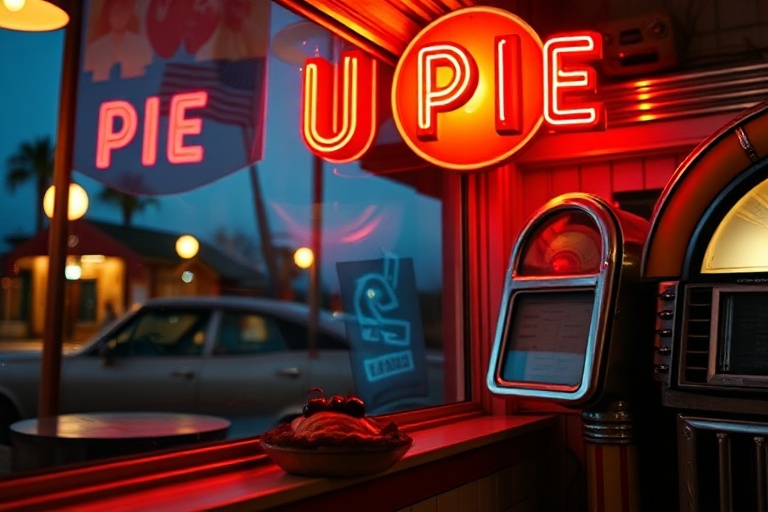
American Pie: How Don McLean’s 1971 Classic Still Resonates Today
The opening chords of Don McLean’s American Pie still send shivers down the spines of those who first heard it in the early 1970s. Released in 1971, the song wasn’t just a hit—it became a cultural touchstone, a lyrical mystery box, and a six-and-a-half-minute anthem that refused to be confined to radio edits. More than five decades later, its legacy endures, debated, dissected, and celebrated by fans, critics, and musicians alike.
The song’s narrative structure is unlike anything else in popular music. It doesn’t follow a conventional verse-chorus format. Instead, it unfolds like a folk ballad steeped in allegory, referencing real events through poetic abstraction. The death of Buddy Holly, Ritchie Valens, and The Big Bopper in a 1959 plane crash—commonly known as “The Day the Music Died”—serves as the emotional core of the song. But McLean never names the event explicitly, leaving listeners to connect the dots between the lyrics and history.
The Lyrics: Decoding a Cultural Riddle
At its heart, American Pie is a meditation on loss, change, and the passage of time. The song’s title itself is open to interpretation. Some see it as a nostalgic ode to mid-century America, a country McLean grew up in. Others interpret it as a metaphor for the decline of innocence, particularly in the music industry, which lost several of its brightest stars too soon.
The lyrics are famously cryptic. Lines like “February made me shiver, with every paper I’d deliver” and “I can’t remember if I cried when I read about his widowed bride” reference the plane crash indirectly. The “widowed bride” likely refers to Ritchie Valens’ girlfriend, Donna Ludwig, who was just 17 at the time. Meanwhile, “the jester” and “the king” have been speculated to represent musicians like Bob Dylan and Elvis Presley, figures who shaped the cultural landscape of the 1960s and 1970s.
McLean has been notoriously tight-lipped about the song’s meaning, stating only that it’s about “the loss of innocence in America.” This ambiguity has fueled endless debates among fans. Some argue that the song is a direct commentary on the assassinations of the 1960s—John F. Kennedy, Robert Kennedy, and Martin Luther King Jr.—while others see it as a broader reflection on the end of the 1950s rock ‘n’ roll era and the cultural upheaval of the 1960s.
Fan Theories and Interpretations
Over the years, fans have developed a laundry list of theories about what the song truly means. Some of the most popular include:
- The “Three Men” Theory: The “three men” mentioned in the song are often linked to the three musicians who died in the 1959 crash—Buddy Holly, Ritchie Valens, and The Big Bopper.
- The “Father, Son, and Holy Ghost” Theory: This trio is sometimes interpreted as a reference to Elvis Presley (the “father”), John Lennon (the “son”), and the influence of music (the “holy ghost”).
- The “Mortuary” Theory: Some listeners believe the song is about the death of rock ‘n’ roll itself, with lines like “the church is burning” symbolizing the end of an era.
- The “Personal Loss” Theory: McLean has also hinted that the song reflects his own childhood experiences and the loss of his father when he was just 15 years old.
The song’s ambiguity is part of its magic. It invites listeners to project their own experiences and emotions onto the lyrics, making it a deeply personal anthem for generations.
Musical Composition: A Masterclass in Storytelling
Beyond its lyrics, American Pie is a masterclass in musical storytelling. McLean’s fingerpicking guitar style, reminiscent of folk and blues traditions, creates a melancholic yet hypnotic atmosphere. The song’s structure is unconventional, with a slow build that culminates in a powerful, almost cathartic release.
The song begins with a gentle, almost tentative guitar intro, setting the stage for McLean’s soft, conversational vocals. As the song progresses, the instrumentation grows richer, incorporating piano, drums, and subtle orchestral elements. The climax arrives in the final verses, where McLean’s voice rises with a mix of sorrow and defiance, particularly in the repeated refrain: “Bye, bye, Miss American Pie.”
This refrain is one of the most recognizable in music history. It’s a moment of resignation, a farewell to an era that can never be recaptured. The way McLean delivers the line—with a mix of nostalgia and finality—has cemented it as one of the most emotionally charged moments in popular music.
Influence on Other Artists
American Pie has left an indelible mark on the music industry. Its success paved the way for other long-form narrative songs, proving that audiences were willing to engage with music that told a story. Artists like Bruce Springsteen, with his Born to Run and Thunder Road, and Bob Dylan, with his epic ballads like Hurricane, have cited McLean’s work as an influence.
Even in the digital age, where songs are often reduced to 3-minute clips, American Pie remains a testament to the power of storytelling in music. Its length is not a barrier but a feature, allowing listeners to immerse themselves in its narrative.
Cultural Impact: More Than Just a Song
American Pie transcended its status as a hit single to become a cultural phenomenon. It was the title track of McLean’s 1971 album, which also featured other notable songs like Vincent (a tribute to Vincent van Gogh). The album’s success catapulted McLean to fame, but it was American Pie that became his signature piece.
The song’s impact can be seen in countless references across pop culture. It has been covered by artists ranging from Weezer to Madonna, and its lyrics have been parodied, sampled, and referenced in TV shows, movies, and even political speeches. For example, in the 1999 film American Pie (a raunchy comedy about high school life), the song’s title is a direct nod to McLean’s work, though the film’s tone couldn’t be more different.
The song has also been used in moments of national reflection. After the September 11 attacks, radio stations across the country played American Pie as a way to mourn and heal. Its themes of loss and resilience resonated deeply in the aftermath of tragedy.
Awards and Recognition
Over the years, American Pie has received numerous accolades. In 2017, it was inducted into the Library of Congress’s National Recording Registry for its “cultural, historical, and aesthetic importance.” The song has also been ranked among the greatest songs of all time by publications like Rolling Stone, which placed it at No. 5 on its list of the “500 Greatest Songs of All Time.”
Its influence extends beyond awards and rankings. The song has been used in educational settings to teach students about the 1950s and 1960s, as well as the art of songwriting. Its lyrics are often analyzed in literature and music classes for their poetic devices and narrative techniques.
Legacy: Why the Song Still Matters
What makes American Pie endure? Part of its longevity lies in its universality. The themes of loss, nostalgia, and the passage of time are timeless, resonating with each new generation. The song captures a moment in history while also feeling deeply personal to anyone who has experienced change.
Another reason for its lasting appeal is its mystery. The song’s refusal to be pinned down to a single meaning allows it to remain relevant. Every time a new generation discovers it, they bring their own interpretations, their own emotions, and their own understanding of history to the table.
Finally, American Pie is a reminder of the power of music to connect us across time and space. It’s a song that has been passed down from parents to children, from one cultural moment to another. It’s a song that has provided solace in times of grief and a soundtrack for moments of celebration.
As McLean himself once said, “This song, to me, is still a mystery. I’ve never been able to fully explain it, and I don’t think anyone else can, either. That’s part of its magic.”
For those looking to explore more about the music and cultural movements that shaped American Pie, check out our Music and Culture sections for deeper dives into related topics.