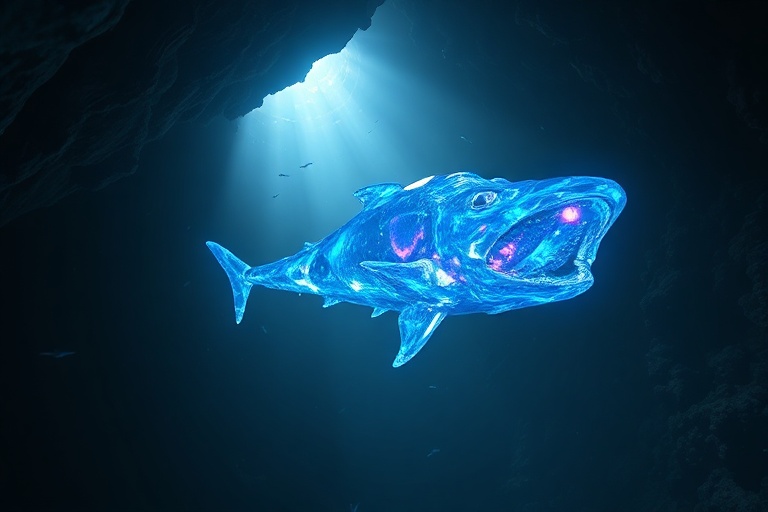
Subnautica 2 has arrived with a promise to redefine underwater exploration, and at the center of its narrative stands Celestine—a character whose presence reshapes the game’s emotional and survival dynamics. As players descend into the alien ocean of planet 4546B, Celestine emerges not just as a companion, but as a narrative anchor that deepens the story’s stakes and humanity. This sequel builds on the original’s legacy by intertwining survival mechanics with a richer personal journey, and Celestine is the catalyst for that evolution.
The game’s developers, Unknown Worlds Entertainment, have carefully crafted Celestine’s role to bridge the gap between isolation and connection. Unlike the first game’s solitary struggle, Subnautica 2 introduces meaningful relationships in a hostile environment, and Celestine embodies that shift. Her presence transforms the player’s experience from survival against nature to survival with purpose, driven by shared goals and emotional bonds.
The Role of Celestine in Subnautica 2’s Story
Celestine is introduced as a scientist from Earth’s Aurora crew, one of the few survivors of the crash who has adapted to the alien ecosystem. Unlike the first game’s protagonist, the survivor (now referred to as the Pilot), Celestine is not just a fellow human—she represents a link to the mission’s original purpose. Her knowledge of the planet’s ecosystem and her personal connection to the Aurora’s research station make her an invaluable ally in navigating the dangers of 4546B.
Her character is defined by resilience and curiosity. While the Pilot focuses on survival and escape, Celestine is driven by scientific inquiry and the desire to understand the planet’s mysteries. This duality creates tension and collaboration, as players must balance immediate survival needs with long-term exploration goals. Celestine’s dialogue reflects a blend of urgency and wonder, grounding the game’s fantastical elements in relatable human emotion.
She also serves as a moral compass. In a world where survival often requires difficult choices, Celestine challenges the player to consider the ethical implications of their actions. Whether it’s deciding how to interact with alien lifeforms or whether to prioritize personal safety over scientific discovery, her presence forces players to reflect on their decisions in a way the first game did not.
Gameplay Integration: How Celestine Affects Survival and Exploration
Celestine’s integration into gameplay mechanics goes beyond narrative depth. She is a functional companion whose skills directly assist the player. Unlike AI-controlled companions in other survival games, Celestine operates within the game’s physics and resource systems, making her both a strategic asset and a vulnerability.
She contributes in several key ways:
- Scientific Analysis: Celestine can scan and analyze alien flora and fauna more efficiently than the player, unlocking crafting blueprints and lore entries faster.
- Resource Gathering: Certain materials are only accessible when accompanied by her, such as rare minerals hidden in dangerous zones she can navigate with greater ease.
- Environmental Navigation: She identifies safe paths through hazardous areas, reducing the risk of creature attacks or toxic exposure.
- Emotional Support: Her presence reduces sanity loss in dark or isolated areas, a mechanic that ties directly into the game’s psychological survival elements.
However, these benefits come with trade-offs. Celestine requires oxygen, food, and medical supplies just like the player. She can be injured by creatures or environmental hazards, forcing players to make split-second decisions about whether to prioritize her survival over their own. This adds a layer of emotional weight to the gameplay that was absent in the first game.
The developers have also introduced dynamic events that revolve around Celestine’s actions. For example, if she becomes injured during a Leviathan attack, the player must choose between fleeing to safety or fighting to save her. These moments are scripted but feel organic, reinforcing the game’s commitment to narrative-driven gameplay.
Thematic Depth: Isolation, Connection, and Humanity Underwater
Subnautica 2 uses Celestine to explore deeper themes about isolation and human connection. The first game was a masterclass in conveying loneliness through vast, empty oceans and eerie silence. Subnautica 2, by contrast, uses Celestine to reintroduce the idea that survival is more bearable—and meaningful—when shared.
Her presence also highlights the contrast between Earth and 4546B. On Earth, Celestine was likely part of a collaborative scientific team. On 4546B, she becomes the sole human connection for the player, embodying the transition from a structured, social environment to one of extreme isolation. This shift is reflected in the game’s visual design, where Celestine’s suit lights and voice transmissions pierce the darkness, serving as beacons of hope in an otherwise unforgiving world.
The game also explores the idea of humanity’s place in an alien ecosystem. Celestine, as a scientist, represents humanity’s desire to understand and dominate nature. Yet her interactions with the planet’s creatures—particularly the peaceful, curious creatures like the Peepers—challenge the player’s assumptions about survival and coexistence. This thematic layer elevates Subnautica 2 from a survival game to a meditation on humanity’s role in the cosmos.
Reception and Future of Subnautica 2’s Narrative Direction
Early reviews of Subnautica 2 have praised Celestine’s character as a standout element. Players and critics alike have noted that her presence makes the world feel more alive and the stakes feel more personal. The game’s narrative pacing, which balances survival urgency with character development, has been highlighted as a significant improvement over the first game.
However, some players have expressed concerns about Celestine’s AI behavior. While she is generally reliable in combat and exploration, there are moments where she can feel unresponsive or get stuck in the environment. Unknown Worlds has acknowledged these issues and released patches to improve her pathfinding and interaction logic. The developers have also hinted at future content updates that will expand her role, including new dialogue options and story arcs.
Looking ahead, Celestine’s character sets a new standard for companion-driven narratives in survival games. Her integration suggests that Unknown Worlds is moving toward a model where companions are not just optional allies but essential narrative and gameplay elements. This could influence future titles in the genre, encouraging developers to prioritize emotional depth alongside mechanical innovation.
For fans of the original Subnautica, Celestine represents both continuity and evolution. She honors the first game’s themes of isolation and survival while introducing new layers of connection and moral complexity. Her presence ensures that Subnautica 2 is more than just a sequel—it’s a deeper dive into what it means to survive, and thrive, in an alien world.
As players continue to explore the depths of 4546B, Celestine remains a guiding light—a reminder that even in the darkest corners of the universe, humanity is never truly alone.
Explore more gaming content and technology insights on Dave’s Locker.