Drone Strike in Abu Dhabi: What We Know About the Attack
The recent drone strike in Abu Dhabi has sent ripples through the region, raising questions about security vulnerabilities and the evolving tactics of non-state actors. On January 17, 2022, a suspected drone attack targeted key infrastructure in the United Arab Emirates capital, marking one of the most significant security incidents in the country’s recent history.
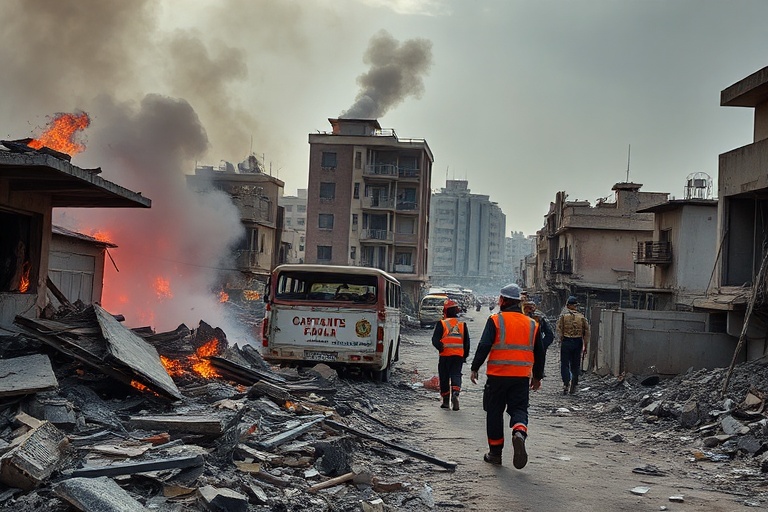
The strike occurred near Abu Dhabi’s Mussafah industrial area, where fuel trucks caught fire following the explosion. Authorities confirmed three fatalities, including two Indian nationals and one Pakistani national, all employees of a logistics company. The attack has drawn international attention, with investigations pointing toward Houthi militants in Yemen as the likely perpetrators.
The Timeline of Events: How the Drone Strike Unfolded
The drone strike unfolded in the early hours of the morning, shortly after 10 a.m. local time. Initial reports described a series of explosions near fuel tankers, followed by a large fire that engulfed several vehicles. Emergency services responded swiftly, but the remote location and the intensity of the blaze posed significant challenges.
Security footage later revealed a small unmanned aerial vehicle (UAV) approaching the site before detonating. Investigators noted that the drone appeared to be a commercially available model modified for military purposes, a tactic increasingly favored by militant groups due to its low cost and accessibility.
- 10:00 AM: First explosion reported near Mussafah industrial area.
- 10:15 AM: Emergency services arrive; fire spreads rapidly.
- 11:30 AM: Authorities confirm three fatalities.
- 3:00 PM: UAE government issues a statement condemning the attack.
- Evening: Houthi rebels claim responsibility via media outlets.
The swift response from UAE security forces prevented further casualties, but the attack highlighted gaps in drone detection and interception capabilities. Military analysts have since emphasized the need for advanced counter-UAV systems in high-risk regions.
Who Was Behind the Attack? Examining the Houthi Connection
The Houthi rebel group, based in Yemen, claimed responsibility for the strike within hours of the incident. In a statement released by their official media channel, Al-Masirah, the group stated that the attack was in retaliation for the UAE’s involvement in the ongoing conflict in Yemen, particularly its support for the Saudi-led coalition.
This isn’t the first time the Houthis have targeted the UAE using drones. Since 2019, the group has launched multiple attacks on Saudi Arabia and the UAE, primarily aimed at oil facilities and military sites. However, this strike was notable for its proximity to civilian infrastructure, suggesting a shift in strategy.
UAE officials have dismissed the Houthis’ claims as propaganda, pointing to the lack of verifiable evidence linking the group to the attack. Instead, they have suggested that the drones may have originated from other conflict zones or been operated by domestic extremists. The UAE’s Ministry of Foreign Affairs released a statement calling the attack a “cowardly act of terrorism,” vowing to pursue those responsible.
Security Implications: How the UAE is Responding to Drone Threats
The drone strike has forced the UAE to reevaluate its security protocols, particularly concerning unmanned aerial threats. The country has invested heavily in missile defense systems, including the American-made Patriot and THAAD systems, but drones pose a different kind of challenge. Unlike ballistic missiles, drones are slower and smaller, making them harder to detect with traditional radar.
In response, the UAE has accelerated the deployment of counter-drone technology, including electronic warfare systems capable of jamming or disabling UAVs. The country has also strengthened its collaboration with international partners, such as the United States, to share intelligence on drone threats. In 2021, the UAE signed a $2.5 billion deal with the U.S. for advanced missile defense systems, a move that may have been influenced by the growing drone menace.
Domestically, the government has launched public awareness campaigns to educate citizens and residents about the risks of drone attacks. These efforts include guidelines on reporting suspicious drone activity and recognizing potential threats.
Broader Regional Impact: Drone Warfare in the Middle East
The use of drones in warfare has become a defining feature of modern conflicts in the Middle East. From the battlefields of Yemen to the skies over Iraq and Syria, non-state actors have increasingly turned to UAVs as a cost-effective alternative to traditional weapons. The Houthis, in particular, have become adept at modifying commercially available drones for precision strikes, a tactic that has proven difficult for conventional militaries to counter.
Saudi Arabia has also been a frequent target of drone attacks, with Houthi-affiliated groups targeting oil facilities in Abqaiq and Khurais in 2019. These attacks caused temporary disruptions to global oil supplies and underscored the vulnerability of critical infrastructure. The UAE’s recent experience suggests that the drone threat is spreading beyond traditional conflict zones, posing risks to stable and economically significant regions.
International observers have warned that the proliferation of drone technology could lead to an arms race in the region, with countries and militant groups racing to acquire or develop more advanced UAVs. The UAE’s proactive measures may serve as a model for other nations facing similar threats.
What’s Next? The Path Forward for the UAE and Its Allies
As investigations into the Abu Dhabi drone strike continue, the UAE faces a complex security landscape. The attack has exposed vulnerabilities that will require both technological and diplomatic solutions. Domestically, the government is likely to prioritize the expansion of counter-drone capabilities, while internationally, it may seek to strengthen alliances with countries that share its concerns about drone proliferation.
For the Houthis and their allies, the strike represents a tactical victory, but one that risks escalating tensions in an already volatile region. The international community will be closely watching how the UAE and its partners respond, as their actions could set a precedent for how drone threats are addressed globally.
The incident also serves as a reminder of the evolving nature of warfare. As technology advances, so too do the methods of those who seek to exploit it. The drone strike in Abu Dhabi is not an isolated event but part of a broader trend that demands vigilance, innovation, and cooperation to counter effectively.
For those interested in the intersection of technology and security, our technology section offers deeper insights into the latest developments in counter-drone systems and cyber warfare.